
“Science friction” (Anti-science movement)

ATOMSTI once had an idiosyncratic anti-science stance. Owing to youthful indiscretion, I found the subject boring and took the minimum amount possible in both college and high school. I later realized my error and did what I could to mitigate the damage, subscribing to Discover, watching intellectual television when that existed, and grabbing some books. The plus of picking up Cliff’s Notes on Chemistry is that it is a $9 science education. The drawback is that it is a $9 science education. I was trying to teach myself the topic, meaning my chemistry professor was Wayne Marlow, a tough obstacle indeed.

I’m still at it, squeezing in science reading when I can, which isn’t much with five children. At the same time, I explain science principles to them and tell them they will learn more about this in future school years. I also watch YouTube tutorials and have all Cosmos episodes on DVR.

Taking so little science is my greatest regret, but at least my anti-science stance was because I thought it was boring, not because I was denying its truths. Today’s anti-science army does just that, ironically aided by the Internet, cell phones, and iPads. Long gone are the days when universities and laboratories could serve as guardians of the world’s scientific knowledge.

What follows is a list of 10 of the worst anti-science ideas. For space reasons, these are presented in Genetically Modified nutshells. Most of the subjects I’ve dealt with at length in other posts, but the focus here is on consolidating them to show the anti-science motif that runs through some of society. The list is in ascending order of negative impact on the country.

10. EARTH IS FLAT. This idea is silly, but the issue is serious. It demonstrates just how impervious to facts and logical arguments some people can be. While Flat Earthers are less than .1 percent of the country, ideas later in the list are just as scientifically flawed, but embraced by 30 to 50 percent of the population and Congress, and these persons attempt to influence policy.

The only incidental positive to the Flat Earth position is that it forces one to build thinking, deduction, and persuasion skills when explaining why the idea is wrong.

So somewhat sheepishly, I present evidence for a round Earth: We see the top of vehicles first when they come over a hill. The farther one travels from the equator, the farther the stars go toward the horizon. The higher up you are in your treehouse, the more you can see the approaching enemy. And the best proof: During a lunar eclipse, a round shadow is cast on the moon.

9. GEOCENTRISM. This bunch thinks the sun, planets, and stars revolve around Earth. Like their Flat Earth brethren, modern-day geocentrists are maddening to someone concerned about science education. But it also forces us to logically explain to, say, our 7-year-old son, how we know heliocentrism is true.

Even at warp speed, Neptune would be unable to complete a rotation of Earth in 24 hours. Second, the apparent positions of the stars changes between January and June, the result of Earth moving around the sun. Also, when rain falls without wind, it comes down vertically. But jump in your car and the rain seems to come at an angle. Similarly, as Earth moves around the sun, the light appears to fall from a slight angle. This would not happen in a geocentric world.

While almost exclusively the domain of a tiny subset of Catholics, I found one geocentrist online who purported to make a scientific case for it. The site was littered with pseudoscience red flags, the most glaring being that he took his ideas straight to a sympathetic audience rather than a peer-reviewed journal. Similarly, he worked in isolation, not with scientists. While he did maintain a forum, he was hostile to sound scientific responses and inquires, whereas a genuine researcher would welcome the dialogue. Another red flag was that he started with his conclusion, then sought confirming evidence. He also employed flawed methods with irreplicable results, another giveaway.

8. MOON LANDING HOAX. This is slightly more in the conspiracy theory mindset, though it includes a massive heaping of scientific ignorance. It centers on misunderstanding of the Van Allen belt, why no stars would be visible, and a flag allegedly waving with no atmosphere. It’s OK to raise questions like these. When I first heard these objections, I entertained them and sought out further evidence. I was satisfied with the thorough scientific explanations given. But for those determined to deny it, these answers were further evidence of a cover-up.

7. GMO EVIL. This is based on little more than fear, highly-selective quote mining, and treating correlation and causation as identical twins. Genetic modification is merely the splicing of genes and inserting of DNA from one species into another, resulting in better food. There are safety controls in place and any danger, if there ever is any, would be to a specific engineered food, not to the entire concept.

Despite the appeal to nature that many anti-GMO activists claim, agriculture has advanced through the use of artificial selection. Nature’s food was mostly atrocious, but has been made delicious and nutritious through agricultural advances.

6. POLYGRAPH USE. These machines accurately record physiological data, but cannot determine if the subject if prevaricating. Police can request a suspect use them, but a guilty sociopath will pass, while someone nervous and innocent might fail.

Another problem is that subject is asked a series of simple questions to establish a baseline before the serious questions commence. But if a person is already sweating and breathing heavily, normal responses to being grilled about a murder, then the baseline will be flawed and the test thrown off. Despite the lack of scientific support for its use as a lie detector, the polygraph is used by governments when hiring for sensitive positions or conducting internal investigations. The best-known person ever hooked up to one, spy Aldrich Ames, passed the exam.

5. YOUNG EARTH. Here is evidence for an old universe: 1. We can see light from stars millions of light years away. 2. Since Earth’s earliest days, radioactive isotopes have been breaking down and releasing energy that adds heat to the planet’s interior. By measuring those atoms inside rocks and comparing their ratios to those inside meteorites, Clair Patterson figured out Earth was 4.5 billion years old. 3. Cosmic background radiation, the afterglow of the Big Bang, is visible in the microwave spectrum.

The Young Earth crowd sometimes claims it is silenced by media, science, and academia. There is no such repression on this page. Here is Answer in Genesis’ retort to the light year evidence, radioactive isotopes, and cosmic background radiation: “The Big Bang is entirely fiction because the Bible tells us that God created heaven, earth, and everything within them in the span of six days.”

4. CREATIONISM. I have a Friend who occasionally posts creation stuff. We have gone back and forth a few times, but my strategy has always been defending the Big Bang or evolution. Most recently, he posted a video of a man claiming that the odds against life forming by chance were so astronomical that it had to be done by God. This time, I tried a different tact and posted, “Describe the Scientific Method and explain how he used it in reaching his conclusion.” For first time, my Friend gave no response.

This is because creationism rests almost entirely on finding supposed flaws in evolution or the Big Bang. Proponents have never, to my knowledge, presented scientific evidence for their position. If creationism is championed in a Facebook post or over dinner, it’s a shame the level of science knowledge is at this level. But far worse is the idea of bringing it into a science classroom. This attempt has failed, but the other side continues to battle for it.

3. ANTI-EVOLUTION. It is a common misconception among the general public and among 99.99 percent of creationists that creation and evolution are in competition. I’m not implying they co-exist, but if creation happened, it would have no impact on evolution’s legitimacy. That’s because evolution is the change in inherited characteristics of biological populations over succeeding generations and doesn’t speak to how life formed. Science has only rudimentary guesses as to how that happened. We have good evidence for how the universe began and how planets formed, cooled, and became habitable. There is good evidence life started in the ocean, but we are unsure how. Admitting this ignorance and searching for the answer is science. Invoking a supernatural explanation is not.

With regard to evolution, the stupidity on this subject is so profound that 44 percent of U.S. adults think Man and other animals were created in their present form less than 10,000 years ago. This requires ignoring, or coming up with ad hoc explanations for, Lucy, Archaeopteryx, Tiktaalik, the Geologic Column, carbon dating, animals that exist only on Madagascar, Iceland, and Papua New Guinea, and Richard Lenski’s ongoing e.Coli experiment at Michigan State University.

The most extreme misunderstanding of the theory comes from those who think it posits that monkeys gave birth to humans. Only slightly less ridiculous is asking, “If man evolved from gorillas, why are there still gorillas?” Of course, the theory really holds that man and the apes have a common ancestor, as evidence by you and me sharing 22 of 23 sets of chromosomes with chimpanzees. Other evidence includes the entire biology field.

I have no issue with anyone asserting that God created Man or the universe. My objection is when they claim these conclusions are arrived at scientifically.

2. ALTERNATIVE MEDICINE. This can be a waste of time, a waste of money, or a waste of a life. If you apply a Reiki rub for a minor stomachache, no harm is done, though that’s time that would be better spent posting a pro-science retort on a UFO thread.

Chiropractic, acupuncture, reflexology, and applied kinesiology are rackets. But as long as real medical care is also sought, the patient has a chance to see improvement and is only impacting the wallet, not his or her health. But when these techniques are the only solution, the patient either continues to suffer or is swayed by post hoc reasoning and communal reinforcement. In the most extreme cases, death results. This month, a teen girl in Florida died from leukemia after forsaking chemotherapy for vitamins and veganism. Closely related is the practice of treating serious illnesses with nothing. Faith healers in Idaho, protected by the government, have allowed a dozen children to die from preventable causes. Faith healing is 100 percent faith, 0 percent healing.

1. ANTI-VACCINATION. This tops the list because it kills babies, such as the 18-month old Measles victim in Germany. Those who are too young or too unhealthy to be vaccinated are at risk of dying from a preventable disease. If choosing to be unvaccinated only impacted that person, being unimmunized would be like finishing two fifths of Scotch at home. Bad for the drinker, irrelevant for everyone else. But refusing to vaccinate is like getting behind the wheel after that whiskey bender.

Smallpox went from killing 500 million people to killing zero, probably the most successful of vaccination’s many victories. Vaccines work by stimulating our immune system to produce antibodies without infecting us with the disease. So if the vaccinated person comes into contact with the disease, the immune system will recognize it and produce the necessary antibodies.

On a UNICEF Facebook post about 15,000 African children dying annually from Measles, and the difference vaccines can make there, one respondent wrote, “There’s no way that’s true. If it’s as dangerous as they’re saying, everyone my age would have died from it.” It’s called vaccine denial for a reason.

So there’s my list. I realize that science can be very complex and I can relate to struggling to grasp the concepts. But there’s a clear difference between genuine searching and questioning, and rejecting facts because they run contrary to a pet position.

“Giant cover-up” (Behemoth burial mounds)

GIANTSKULL2For versatility, few conspiracy theories can match the one centering on behemoth inhabitants of ancient North America. The idea appeals to various stripes of neo-Nazis, fundamentalist Christians, Edgar Cayce devotees, alien visitation proponents, cryptozoologists, and the garden-variety conspiracy theorist.

The idea that giants roamed the plains and hills was fairly popular in the era of circus freaks, sensationalist headlines, and hoaxes such as Piltdown Man and the Cardiff Giant. The reports purported the existence of a race or species of humanoid giants, usually advertised as eight to 12 feet tall, though some of the more daring made the 50 Foot Woman more than just a 1950s B Movie.

The concept went mostly dormant in the mid-20th Century, but found new life when Jim Vieira presented his “findings” in a TED interview. The condensed Cliff’s Notes version is that scientists found massive skeletons in burial mounds in the 19th Century, but that the government ordered them destroyed, with the Smithsonian doing the bulk of the bone crushing. This assertion gained some traction in various subcultures, but exploded when TED, after realizing that several unscientific and unsubstantiated claims had been aired, pulled the interview. What had been a minor scrape became a full-on bloody gush for the conspiracy piranhas. Clearly, THEY had gotten to TED.

For the more level-headed, there were practical reasons for a serious website to remove the interview. Vieria made several science errors, such as ascibing the lack of any present-day giant bones to them having not been mummified. In fact, skeletal preservation and mummification and separate processes. He also insinuated that stone had been carbon-dated, which is impossible. Further, he cited Mayan writings as proof of the giants, even though interpretation has revealed the writings to be of births, coronations, and wars.

One accuracy was the locations cited. There are burial mounds through Ohio and farther east that were common in the 19th Century, and dozens of persons could be buried in the same mound. As to why long-deceased giants would be of concern to the modern-day federal government, that depends on which conspiracy theory subset one subscribes to.

For the religious fundamentalists, behemoth bones mesh with Genesis 6:4, which references giants cavorting about Earth. This vindication of the Bible, combined with the hole it would punch in Darwinism, is too much for the evil secular worldly government to handle. In neo-Nazi lore, the red hair becomes blonde, the Asiatic giants become white, and they are examples of the supreme Aryan race, which our race-mixing government could never tolerate. Edgar Cayce devotees claim the unearthed skulls had horns, consistent with the mixing of man and animal that appeared to him in visions. UFO enthusiasts agree the creatures were hybrids, but of aliens and homo sapiens. For cryptozoologists, the bones are proof of Bigfoot or his ancestors.

The most specific reason I found for the cover-up came from myteriousworld.com. It insists that Smithsonian executive John Wesley Powell worried the bones would distract from the plight of the American Indian, since people would no longer think they were the only ones who lost their land, or worse, than the Indians had slaughtered them. Today, “these countless crates of precious truth are lost in the massive Smithsonian Warehouse, guarded by security.” If mysteriousworld.com has any evidence for these theories, it failed to cite it.

Besides the newspaper fabrications, circus displays, and hoaxes, the main evidence cited by believers is that North American Indian tribes had tales of slaying giants. In other words, the proof lies in variants of Jack and the Beanstalk.

The proponents also concluded that the mounds were so large so that a giant could be buried there. The idea that they could instead be used to bury dozens of normal-sized persons is ignored. Despite the broad range inhabited by this sizable population of massive creatures, they were never referenced by Amerigo Vespucci, Henry Hudson, Francisco Coronado, Hernando de Soto, Sir Francis Drake, Ponce de Leon, or the Vikings.

In a typical newspaper account of the time, the Fort Wayne Sentinel of Nov. 28, 1897, reported that the skulls of 100,000 giants with two rows of teeth apiece were found near Wichita. All of the bones are gone now. In fact, the conspiracy has been so thorough that every trace of the hundreds of thousands of giant skeletons has been excavated, moved, and destroyed or successfully hidden for decades. Try competing with that, Grassy Knoll.

“Transcendental Manipulation” (Transcendental Meditation)

FLOATI contacted a Transcendental Meditation office about learning the practice and expected to be on hold for some time listening to sitar music, but they answered right away. In short order, I learned it would cost almost $1,000 for one of their amateur yogis to provide me a word I was to repeat many times while breathing deeply with my eyes closed. My magic mantra monies were spent on my trip to the fortune teller in Tbilisi, so that ended my plans for a first-hand TM account. Hence, most of this will be from an outsider’s perspective.

The technique was started by Maharishi Mahesh Yogi. He denied this, stating that his yogic predecessors were chanting holy mantras at the moment of Earth’s creation. He merely continued the line, along with developing the enterprising notion of charging $960 a word.

His fame peaked in the 1960s, even holding court with The Beatles. When a frustrated John Lennon left in mid-session, Mahesh asked where he was going, to which the Walrus Egg Man replied, “You’re the holy man, you tell me.”

Mahesh is dead, doing cosmic yogi stuff now, and I am not a music icon with means and access, so the TM experience related here will be more pedestrian.

Neophytes are told they have a unique mantra, arrived at through a guru’s thought process. Unlike many religions, TM is upfront about the costs, at least in the beginning. The pricier items, such as invisibility and spiritually-attuned mansions, come later. Meditators are told never to reveal their mantra, lest it lose its power. Blogger Joe Kellett, who left the movement, claims the real reason is because many persons are given the same mantra, despite the insistence that each one is unique.

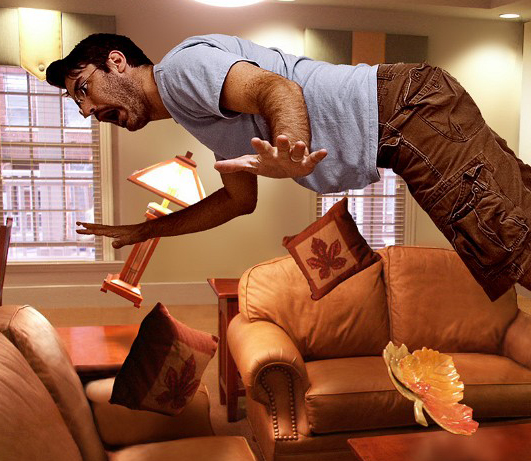
TM practicioners once claimed that adherents had the ability to float by assuming the lotus, repeating their mantra, and bouncing about. In the interest of investigative journalism, I gave this a shot. I remained ground-bound, but in fairness to TM, I am too stiff to assume a full lotus and not agile enough to bounce very well, plus I was never given a proper secret mantra. At any rate, TM yogis now downplay this power, since its fraudulent nature was revealed in video exposés.  Now, the ability is touted as merely being the potential for flight, once enough superhero powers are attained.

Most meditative techniques focus on the individual, but TM claims collective benefits. Specifically, if the square root of one percent of the population practices TM, it will create a powerful effect on everyone. If any nation reaches the square root of one percent mark, the country becomes invincible. For a proper control, we need for two neighboring countries to reach this threshold, then go to war. Once all nations have reached this number, Earth transforms into heaven.

TM adherents once claimed this was best demonstrated in the Shangri-La of Fairfield, Iowa. This is home to the Maharishi University of Management, and devotees said 13 percent of the city’s residents practiced TM, with resulting good vibes oozing onto all the locals. They reported the town was virtually without crime, illness, and unemployment, with bountiful harvests of milk, honey, and winning lottery tickets. James Randi and cohorts bounced these claims against government and police numbers and found them wildly conflicting with reality.

At first, TM can sound reasonable, even to the skeptic. For instance, it highlights the reduction of stress that comes with the practice. Indeed, the most comprehensive metadata of meditation studies does suggest limited benefits, although similar results can be attained through soothing music and other relaxation techniques. However, the positives in these studies center on meditation, and despite the Transcendental prefix, TM offers nothing beyond that.

That’s what I say, anyway. TM advocates insist otherwise, asserting that the recited mantra will reveal a higher consciousness, leading to a more advanced state of evolution, which continues until the chanter becomes a deity.

The Natural Law Party ran a candidate for president in 1992, touting TM techniques as a panacea to the nation’s ills. The 10,000 or so votes the party received fell well below the square root of one percent threshold, so the nation’s sub-paradise status continued unabated.

Kellett reports that in the initial sessions, mantra recitation is followed by instructions on how to induce a trance, and this is followed with indoctrination. Kellett said persons start out with plans to relax, but end up in the quite uncomfortable position of being asked to pay thousands of dollars for classes aimed at developing supernatural abilities.

The idea is that those staying (or floating) around long enough will achieve what TM proponent David Lynch calls “pure consciousness, bliss, creativity, peace, and intelligence.” Lynch, who claims rudimentary levitating abilities, hopes to assemble groups of 8,000 meditators to bring about world peace and harmony. By these standards, Twin Peaks seems downright plausible.

Lynch can afford the training, though others may not. The basic technique ends up running $1,500, while levitation instruction sets TMers back $3,000, and that’s without a warranty. Mantra adjustments are $1,000, on top of the $960 you paid for the flawless mantra in the first place. There are also gems, cosmetics, yogi medicine, and a protective cleansing that shields your home from negative energy.

At the last of the three initial indoctrination meetings, we learn that all personal suffering will disappear if the Transcendental Meditator practices for 20 minutes a day. Curiously, this attainment of full enlightenment, harmony, and bliss is followed by further purchasing of TM products and training.

“Calling For Doctor Love” (Anti-physician movement)

TWZONEAn anti-doctor stance makes as much sense to me as opposing oxygen or water. However, there are some with this opinion, so I will address some of the specific complaints I hear about the profession.

Occasionally, a big deal is made about doctors not knowing everything, a condition they share with every other occupation. If medicine thought it knew everything, it would no longer be conducting research into diseases, treatments, and cures. But gaps in knowledge cannot be filled with seaweed wraps, therapy touch, and ionic bracelets. We need to continue the search for truth using the Scientific Method, the same process that conquered smallpox and landed a probe on a comet.

A common refrain from alternative medicine advocates is that medicine has made mistakes before, whether it involved leeches, thalidomide, or failing to ask about allergies when prescribing medications. But in every instance, it was medicine that discovered and corrected the mistake. Medicine will continue to make mistakes (see, I’m not inherently anti-clairvoyant), but the field is a self-correcting practice that eventually gets it right. Scientists and doctors change their positions when dictated by the evidence. Science is forever trying to prove itself wrong, and healthy, robust debate is encouraged.

Sometimes proponents of medicine are accused of being unable to think for ourselves. Like science, I don’t know everything either. So I have no issue deferring when 98 percent of those with advanced degrees, having evaluated published research and studies, arrive at the same conclusion. I know the field has its flaws, but it is continually researching and advancing.

No one has thrown the accusation of closed-mindedness at me, though I’ve seen it applied to those with my mindset. But we will always consider new evidence attained through proper studies and science. I talked with a crystal healer who had various rocks for different ailments. Had I mentioned my skin cancer, maybe she would have recommended amethyst. But there is no alternative medicine, there is only medicine, treatments that have been proven to work in repeated double blind studies. There is no bias here. Gems, Reiki, and detoxifying foot pads are held to the same standard as pills cranked out by pharmaceutical companies. All must be judged according to the Scientific Method.

Some alternative medicine publications run advertisements with insinuations of cover-ups, warning that doctors don’t want you to know about a miracle treatment. First, it is a pseudomedicine tip-off if claims are taken straight to a sympathetic audience, rather than submitted for peer review. Second, doctors are concerned about their patients’ well-being and would recommend any cure or treatment that was proven effective. This is demonstrated by their embrace of continual research that, if ever completely successful, would put them out of business.

I sometimes hear that doctors treat only symptoms, not the cause. This idea is refuted by antibiotics, vaccines, annual check-ups, and doctor’s office brochures promoting a healthy lifestyle and letting readers know what warning signs to look for.

Some object to mainstream medication because of horror stories centering on drug reactions, medical miscues, and even death. Like all fields, medicine has pulled some doozies, such as amputating the wrong limb or allowing anesthesia to wear off during surgery. But the harm of medicine must be considered alongside the tremendous benefits. Medicine has killed, but it has saved many more. Vaccines, sanitation, and the advent of Germ Theory have caused the average life span to double in 400 years.

Numbers about medical dangers can also be misleading. Many who develop treatment complications lived as long as they did only because of the medicine. Some patients die while receiving last-ditch experimental treatments. All effective treatments have side effects. Indeed, the very property of it being medicine can make it risky. To reduce the dangers, doctors conduct a risk-benefit analysis and base treatments on it. They reject treatments where risk outweighs benefits.

The seeming safety of alternative medicine is offset by its inefficiency. There’s no chance of overdosing on homeopathic cough remedies. Misdiagnosis is sometimes a problem in medicine, whereas there’s not much danger if you slap on frankincense instead of thyme. And the only way someone dies from crystals is if they try to pull them from their pocket while driving.

There are also outright fabrications, such as the recent Internet claim that 108 persons have died in the past decade from the Measles vaccine. In actuality, there were 108 persons who received the vaccine and later died, but the deaths were unrelated to being immunized. It would be like seeing how many persons ate Rice Krispies and died later in the decade, then using those numbers to justify an anti-cereal stance. The Measles vaccine death falsehood was usually accompanied with a note that there have been zero U.S. deaths from Measles in the same time. The actual number was four, but the larger issue is that it was an absurd point to be making in an anti-vaccine post. It was a successful Measles vaccination campaign that eradicated the disease from the U.S., while 145,000 persons worldwide died from it during the same decade.

Another claim is the medical field is resistant to new or natural cures, yet half of prescription drugs were derived from plants. And any original idea is welcome to be submitted for peer review and double blind studies. If the evidence seems valid, it will be published and investigated further and considered for approval by the FDA. Doctors discovering new diseases or treatments are honored, with the greatest accolades reserved for those who disprove traditional wisdom. For instance, treating ulcers with antibiotics went against accepted medical methods, but the two doctors who discovered this use won the Nobel Prize.

I also have an affinity for the field, since a routine physical led to the discovery of my skin cancer. Since the discovery, I have been back to the doctor three times for treatment and am disease-free, with a follow-up scheduled for a few months from now. The best part is, there are free suckers in the waiting room.

“Discounting calories” (Breatharians)

SKELDRINKI prefer to be involved in topics I post about, so I decided to experiment with being a Breatharian, one who attempts to survive without food. To help me along, I sought out those who practice this. However, I could only find four persons worldwide who were confirmed Breatharians. An additional complication was that all of them were dead.

Britons Verity Linn, Timo Degen, and Lani Morris, along with an anonymous woman in Switzerland, all perished from the practice. Morris kept a diary of her attempt, reporting that she became incontinent and lost use of her legs. She also began coughing up a black, sticky fluid, which presumably was her common sense.

She and the other Brits were disciples of Ellen Greve, who said becoming a Breatharian is done in stages of increasingly-restricted diets. Stage one is to become a vegetarian. Hey, at this rate I’ll be done in 10 seconds. Step two is to become a vegan. My breakfast is vegan except for egg whites, so I substituted Shredded Wheat and soy milk, and stage two was complete.

Some Breatharians have been disproven without having to die. Wiley Brooks, who also claims to access the fifth dimension, was caught eating at McDonald’s. He said this was because those restaurants are “constructed on properties that are protected by fifth dimensional high energy spiritual portals,” so food eaten there doesn’t count.

Meanwhile, Greve attempted it herself. The Australian version of 60 Minutes put her to the test, during which she suffered severe dehydration. She blamed this on city air, so she was moved to the country. There, here condition deteriorated, with dilated pupils, slurred speech, a doubled pulse rate, and signs of kidney failure. 60 Minutes stopped the experiment on what it called ethical grounds, and on what Greve called fear of her eventual vindication.

Naveena Shine of Seattle attempted it in 2013. She planned to live only on water, tea, and sunlight. Her logic was that, “Plants live on light, then we eat plants. Are we accessing our inherent ability to live on light?”

Of course, plants also need their version of food, soil nutrients. If you pull a geranium up by its roots and lay on the sidewalk, daily watering and a constant breeze and sunshine will be useless. She was undeterred and pondered how much more lovely Earth would be if we needed no land for farming. “If humans did not have to eat, we could turn our planet back into a place of beauty,” she said. If she wanted a place where humans don’t eat, she could have left Seattle for rural sub-Saharan Africa.

Shine reported that she received a call from the universe telling her to go for it. She also received calls from doctors telling her to knock it off. She declined the advice, saying, “A doctor can’t see living on light because he looks at it through different lenses.”

Those lenses also revealed that Shine lost 20 percent of her body weight in five weeks. Other afflictions were a severe lack of energy, dizziness, sensations of freezing, and vomiting bile. On the plus side, she reported that her skin felt better. Despite the improved dermatology, Shine pulled the plug on the experiment before someone had to do the same to her.

She gave up, but I’m still at it. I’m ready for stage three, raw food.The next step after that is becoming a fruititarian. I decided to speed things along by tackling those stages simultaneously and having tomatoes for lunch. Quite tasty, actually. It may have helped that they were part of a veggie cheesesteak with tater tots.

Human death by starvation poses a sizable obstacle for Breatharians, who offer differing reasons for their practitioners’ 100 percent fatality rate. Some say the deceased failed to access life-sustaining energy from an invisible spaceship. Others say the secret is tapping into prana, Hinduism’s vital life force. Another subset prefers to stare at the sun at dusk or dawn in an attempt to gain nourishment. This has never worked, which practitioners say is because the technique takes years to master. A more likely factor is the eye’s inability to photosynthesize. Maybe man will evolve that ability if we stare at the sun long enough.

During the documented attempts, Breatharains became painfully thin, with sunken eyelids and quivering limbs. As to what was going on inside, the body attempts to maintain glucose levels when denied food. It starts by breaking down glycogen, a form of energy storage. If it’s still not being fueled, the body starts feasting on protein, muscle, and fat. Next, the liver helps out by turning fatty acids into nutrients. This works for a while, but it eventually leads to ketosis, a fatal chemical imbalance. It takes a lot of UFO vibes to counter that.

At any rate, I’m ready for stage five, the all-liquid stage. Looks like I chose a good day to grab a Samuel Adams seasonal sampler.

“The game blame” (Video game hysteria)

gameblameI expected my 4-year-old to be excited when I told him Daniel Tiger was coming to town. Instead of joy, he responded with skepticism. Guess I’ve taught him well.

He didn’t understand that I meant a man in a Daniel Tiger costume would be here. He took it to mean that the cartoon character would come out of TV land and grace us with his anthropomorphic presence. He knew it doesn’t work that way because he can largely differentiate fantasy from reality.

And this ability certainly exists among teenagers and young adults, which is one of the reasons why the supposed link between playing violent video games and committing mass murder is as phony as Daniel Tiger popping out of our flat screen.

Penn & Teller demonstrated this on “Bullshit!” They took a 9-year-old who incessantly played violent video games to a gun range, where he popped off three automatic rifle rounds. He then broke down weeping because the experience so traumatized him. Yet there are those who insist that playing shoot-‘em-up games makes one more desensitized and violent.

Of course, the crying at the gun range is merely an anecdote. We need statistics to turn this into a valid argument. So here we go. Arrest rates for violent juvenile crime peaked in 1993, at 500 per 100,000. By 2013, that number had plummeted to 195 per 100,000. During this same 20-year stretch, sales of Grand Theft Auto and games with similar themes quadrupled.

Still, if a child who perpetrates a mass shooting is found to have an XBox in his room, some assign the blame to the games. Next to the XBox may be tennis shoes and candy bars, but nobody is blaming the sneakers or Snickers. Video games are so common they’ll be in almost any child’s home, including the overwhelming majority of non-mass murderers.

There are some numbers that might suggest a link between games and behavior. In the book Grand Theft Childhood, 60 percent of middle school boys who played violent video games responded that it would be OK to slug someone who offended them. By contrast, just 39 percent of those who didn’t play such games said it would be OK. But this confuses correlation and causation. Youth that are more prone to violence are drawn to images of legs being blown off and bloody corpses strewn across a post-Apocalyptic landscape. My boys play Teenage Mutant Ninja Turtles video games because they love the characters; they do not love the characters because they play the game.

It’s similar to the way that some persons blame mass shootings on antidepressants, noting that a high percentage of perpetrators were on them. Of course, the reason they were heavily medicated was to try and tame their simmering rage. An otherwise normal person won’t turn into a killer by playing Call of Duty any more than playing Mario will make one a plumber.

Despite the idea that the joysticks are being throttled by sulking loners, most video games are played with friends or with online partners. A 2007 study found that 45 percent of boys played video games for anger relief and 62 percent said it helped them relax. There have always been violent youth, long before video games, and no study using sound research methods has found a causal link between the two.

The U.S. Supreme Court acknowledged this in 2011 when it declared Game Over to California’s attempt to ban violent PlayStation imagery. In an unusual move, the Court went beyond the law and addressed the scientific inadequacies of those arguing for censorship. From the ruling: “These studies do not prove that violent video games cause minors to act aggressively. The research is based on correlation, not evidence of causation, and most of the studies suffer from significant, admitted flaws in methodology.”

Indeed, Sen. Jay Rockefeller, toying with the idea of federal legislation, said, “Recent court decisions demonstrate that some people still do not get it. They believe that violent video games are no more dangerous to young minds than classic literature or Saturday morning cartoons. Parents, pediatricians, and psychologists know better. These court decisions show we need to do more and explore ways Congress can lay additional groundwork on this issue. This report will be a critical resource in this process.” Rockefeller was encouraging scientists to arrive at the conclusion first, then seek supporting evidence, which is the antithesis of research.

When the type of research that annoys Rockefeller was conducted, results were clear. Christopher Ferguson, chair of Stetson University’s psychology department, found that the studies linking video games to violent behavior failed to account for other factors such as abusive homes or mental illnesses.

Ferguson also studied 165 10-to 14-year-olds for three years and published his results in the Journal of Psychiatric Research. He found no long-term link between violent video games and aggression and violence. Similar study results were published in Media Psychology and Review of General Psychology.

There’s more. A 2004 U.S. Secret Service review of school shootings found that 88 percent of shooters had no interest in violent games. In 2005, the United States, adjusted for population, had three times as many murders committed by juveniles than did Japan. Yet the Asian nation had nine times as many video game sales.

These numbers illustrate that fantasy is unlikely to change behavior. I already knew this, because my 4-year-old is no more likely to clean his room after seeing Daniel Tiger do so.

“Stories, studies, and stouts” (Data vs. anecdotes)

ghost2Some persons who suffer leg cramps have reported relief in the form of snoozing with soap. Anecdotes like this have value in being the first step of scientific investigation, but some persons are content to let these be the end of the experiment. However, proof comes not from stories, but from metadata of peer-reviewed, double-blind, reproducible studies employing the Scientific Method and sound statistics.

Such studies are mighty boring compared to tales of ritual Satanic abuse, autism-inducing syringes, homegrown osteoporosis cures, Bigfoot run-ins, and the danger of getting cancer from breast implants, especially if you’re talking on a cell phone.

However, testimonials are unreliable due to bias, selective details, prevarication, a tendency to embellish them if encountered by a positive reaction, and a willingness to believe, from both the speaker and listener. Most stories get distorted through retellings, events get exaggerated, time sequences are reversed, and specifics become cloudy.

Furthermore, the anecdote usually only involves one person seeing the angel, hearing the ghost, or instantly zapping the flu with Therapeutic Touch. Since others cannot experience the same thing under identical conditions, there is no way to verify the experience. Selective thinking and self-deception can never be controlled and observed, which are necessary elements in scientific experimentation. With no way to test the claim, it’s impossible to determine if the experience was interpreted correctly.

Still, many persons put a lot of stock in anecdotes. One reason is unfamiliarity with the importance of the Scientific Method. Also, people seeking evidence for a Chupacabra, homeopathy, or reincarnation won’t find it in double blind studies or laboratories, so they have to rely on anecdotes and possibly shaky, out of focus videos.

The appeal to feelings is another factor. Some persons put value in testimonials because they are vivid, detailed, and emotional. This causes them to relate to the speaker and give a statement more value than is justified. Tales are often made by people who seem enthusiastic and honest.

Imagine a girl. That’s little to work with, so let me add that her name is Jenny, she’s 7, from Pocatello, Idaho, with thick medium-length blond hair. She loves to play with toy horses, listens to One Direction, and rides her bicycle every chance she gets. Last week, for cooked for the first time, making her favorite food, cinnamon rolls.

She just became more real to you. Throw in a congenital, potentially fatal kidney defect, a miracle wonder cure based on lemongrass, and a weeping mother grasped by Oprah, and you’re hooked. No way that the cold hard facts in 15 double blind reproducible studies could compete with that.

Less emotional testimonies can also get a free pass depending on the listener’s point of view. Someone into essential oils likely will accept without question a chat room story about eucalyptus vanquishing a boil. Billy Bo Jim Bob will be so overjoyed by a post from ETHunter about seeing a UFO accompanied by F-15s that he will heartily embrace it.

Even when stories can be verified, it’s not enough to establish its meaning beyond that one instance. If a 38-year-old man dies while taking a new medication, there’s no way to know if he would have died anyway, unless the autopsy shows a clear connection between the medication and death. This also applies to positive results with untested treatments. Anecdotes fail to mention the people who did not get better. One man may tell of slipping on a Q-Ray Bracelet to cure a rash, but you won’t hear about the 100 who tried it unsuccessfully. Nor would many persons be drawn to the headline, “Boy completes vaccine regimen without incident.” To highlight how easily cherry-picked anecdotes can be abused, it could be argued that cigarettes promote remarkable life spans because the oldest person ever verified, 122-year old Jeanne Calment, smoked for over a century.

Very few persons would accept this logic, owing to tobacco’s documented dangers. But when the unfamiliar is in play, combined with the fear of death, people can be swayed. Let’s say 10,000 people try an untested food and fitness regimen to battle lung cancer. Between spontaneous remission and misdiagnosis, maybe 50 and up being “cured,” and those are the ones highlighted. Or perhaps someone is made better after taking both proven and unproven medication, with the latter being the only one credited. These types of errors would be exposed in a scientific study, but not through anecdotes.

Kim Tinkham appeared on The Oprah Winfrey Show to praise an alkaline diet, which she credited with curing her cancer. She later died of the disease. Because her case was fairly prominent, her death made the news. But in most cases, anecdotal stories never include these poignant endings. There are no follow-up studies or attempts at replication.

By contrast, there was a case study that included an instance of spontaneous remission of diabetes in an anonymous woman. In the anecdote world, that would be the end of it. But since this was a case study, we know the woman’s diabetes returned in a couple of years.

So that’s my take on anecdotes vs. evidence. I’m off now to enjoy an Imperial Stout on draft. It’s not only delicious, some guy at the bar told me it took away his Type 2 Diabetes.

“Food Fright” (GMO hysteria)

CARROTIn the interest of balance: GMOs cause massive tumors and famine, rupture children’s digestive systems, and drive Indian farmers to mass suicide. Using seeds improperly is worse than the Holocaust.

Now that I’ve presented the other side, here’s mine.

Genetically Modified Organisms are plants or animals altered by the splicing of genes and the insertion of DNA from one species into another. The goal is transfer properties that have agricultural benefit.

We will concentrate only on plants, since no GM animals are sold for food. One example is golden rice, made from genes of maize and a common soil bacterium. The benefit in this case is food rich in beta carotene, which helps bodies produce Vitamin A. Genetic modification can also yield food that is softer, tastier, healthier, longer lasting, more resistant to pests, and less susceptible to drought. Compared to traditional plant breeding, there is less risk of concentrating natural toxicants since far fewer genes are transferred.

Because persons with allergies could be affected, all GM foods must be approved before going to market. In one case, a gene from a Brazil nut was transferred into a soybean. When serum from persons afflicted with nut allergies was introduced, a positive reaction registered, so the product was never sold. In another instance, a corn variety was also declared unfit for human consumption because of a potential allergen. This highlights two key points. First, there are safety controls in place. Second, any danger is going to be to a specific engineered food, so condemnation of all genetic modification is unfounded.

Most of those doing the condemning claim to prefer natural foods. Those people never had to eat the original tomato. University of Buffalo biochemistry professor Mark O’Brian called agriculture, “the manipulation of nature to meet desired ends.” He pointed out that a bright red, perfectly ripe, delicious tomato is “a biologically distorted, genetically engineered product of human innovation derived from a small, hard, poisonous fruit created by nature.” Similarly, the original carrot was dark purple and not near as high in beta-carotene.

Ray Comfort and Kirk Cameron have a YouTube video in which they declare the banana to be proof of God. Their evidence is its nonslip, biodegradable wrapper, a shape angled to enter the mouth, and a color scheme letting the consumer know if it’s not ripe, too mushy, or just right. Indeed, the banana is the result of intelligent design, but by farmers and scientists. What Comfort and Cameron tout as a divine miracle was once tiny, nasty, green, and full of large, hard seeds.

In short, there’s nothing natural about the foods we eat. Instead, cultivation is mostly artificial selection, with farmers saving the best plants from the year’s crop to provide seeds for the next season. After a few thousand iterations, we get tonight’s dinner. Genetic modification takes that idea and runs with it at light speed. Scientists can do in a few months what nature might have taken a few million years to accomplish.

Metadata from 12 long-term studies and 12 multigenerational studies met the conclusion that, “The studies reviewed present evidence to show that GM plants are nutritionally equivalent to their non-GM counterparts and can be safely used in food and feed.”

Meanwhile, University of California-Davis geneticist Alison Van Eenennaam and research assistant Amy Young reviewed 29 years of livestock productivity and health data from both before and after the introduction of genetically engineered animal feed. Van Eenennaam and Young found no increase in illness or disease, and concluded that GM feed is safe and nutritious.

Anti-GMO types, of which Mike Adams of Natural News is the most outrageous, don’t care for this science so they make up their own. While he and his ilk hawk scores of alleged studies and papers attesting to GMO dangers, none of them have appeared in scientific peer-reviewed journals. Another trick is to cherry pick quotes from genuine research in order to distort the findings. Adams’ efforts have put Natural News at the top of several lists of the Top 10 Worst Anti-Science Websites. Adams claims agribusiness is out to poison us all, aided by compliant scientists, doctors, and reporters. He encourages his followers to murder those expressing pro-GM views.

Despite engendering this murderous rage, causing alarmist terms like Frankenfoods to enter the lexicon, and being the subject of dire warnings and outright lies, GMOs haven’t harmed anyone. Opposition to them is another matter. Presidents of Zambia and Zimbabwe preferred to let a famine rage rather than allowing GMOs to be imported.

“Fallacious assault” (Critical thinking)

ARGUINGIt’s been a while since we’ve shone the spotlight on critical thinking, although the following are mostly examples of what critical thinking is not. Along those lines, I’ve tried to pin down a precise, easy-to-understand definition of critical thinking and that has eluded me.

But when I envision critical thinking, it’s most often in the form of someone using deductive reasoning in a series of arguments, free of logical fallacies, to reach a valid conclusion. For instance: W. Wayne writes a blog. Blogs are Internet products. Therefore, W. Wayne’s writing is on the Internet. Of course, people seldom talk that elementary in conversation. In the real world, arguments can get complex, tangential, and clouded with emotion, so logical fallacies are more difficult to detect.

I will use recent online examples of logical fallacies, identify what it’s called, and highlight the error in thinking.

U.S. soccer star Landon Donovan, who was surprisingly cut from the 2014 World Cup team, wrote a post-Cup column criticizing decisions made by Coach Jürgen Klinsmann. A few posters labeled Donovan a “bitter man,” which was an AD HOMINEM. These are arguments that address the person making the point rather than the point being made. Donovan’s level of bitterness was unrelated to how valid his criticism of Klinsmann’s coaching was.

This particular type of ad hominem is a GENETIC FALLACY, in which the person making the argument becomes the counterargument of the other person. Rather than coming up with points against the assertion, the interlocutor will criticize the opponent’s incentive or bias. A Friend posted about medical inaccuracies of Dr. Oz, causing her Friend to write sarcastically, “Yeah, Big Pharma wouldn’t have any interest in destroying the credibility of someone who’s costing them money.” The information hadn’t actually come from Big Pharma, but even if it had, whatever interest that source had in ruining Dr. Oz, or how much money he was costing them, would have had no bearing on the point’s validity.

But what about the adage, “Consider the source”? Does this have value? That depends. If a flash comes across my news feed that Answers in Genesis has disproven evolution, I would know this comes from a silly antiscientific source with a terrible track and keep scrolling. However, if I clicked the link and responded, I would need to answer with science, facts, and possibly a challenge to submit the findings to a peer-reviewed journal. Just dismissing AIG as being Young Earth Creationists or deliberately stupid would be inadequate.

Another form of ad hominem is the TU QUOQUE, which means “you too.” These point out the speaker’s hypocrisy, or counters a charge with a charge, and is not an attempt at refutation. Joshua Feuerstein made a minor Internet splash last year with an anti-evolution/anti-Big Bang rant. We will look at this rant and include responses to it, some which were fallacies and some which were solid retorts.

Early on, the goateed, backwards baseball cap wearing Feuerstein shouts, “Evolution was never observed!”

In his response, patheos.com blogger J.T. Eberhard committed a tu quoque by writing, “If being observed directly is your criteria, god should be thrown out immediately along with any stories of him creating the universe.”

This is true, but it is not a valid counterargument. Eberhard later provided one of those by writing, “Evolution has been observed. The most recent is the controlled experiment in evolution with the lizard species Podarcis sicula, in which the species developed a Cecal Valve, a new feature not present in the ancestral population. The old population of Podarcis sicula was still around and breeding, yet they had branched off to create a new animal that with adapted behaviors and features.” Here, Eberhard addresses Feuerstein’s claim and provides strong counterevidence.

Still in a frenzy, an incredulous Feuerstein later spits out, “You want me to believe that out of some accidental cosmic bang was created one cell and that somewhere along the line we all magically developed different will and different traits?!”

Eberhard commits another tu quoque by writing, “If you’re going to be defending a book which asserts the existence of a talking snake, a man being created from dirt, a woman being created from a rib, a man walking on water and rising from the dead, maybe it’s best not to disdainfully accuse your opponents of magical thinking.”

This points out flaws in Biblical literalism and highlights Feuerstein’s hypocrisy, but it does not refute the point. What Eberhart wrote next, however, did: “We have observed mechanisms that produce increased functionality over time. Evolution is driven by the same key forces that generate new order everywhere in our universe without the need for any appeal to god. They are mutation, reproduction, and selection. If you have these three catalysts in place, order and often improved functionality are the end result.”

Incidentally, Feuerstein had created a STRAW MAN by misrepresenting what astrophysicists and biologists teach. A straw man is when a person either completely makes up or greatly distorts an opponent’s position for the purpose of attacking it.

A simple Wikipedia query would have let Feuerstein know that the Big Bang Theory teaches that out of the explosion came subatomic particles which congealed into hydrogen. Clouds of hydrogen large enough to produce significant gravitational pull then collapsed inward to form stars, which fueled processes that created other elements. Contrary to Feuerstein’s cosmology, scientists do not teach a primitive cell came from the Big Bang and that this cell magically grew into others.

Also contrary to Feuerstein’s assertion, biologists do not teach that evolution is inexplicable magic. They teach that evolution is the change in inherited characteristics of biological populations over time, and is driven by random mutation, natural selection, and adaptation.

Moving on, we come to the FALSE DILEMMA, where an artificially limited number of choices are given as the only possible reason something exists. Jennifer LeClaire of Charisma Online, wondering why so many people were leaving the faith, wrote, “Is the church doing something wrong? Or is the culture wooing once-saved Christians to the godless side? Or both?” It is a false dilemma to say that only these factors, or combination thereof, could be the driving force. When I realized religion clashed with science, I dumped religion. Dumping science didn’t seem like a very practical option. I did not have a bad experience in church, nor did any person or organization recruit me to heathenism. I reached my conclusions through a third way of observation, reflection, questioning, searching, and life experiences. False dilemmas are usually created so the person has an easy way to arrive at and “prove” a point. In LeClaire’s case, she deduced that lukewarm preachers and evangelical atheists were the culprits. She cited examples of both, then was able to tie this into a nice bow because she had begun her post by eliminating competing options.

Neither lukewarm preachers nor heathen recruiters have been able to sway the musical artist Lecrae. Arguing for God’s existence, he trotted out Pascal’s Wager and announced, “If I’m wrong about God then I wasted my life. If you’re wrong about God then you wasted your eternity.” This is the ARGUMENT FROM CONSEQUENCES, where possible unfavorable conclusions are presented in lieu of providing evidence for the position.

The greatest congregation of logical fallacies I’ve come across recently was in a column my Mark Baisley at townhall.com. He crammed four of them into a column arguing that the laws of physics preclude spontaneous emergence of life. Rather than presenting original physics arguments, however, Bailey writes, “For single celled creatures to materialize, reproduce, and survive defies statistical randomness even in the inviting habitat of planet Earth. And the likelihood that the elements would self-generate into intelligent life lies outside of the probability distribution.”

However, Baisley’s inability to comprehend how life could develop is not evidence of that non-development. This is the logical fallacy of making arguments based on PERSONAL INCREDULITY. Put another way, there’s a reason he’s not a scientist.

He also commits the APPEAL TO IRRELEVANT AUTHORITY. He cited the Roman architect Vitruvius as having recognized the beauty of human form and ascribing it to God’s majesty. Vitruvius did intelligently design some nice works of his own. But his status as an ancient, revered artist gives him no special insight into how Man developed.

Later, Baisley cites “optimal conditions for structures and human biology” to argue that this “implies an ambient existence of intelligent design.” This is the APPEAL TO IGNORANCE. He asserts that because physics can’t prove how we got here, this means an intelligent designer did it. He also applies CIRCULAR REASONING by writing, “Man is so far advanced that it had to have been designed.” It is circular reasoning because he has not established that God is the only way man could reach an advanced state. His premise and conclusion are the same. It could also be argued that this was BEGGING THE QUESTION, whereby one assumes what one claims to be proving. Baisley asserts a god exists because of the structure of human biology, the structure of which proves intelligent design.

I hadn’t intended to beat up on the religious; it’s just that they’ve been especially fallacious on my news feed of late. But let’s give them a rest and close with a secular example.

Kyle Smith of the New York Post highlighted a Freakonomics blog that presented the possibility that a McDonald’s double cheeseburger might be the “cheapest, most nutritious, and bountiful food that has ever existed in human history.” It was noted the mass-produced sandwich has 390 calories, 23 grams of protein, seven percent of daily fiber, and 20 percent of daily calcium. Readers were challenged to find another inexpensive food that matched those criteria. When some offered boiled lentils, Smith MOVED THE GOALPOSTS by writing, “Now go open a restaurant called McBoiled Lentils and see how many customers line up.” He asked for a specific type of food, was presented with it, then changed the rules to also mandate that it be commercially viable. He further deduced that the lentil lovers were “huffy back-to-the-earth types, class snobs, locavore foodies, and militant anti-corporate types.” If I’ve done a decent job of instruction, you recognize these attacks as ad hominem.

“Losing the race” (Biological claims of race)

ZEBRAThe idea that we are all just one race, human, isn’t just a feel-good platitude or call for unity. It’s science.

Attempts to establish racial superiority using phrenology and craniology permeated the 19th and 20th Centuries and was used to justify slavery, Nazi ideology, and other atrocities. It hasn’t been limited to the light-skinned either, as Melanin Theory posits that black is the ideal color, with lesser pigments being emblematic of devolved races.

Craniology, the idea that the size and shape of the skull reveals a person’s intelligence and morality, was used by racists to argue that brain size separates superior races from inferior ones. This logic would mandate that elephants and blue whales be Earth’s most intelligent creatures, and would have meant Neanderthals would have never been supplanted by homo sapiens.

Charles Darwin’s works, On the Origin of Species and Descent of Man, shot holes in these bigoted beliefs. He showed that humans were one species without clear biological delineations amongst ourselves. Despite Darwin’s’ refutation, some twisted his ideas to argue that evolution favored superior races. The term “Survival of the Fittest,” often misattributed to Darwin, came from Herbert Spencer, who believed man could continue evolving until he reached an ideal state, with evolution extending to social arenas as well. Some racists have expanded this idea by insisting those who share their skin color are part of this push to racial superiority through evolution.

These ideas have been embraced by members of Appleby Baptist Church in Nacogdoches, Texas, who argue blacks are under the Curse of Ham. At the other end of the spectrum (or the same end, depending on how one looks at it), are a Black Hebrew offshoot, the Nation of Yahweh, whose members plotted to murder demonic whites on orders from God.

But members of Appleby Baptist and the Nation of Yahweh are indistinguishable biologically. Races are social constructions based on physical traits, primarily skin color, and to a lesser extent, hair and facial features. But this is no more legitimate than separating people by intelligence, height, or weight. There are some genetic differences in all of us, of course, but this is not race. In fact, the most genetically diverse peoples on Earth are all dark-skinned Africans.

One of the more amusing results of our DNA similarities came when racist Craig Cobb learned on a talk show that his ancestry was 14 percent sub-Saharan African.

Anthropologists theorize that Cobb owes his whiteness to the northerly migration of black-skinned populations. During and after this move, they ate more grains and fewer animals, meaning less Vitamin D in the diet. And while dark skin was a plus for protecting against UV radiation, it was a detriment farther north where the inability to absorb enough Vitamin D from the sun compounded the lack of it in the diet. This led to Ricketts. By contrast, being able to get Vitamin D from the sun provided an evolutionary advantage, so lighter skins were developed. These types of adaptations have occurred throughout history and led to what is called race.

That’s why scientists working on the Human Genome Project came up empty when examining the genome for DNA evidence of race. It’s similar to the way we have the same bones, muscles, tendons, and organs.

That’s because homo sapiens have been around for too short a time, and their migration has been too wide and frequent, for them to be divided into biologically distinctive groups. They originated in Africa about 150,000 years ago, with about 10,000 of them migrating to Asia, Europe, and Africa. Since then, 7,000 generations have come, a nanosecond by evolutionary standards. This short time, combined with a small founding population and its tiny genetic variation, means humans differ very little from each other despite some outward appearances. Dr. Harold Freeman of Human Genome Project said less than .01 percent of genes are reflected in appearance. Traits used to identify race, such as skin color, eye color, and nose width, are controlled by a tiny number of genes which can change rapidly in response to environmental conditions.

But what about the preponderance of sickle cell anemia among blacks, or hemoglobin disorders that afflict those of Mediterranean ancestry? Or what about the stunning ability of western Kenyans to consistently dominate marathons?

With regard to the illnesses, this is the result of ancestors of these groups developing a resistance to malaria. This was beneficial at first, but disastrous when doubly inherited. In this and similar cases, the high prevalence of distinctive conditions among a population is due to an ancestor bringing a unique mutation into the region.

As to the marathon winners, it’s a combination of genetics, culture, and training. Evolution is driven by random genetic mutation, so isolated populations will drift toward common traits. In the case of western Kenyans, this means longer legs, shorter torsos, and slender limbs, along with a more advantageous body mass index and bone structure. The cultural importance of marathon running in the region and an elevation of 7,000 feet are also factors. Hard work also plays a role.

So there are differences in populations, but this is genetics. The only races are the ones Kenyans are winning.