“Think tanked” (New Thought)

GIANTBRAIN

The New Thought positon can be summed up as, “Believing something makes it so.” By that logic, since I believe that the New Thought movement is bonkers, it is. But let’s delve a little deeper.

Proponents do not believe that if I think that I am a cow, I am. Rather, they think that consistent and correct thinking regimens will lead a person to get what they want out of life, be it money, love, peace, or that extra-cushy recliner.

The movement’s central point is that our thoughts or beliefs determine our existence, especially in the  health realm. New Thought began in the 19th Century and, rare for the time, was primarily led by women. It had been founded, however, by a man, Phineas Quimby, in days when people were named Phineas Quimby.

He felt that that tapping into the power of the mind was how Jesus performed healing miracles attributed to him in the Gospels. While Quimby was unable to manage the instant fix that his savior did, he saw about 500 patients annually and explained to them that their condition or disease was something their minds could control. By combining low overhead with religious trappings, Quimby developed an ideal business model. Customers came in, emptied their pockets without getting a product or service in return, and left to recruit others.

One of Quimby’s disciples, Mary Beth Eddy, formed the Christian Scientists, who maintain a form of New Thought with their extreme faith in the power of prayer. Contrary to popular belief, Christian Scientists are free to seek medical care in limited circumstances, but the church holds that prayer is most effective when there’s no accompanying treatment. Using medicine is seen a demonstrable lack of faith and if the patient would only show more trust in God, he would heal them.

One of Eddy’s students, Emma Hopkins, took the New Thought movement national. Her contemporary, William Atkinson, attributed his recovery from mental, physical, and fiscal setbacks to the power of belief.

They and others in the movement downplayed creeds and rituals, and most departed from traditional Christianity by rejecting, or at least redefining, the notion of sin. They projected an optimistic view of human nature and felt that the divine could be found within all of us. This gave rise to the idea of a power being inside everyone, and this power could be harnessed to change one’s lot in life, including the vanquishing of mental and physical ailments.

Despite their iconoclastic views, they embraced the Bible when it fit their agenda, such as favoring Mark 11:24 (“Whatever you ask for in prayer, believe that you have received it, and it will be yours.”) These days, the Home of Truth follows the teachings of Hindu advisor Swami Vivekananda and the New Thought movement has some Buddhists in its ranks. Most adherents, however, are quasi-religious in nature and a few are even secular.

One secular example is Tony Robbins, who while not completely onboard with the movement, ascribes an unrealistic amount of potency to mental exercises, affirmations, and self-confidence. Another secular example was Norman Cousins, who treated his collagen disease with intravenous Vitamin C, comedy movies, and a peppy attitude. While he recovered, exactly how much his unorthodox treatment had to do with was never ascertained.

Among the quasi-religious, Deepak Chopra argues that quantum physics enables persons to seize control of all aspects of their lives through the right thinking process. Another quasi-religious version is touted by Esther Hicks, who highlights the Law of Attraction. This holds that humans can bring into their lives whatever they focus on, be it good or bad. Yet all NFL players concentrate on winning the Super Bowl, yet only one team does so. And lovelorn persons obsessively think about the object of their affection without that object ever coming around.

While there are various New Thought schools, most emphasize that something ubiquitous is in control of our lives and is ready to benefit us, if only our thoughts can access this mighty force. It may be described as a god, spirit, energy, or life force, but in any case, health, wealth, and other desirable outcomes are inevitable if we think about them the right way. Adherents believe they can determine their situation by willing a deity or mystical energy to do it for them. This can be attractive because it is free, painless, easy, and gives the practitioner a feeling of being in charge.

But while the power of positive thinking can help with attitude and performance, scientific tests of the power of belief to cure serious illnesses have been uniformly negative. Carol Tavris of Skeptic Magazine wrote that a research team catalogued 179 patients with lung cancer over eight years and found that optimism, pessimism, and neutrality all had no bearing on cures or long-term survival rates. Thinking that the techniques work results from post hoc reasoning, selective memory, and the Forer Effect. And since less-serious illnesses usually fluctuate, their eventual end is credited to finally getting the thought process right.

As far as thoughts helping one succeed in life, we hear stories about Steve Jobs, Oprah Winfrey, or Mark Cuban, and the massive dreams they stayed with until fame and fortune resulted. In these tales, the figure’s positive outlook is referenced. But highlighting only these stories is to commit survivor bias. We never hear about the much more voluminous instances of dreamers who never wavered but also never achieved. The only benefit to their positive outlook was to feel more positive; it did not lead to the desired results.

Indeed, one of the philosophy’s problems is that it equates feeling empowered with being empowered. Another issue is that New Thought holds uncompromisingly negative views of doubt, fear, and worry, even though these are sometime necessary and, in the long-term, often beneficial. A seasoned employee, put on a 90-day probationary period, can use the consequent fear to work harder and become more efficient. A person with a potentially fatal diagnosis can use this fear to get their affairs in order, reconcile with those they’ve hurt or been hurt by, and reevaluate what matters in life. By contrast, a person convinced they can whip leukemia with good vibes and happy thoughts will do none of those things while also succumbing to the disease.

Other detriments of being overly optimistic can include unreasonable amounts of gambling and being unable to realistically analyze one’s financial picture, romantic relationships, or job prospects.

Most distressing is New Thought’s rejection of Germ Theory and our knowledge of how diseases and cures work. Members of Idaho’s Followers of Christ church consider pharmaceuticals to be satanic, while others think mental states are what cause disease. Believing that health and illness are determined by the amount of one’s faith and the fervency of one’s thoughts will lead that person to feel it’s their fault if the conditions stagnate.

And in the end, the strongest evidence against persons being able to control their health and lives by wishing for it is that adherents of such notions keep dying.
“The Brady Hunch” (TB12 Method)

bradyps

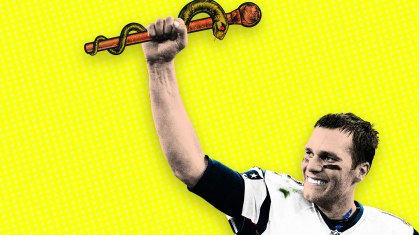
Whatever reasons Tom Brady might give for his key fumble in the closing minutes of Super Bowl LII, he won’t include his breakfast among them. The New England quarterback touts his TB12 Method through his book of the same name and he outlines his dozen guidelines for optimal performance. These include, supplements, stretches, and massage techniques, but the primary focus is on diet.

Brady emphasize foods that he calls “alkalizing,” “anti-inflammatory,” and which improve “muscle pliability.” He writes that certain meal selections lower his pH level, which in turn help with a range of ailments, from low energy to supple bones. However, a person cannot impact their pH balance through diet or anything else, nor would one want to. The lungs and kidneys maintain pH levels and the body deviates very little toward more acidic or more alkaline, instead permanently residing in a balanced, ideal range. In this sense, pH levels are somewhat akin to body temperature. There is little one can do to impact it, one should not be attempting to do so, and if it changes five percent in either direction, medical help should be sought.

Brady avoids alcohol, gluten, GMOs, high-fructose corn syrup, trans fats, sugar, artificial sweeteners, fruit juice, grain-based foods, jams, jellies, most cooking oils, frozen dinners, salty or sugary snacks, white potatoes, prepackaged condiments, flour, caffeine, and nightshade vegetables such as peppers, tomatoes, and eggplant. With a list that extensive, it doesn’t seem like there would be many grub options left, but he does profess his love for coconut oil and Himalayan pink salt, both New Age, alt-med darlings.

Clearly, some of this abstinence is good. Avoiding alcohol, trans fats, and excess sugar are to be applauded. But some items on his list are there because of unwarranted fears, specifically of GMOs and gluten. Moreover, some foods he eschews are good for health, such as the vegetables. The biggest point, though, is that whatever Brady is refraining from or indulging in, there’s no evidence that the diet does what he claims. It neither alkalizes the body nor improves muscle recovery.

One possibly-true-but-with-a-caveat claim is Brady’s insistence that his anti-inflammatory diet helps him stay injury free and recover quickly from a bruising corner blitz or a game played on three days’ rest. It is true that our cuisine choices can impact inflammation, but Brady’s diet is unnecessarily restrictive.

Before going further, let’s emphasize that there are two primary types of body inflammation. One is beneficial and assists the body’s immune system against viral and bacterial interlopers. As an example, the skin may redden as the body turns up the heat in order to fend off bacteria residing in an elbow scrape. Then there’s harmful inflammation, which occurs when the body’s inflammatory responses are overactive and which reduces a person’s ability to fight off invaders and disease.

Unlike our pH levels, there are ways to deal with harmful inflammation. These include regular exercise, maintaining a healthy weight, medicine, and, yes, diet. But anti-inflammatory regimens aren’t nearly as exclusionary as the one Brady is promoting. Per an article cited in PubMed, an effective anti-inflammatory diet would focus on omega-3 fatty acids and colorful, non-starchy vegetables, while eliminating Ding Dongs and the like. On another point, there’s no evidence that these diets boost athletic performance. The only post-exercise food options likely to speed recovery are getting adequate carbohydrates and protein.

Another tip Brady offers is drinking water equal to at least half one’s body weight in ounces per day. For instance, I weigh, well never mind, let’s just go with someone who weighs 180 pounds. That person, per Brady, should be drinking at least 90 ounces of water daily. He claims consuming less could lead to decreased oxygen in the bloodstream, more susceptibility to sunburn, toxin buildup in cells, and an undefined unpleasantness he calls an “unhealthy inner environment.” None of this has any scientific backing, nor does Brady attempt to cite any.

To state the obvious, humans need water, but let thirst be your guide on whether you should drink some. Our bodies maintain sufficient reserves of electrolytes and 538 journalist Christie Aschwanden quoted exercise scientist Tamara Hew-Butler, who said even an endurance athlete will have salts and minerals replaced with their next meal. There is no need for supplements or excess water consumption. She further said, “Even athletes taking part in ultramarathons should not drink beyond thirst, and supplemental sodium has been demonstrated to not be necessary during prolonged exercise even under hot conditions for up to 30 hours.” Besides, drinking extreme amounts of excess water can lead to hyponatremia, a potentially fatal condition.

As to the muscles claims, Gretchen Reynolds of The New York Times took these on. Brady’s idea is that muscles should be pliable for good health and prolonged athletic performance. He suggests less weight training in lieu of “targeted, deep-force muscle work,” which entails “focused massage and contracting of muscles, while also stretching and pummeling them, preferably with high-tech, vibrating foam rollers or vibrating spheres.”

There is no empirical evidence supporting this and Brady is not a subject matter expert with double blind studies and published papers to his name. There’s no more reason to believe his take on this than there would be to turn quarterbacking duties in the Super Bowl over to a kinesiology professor. Stuart Phillips holds just such a position at McMaster University and he said that soft muscles are sick ones, so Brady is not accomplishing what he thinks he is, nor would he want to.

Brady calls muscle pliability the name he and his body coach “give to the training regimen he and I do every day.” In other words, they made the term up and there is no science supporting the purported benefits they attribute to it. Indeed, Reynolds performed a PubMed search with the keywords muscle and pliability, and the only result was a study on the efficiency of various embalming techniques on corpses. Brady’s nutritional notions should likewise be considered dead on arrival.


“I Can’t Believe It’s Not Better” (Margarine fears)

FREDBUTTER

These days, it seems that even the most trivial item can become the object of an unwarranted freakout. This includes how we make our English muffins tastier, for a diatribe against margarine has made its way around the Internet. In addressing the faux yellow condiment, the message gets a few items right, but it mostly contains whoppers and misinformation.

It starts with the assertion that margarine was invented as a means to fatten turkeys, but that the concocted food caused the birds to die en masse. Hoping to recoup some of the money lost from the stricken livestock, the farmers added food coloring to the white substance and passed it off as butter to the unsuspecting masses.

In truth, margarine has nothing to do with turkey, or Turkey for that matter, but with France. Napoleon III offered a prize to anyone who could produce a viable, affordable butter substitute that could be consumed by peasants and soldiers. The winner was a mix of beef fat, saltwater, milk, and margaric acid, which gave the nascent substance its name. Today’s margarine is normally composed of refined vegetable oil, water, and sometimes milk.

I have written before that there is enough amazing about science that there’s no reason to make up cool stuff. For instance, humans having landed a probe on a comet is more captivating to me than is pursuing proof that some unknown critters constructed a face on Mars. In the same way, there is enough genuine ghastly gastroenterological unpleasantness that there is no need to fabricate any.

For example, trans fat is legitimately a food boogeyman that increases the chance of Alzheimer’s, cancer, diabetes, liver disorders, and much more. It was prevalent in margarine for years and were that still the norm rather than the exception, the railing against margarine would be justified.

But the key issue is how much trans fat margarine (or any other food) contains. Avoiding all margarine because of the trans fat issue would be like going naked because one dislikes hats. Many brands, including I Can’t Believe It’s Not Butter, no longer contain trans fat, and that’s usually the case for margarine that comes in tubs or in liquid form.

Another assertion from the screed is that butter has been around for centuries, whereas margarine has been around for less than 100 years. The math is off on that, as margarine dates to the 1860s. But the more relevant point is that how long something has been around is unrelated to its other attributes. Trying to score this as a point for butter over margarine is to commit the appeal to tradition fallacy.

The bulk of the rant is a series of unsubstantiated claims that are unsupported by any documentation, evidence, or studies. The claims include: Margarine triples the risk of coronary disease, quintuples the risk of cancer, increases bad cholesterol while lowering good cholesterol, lowers the quality of breast milk, decreases immune and insulin response, increases the risk of heart disease in women by more than 50 percent, and that eating butter increases the absorption of nutrients from other foods.

The claims against margarine would only be true if the specific brand is high in trans fat, and again, that would be true of any food. The boast about butter melts like, well, butter, when examined. Harriet Hall at Science-Based Medicine wrote, “Where did this claim come from? I found no evidence to support it. Perhaps they were thinking about the fact that some vitamins are fat-soluble, but that would apply to margarine as well as to butter.”

Another baseless assertion is that margarine will not attract flies because it has no nutritional value. Any food, by nature, has nutritional value, and while I doubt there is any data on whether winged pests cotton to vegetable oil spreads, I see no evidence for the assertion that they don’t. Feel free to conduct your own experiment and let me know the results.

Like other good fearmongering pieces, this one contains a dose of chemophobia, this time in the form of a caps-friendly alarm: “Margarine is but ONE MOLECULE away from being PLASTIC and shares 27 ingredients with PAINT.”

First, as Hall noted, this is false. She wrote, “Plastics are polymers and completely unrelated to anything in margarine. Paint doesn’t contain any of the ingredients in margarine.”

But even if true, this would be pointless anyway. Any change, not matter how small, in the chemical makeup of a substance can alter its safety, impact, and use. One oxygen atom is all that separates water from hydrogen peroxide, but this would not be a sound reason to drink the latter while using the former to disinfect a scraped finger.

“Empty premises” (Hollow Earth)

DIG

While Flat Earthers have welcomed the explosion in articles and videos espousing their cause in recent years, it undercuts their claim that a dangerous truth is being repressed. Logically, a repressed idea is one that is not being heard, which brings us to the idea of a hollow Earth.

There are websites and essays that tout this notion, but these receive a tiny fraction of the notice that those produced by Flat Earthers receive. The proposal has been around in various forms for millennium. Early hollow Earth enthusiasts idealized inhabitants as deeply evolved, supremely healthy beings who were peaceful, prosperous, and rippling with muscles. A few religious movements sprouted from this idea. These days, Earth’s insides are mostly thought to house some combination of superior 12-foot humanoids, wayward Greenlandic Vikings, immortal peace-lovers, the 10 Lost Tribes of Israel, and Third Reich leadership. Those peace-lovers have their work cut out for them if those last two groups are both present.

Those favoring a more rational approach engaged in genuine scientific pursuit to find out if Earth was hollow and at least two excursions were made in the spirit of exploration to try and find the entry point. Edmond Halley wondered if auroras were caused by a combination of ferrous matter and a supple magnetic pole. He pondered that an aurora could be caused by luminous gases spewing from a polar door. To explain anomalous compass readings, Halley also suspected Earth might have a hollow shell about 500 miles thick, followed by two inner concentric shells, then an innermost core.  

Such speculation was admirable, as was his method of using observation and testing using proper protocols. By employing these channels, he and later scientists learned such notions were incorrect, yet some hollow Earthers continue to cite Halley as a supposed proponent. This is what Steven Novella meant when he said that such groups use science like a drunk uses a lamppost: For support, not illumination. About a half century later, mathematician and physicist Leonhard Euler talked what would happen if one drilled a hole all the way through Earth and dropped a stone into the opening. He never said Earth was hollow; in fact, drilling all the way through would be unnecessary if it was. Yet he too is sometimes touted by hollow Earth proponents as a believer.

The idea of subterranean realms made appearances in various mythological and religious texts, with it sometimes being the destination of departed souls. Greeks, Celts, Hindus, Nordics, Tibetans, Jews, Mesopotamians, Native Americans, and Christians have all embraced this notion in some form. While the port of entry is usually near one or both poles, prospective entrances have been surmised in locales as diverse as the Amazon, the Himalayas, and downtown Paris. Through an unexplained mechanism, these portals open to enable travel between the inner and outer portions of our planet.

The most common hollow Earth hypothesis in the 19th Century was that we were the ones on the inside. Championed by Cyrus Teed, this idea held that all observed celestial bodies were inside Earth with us. He founded a religious movement based around the idea and sprinkled it with pseudoscientific guesses about light, gravity, and other natural phenomena.

Later, Nazis got in on the act, with Luftwaffe pilot Peter Bender devising another mystical movement whose tenets included a vacuous planet. There exist tiny pockets of both fascists and non-fascists who think Third Reich leaders escaped to these locales, usually aboard flying saucers.

The idea of us being on the outside is more attractive because getting to the other side would be much easier that way. So the concave planet has few adherents anymore and John Symmes was an early promoter of the reverse notion. He wanted to make a North Pole expedition to get inside but was unable to obtain funding. Jeremiah Reynolds did go on such a jaunt in the opposite direction, but if he found an Antarctic opening, he kept the location to himself.

While previous motivations were religion or idealism, those have largely been replaced with a 21st Century conspiratorial flavor. Now, an anonymous, malevolent “they” hides the hollow Earth truth from the populace, with a few brave rebels tirelessly trying to convince the sheeple.

There are a few exceptions. Dianne Robbins, whom I’ve previously profiled, sees inner Earth as a paradise populated by immortal, absolutely peaceful beings with whom she communicates telepathically. And on ourhollowearth.com, the site maintainer likewise considers our planet’s innards to be a terrestrial wonderland, in this case the place where the 10 Lost Tribes of Israel hang out. Tribe members are responsible for flying saucer sightings, as they leave their subterranean sanctuary to ward off dangers to Outer Earthlings.  

Among those who think these truths are being hidden rather than just not widely known, Raymond Bernard claims many early polar explorers were engaged in a secret mission to find these openings and reach the inhabitants. Fellow author Jan Lamprecht writes that evidence for a hollow Earth includes animal migration and early maps having been changed, which he thinks suggests subterfuge.

However, reasons to reject these hollow Earth hypotheses are found in evidence from seismic activity, gravity, and density. 

With regard to the first of those, the time it takes seismic waves to travel through and around Earth is inconsistent with an empty sphere. Such evidence shows Earth is filled first with solid rock, then liquid nickel-iron alloy, and finally solid nickel-iron.

As to the proof provided by gravity, massive objects tend to clump together and create solid objects like stars, satellites, and planets. Such a configuration is a way to reduce the gravitational potential energy of the object being formed. Additionally, ordinary matter is too weak to support a hollow planet against gravity’s ample force.

Finally, we consider density and that’s not a reference to hollow Earthers’ mental acumen. Based on the size of Earth and the force of gravity on its surface, the average density of the planet is 5.5 grams per cubic centimeter. However, densities of surface rocks are only half that. This is crucial because if any sizable chunk of Earth were hollow, its average density would be much less than what the density of its surface rocks is.

While doing background work and compiling my information for this post, I could find no proponents or websites extolling the concept of a flat, hollow Earth. Sounds like repression to me.


“The limit’s the sky” (Astrology)

STEWIE

In a piece this month for Quartz, Ida Benedetto outlined her case for giving astrology more respectability. To help with this venture, I can state that I knew pseudoscience would continue to thrive in 2018, so this is could be a point in favor of correct visions of the future.

Benedetto had two main points, both of which lean on the appeal to antiquity. Her first argument was to blame astrology’s tattered reputation on pop psychology, which she says permeates modern astrology. She lays into modern seers, writing that they rely too much on feel-good platitudes instead of that tough love from above approach she credits the ancients with. She wrote that texts from days of yore show that astrologers told it like it was, not how the customers wanted it to be.

As to the modern-day charlatans, Benedetto wrote, “The nurturing approach psychologists take has polluted modern astrology with watered-down interpretations that seek to protect their clients. Even if an astrological configuration spells trouble, the modern astrologer will describe it as an ‘opportunity for growth.’” Benedetto rejects horoscopes and astrological signs as counterfeit currency in the astrological bank.   

As to the good (really) old days, Benedetto writes that before the Common Era, “Astrology flourished alongside various sciences like mathematics, medicine, and engineering.” Here, she is trying to piggyback astrology on legitimate gains and is committing the division fallacy. This is where one asserts that if something is true for the whole, it must be true for all parts. In this case, Benedetto figures that since disciplines which benefit us today flourished in the Hellenistic period 2,300 years ago, astrology must also be of value since it likewise had its heyday during this place and time.

During that era, Benedetto wrote, “Astrologers based their interpretations on centuries of observations recorded by the Mesopotamians who came before them. They kept careful records of astronomical phenomenon, looking for correlations between what happened in the sky above them and the material world around them.”

However, Steven Novella called this an instance of Tooth Fairy Science. This refers to research done on a topic before that topic has been shown to exist. Novella wrote, “If you carefully documented the amount, denomination, and timing of money left in exchange for children’s teeth, and correlated that information with all sorts of demographic variables, you might create a convincing imitation of doing real science, but none of that data would actually test the underlying premise: Is the Tooth Fairy real?”

“Likewise,” Novella continued, “documenting the position of the stars and planets and then correlating those positions with events on Earth is not science. This type of observational behavior is not capable of asking the important underlying question of if there is a causal relationship between what is observed in the sky and events on Earth.”

To do that, one would need to test a hypothesis through the Scientific Method. That would entail, at a minimum, making an observation, then a prediction, followed by testing it, trying to falsify it, attempting to replicate it, then making one’s data available to other scientists and submitting the findings and methods for peer review.

Novella further wrote that holding ancient wisdom in unjustifiably high esteem serves to minimize the efforts and accomplishments of the visionaries, inventors, and discoverers who have contributed to the wonders of the last thousand years. Persons who have this reverence possess it selectively. Benedetto composed her essay on a word processor and posted it on the Internet, rather than chiseling it on clay tablets and transporting it by donkey.

In this non-equine delivered piece, she claimed, “If we can set modern judgments aside and learn the language of the ancient astrologers we may discover lost insights.” In other words, it’s our fault for being closed-minded, not astrology’s fault for being without a plausible mechanism.

And the truth is the same now as it was in the Hellenistic period. Neither astronomers nor astrologers have uncovered empirical evidence that the positions of stellar bodies impacts Earthly events, other than the comet that obliterated the dinosaurs.

“Vanilla fudge” (Racist anthropology)

WHITEGIANTS

When I hear someone complain about having to press ‘1’ for English, I can’t help but wonder how the Cherokee and Choctaw feel about having to do it. The irony is that those who fear immigrants taking over are descended from the only immigrants who did come here and seize control of the land and culture. This made it possible for their descendants to become the majority, albeit one that is still subject to indignities like button-pushing.

To deal with the issue of other peoples having gotten here first, some on the far right have embraced concocted tales that Native Americans were preceded by a still earlier band of pale faces. There have been tales of lost tribes and civilizations for a very long time, with Atlantis, Mu, and Thule among the better known. Likewise, there have been genuine lost peoples, such as the Roanoke colonists and Mayans. But our focus here is on only peoples that are both mythical and embraced by the far right to further their agenda.

Getting a jump start on this mindset by nearly two centuries was President Andrew Jackson. In an article on the Southern Poverty Law Center website, Alexander Zaitchik wrote that Jackson defended the relocation and massacre of Native Americans in part because he was convinced the Indians had previously massacred whites. He called the latter “a once-powerful race” that had been done in by “savage tribes.” Jackson likely got this notion from an idea popular at the time, that majestic Caucasian architects had built the large mounds and earthen structures that then dotted North America.

Around the same time, the Book of Mormon likewise promoted the idea that the light-skinned had gotten here first and were responsible for the major technological advances. These ideas mostly center on inhabitants of early North America since that’s the territory the far right is seeking to claim as theirs by ancient birthright. However, there are a few exceptions, such as online writer Patrick Chouinard, who claims that the elongated skulls of Peru belonged to Nordic supermen with massive brains.

Some of the more religiously oriented among the far right assert that the Nephilim giants in Genesis were an early Aryan race, possibly the offspring of demigods and human women. Another favorite tale is that Nazi scientists, being brilliant and all, concocted a type of flying saucer and escaped Europe to take residence in subterranean Antarctica. The fact that our history books are silent on mound builders, Lamanites, and fascists cavorting with penguins is proof of a cover-up, usually perpetrated by or for Jews.

The most prominent proponent of these alternative archeologies and histories were the Nazis. While they didn’t invent the concept of an exalted, pure Aryan race which deserved restoration to glory, they promoted it more than any other group before or since. The Third Reich version was tweaked so that Pan-Germanism became a more relevant factor than skin color and Heinrich Himmler founded the Ahnenerbe, whose goal was to document Aryans’ archeological and cultural histories. The Nazis’ most blatant attempt to take what they thought was theirs was when they thieved the swastika from ancient eastern religions. They claimed they were only reclaiming it because the symbol had been ­­­­brought to those cultures by a conquering Aryan people.

While their motivations are worse than pseudo-archeologists of the ancient alien and creationist persuasions, proponents of an ancient white North American people use the same tactics.

They inte­rpret paintings and pottery as historical documentation rather than something created in the mind of an artist. They consider similar imagery in more than one place as evidence that one influenced the other. Perhaps most important, they pre-determine what evidence will mean, then finagle found artifacts and discovered sites to support that “conclusion.” And authors ship those findings to a sympathetic website in search of a glowing endorsement rather than to a scientific journal looking for peer review. And the reason given for not submitting for peer review is that that the establishment is against them and the findings would be repressed.

Even if the far right is correct about North America’s anthropological history, who’s to say there wasn’t an ever earlier group of people with large doses of melanin which preceded the Nordic super race? Besides, if Nordics were here first, that means we should be pressing ‘1’ for Old Saxon.

“Big Farma” (Lysenkoism)

LYS

In the United States, opponents of evolutionary biology education generally limit themselves to trying to sneak Jesus in the back school door while ushering out Darwin. But in the Soviet Union, opponents of the theory added mass murder to their arsenal.

During Stalin’s reign, Trofim Lynseko attempted a highly idiosyncratic and untenable reworking of biology, especially the tenets espoused by Darwin and Mendel. The most basic point of Lysenkoism was that an organism’s acquired characteristics could be inherited. He also felt this could be manipulated, so that plants could be conditioned to acquire desirable traits and pass those onto succeeding generations. But this would be like saying mice could have their tails sliced off and, if this mutilation was done under the right conditions and in the right environment, the offspring of those mice would be without the appendage. The idea doesn’t work any better with plants.

In an article on Lysenkosim, The Atlantic’s Sam Kean wrote that genetics teaches that plants and animals have stable characteristics, encoded as genes, which are passed to the next generation. Lysenko loathed this idea because he felt it denied all capacity for change. Marxists liked the idea of heredity having a limited role because that would mean any characteristics gained by living under communism could be inherited by succeeding generations. Of course, all this is the appeal to consequences fallacy and has no bearing on whether what was taught about genetics was true.

For his competing viewpoint, Lysenko decreed that if plants were placed in the proper setting and exposed to the right stimuli, they could be improved and pass those traits on. He rejected both natural selection and Mendelian inheritance, going so far as to dismiss the notion of genes. Soviet leaders found it attractive to have a homegrown peasant to counter Darwin, so Stalin put Lysenko in charge of the county’s farms, where he was content to attempt practical application of his ideas rather than subject them to experiment and scrutiny.

Lysenko’s notions fit in well with forced collectivist agriculture. He was able to force the farmers to participate in his experiments, which were intended to increase crop yields but which ended up exacerbating a famine. Lysenko made farmers plant seeds close together since his belief was that plants from the same class would never compete with each other. He also had bizarre practices like soaking crops in freezing water, thinking positive traits would result and be passed on ad infinitum. Additionally, he forbid the use of fertilizers and pesticides. These terrible ideas led to most of the planted food dying or rotting.

Farmers and biologists who objected were fired, sent to the gulag, or executed, a policy that makes Ken Ham’s anti-science positions seem almost reasonable. Lysenko fell out of favor and power with Stalin’s death and he remained a footnote a historical footnote for decades.

But like the flat Earth, reports of Lysnekoism’s demise have been greatly exaggerated. It has zombified and is once again infesting the scientific landscape. That these issues have gained hold again staggers belief. At the same time, even if 100 percent of the population were scientifically literate, scientific literacy would still be one generation away from potential extinction. For some persons, being iconoclastic is more important than being right.

The resurgence of Lysenkoism has been fueled by a combination of nationalism, anti-Western sentiment, and unofficial endorsement by the Russian Orthodox Church. There is an attempt to cloak the resurgence with a veneer of scientific legitimacy by piggybacking on the burgeoning epigenetics field, which studies environmental influences on gene expression and phenotype. Epigenetic factors can help shape an organism to its current environment and it’s possible for these factors to be inherited. For example, a wheat crop that has the ability to fight drought may have this property manifest if that condition occurs. However, the parent crops always had those traits, meaning epigenetics does not teach that acquired characteristics are inherited. Moreover, epigenetics centers on the work of genes, which Lysenko explicitly rejected.

The other reason some Russians are embracing Lysenko is because they have an anti-intellectual and paranoid mindset that sees malevolence behind space programs, vaccines, and genetic modification. In this case, that paranoia is combined with anti-Western sensibilities and serves as another way of coping with Cold War defeat.

“Dead with the water” (Raw water)

WATER

Anti-vaxxers may soon be challenged in their role as the most prominent spreader of preventable diseases. Another science-challenged trend focuses on what adherents call raw water. It is based on the idea that any treatment of H2O is detrimental and that water should be consumed untreated, unsterilized, and unfiltered. And if you don’t live near a river or stream, companies like Live Water and Tourmaline Spring will deliver raw water to you.

The trend is driven in part by distrust of tap water, particularly its fluoridation and the lead pipes which deliver some of it. Proponents also contend that filtration removes beneficial minerals.

The lead pipe issue is the one concern grounded in reality. Flint, Mich., is the most hideous example of what can happen if the problem is inadequately addressed. But better regulation and bottled water would fix this, while raw water would not. Another concern is that water treatment facilities are unable to remove all trace pharmaceuticals, but these levels are so low as to be innocuous. And even if they did pose a danger, that hazard would not be alleviated by raw water, which by nature goes through no treatment process.

Besides these deficiencies, raw water claims are awash, so to speak, in the appeal to nature and antiquity fallacies. The Live Water website boasts, “Earth constantly offers the purest substance on the planet as spring water. We celebrate this ancient life source that humanity flourished from, since the beginning of our existence. We trust it’s perfect just the way it is.”  

The website also recommends consuming the product within one lunar cycle of having purchased it. This is more appeal to nature, for even if drinking the water within 29.5 days was optimal, the company could just say that rather than mentioning the moon and pandering to the nature crowd.

Singh acknowledges that reverse osmosis gets rid of most of the nasty stuff in water, but says it also makes the water “dead.” He fails to explain precisely what that means, but seems to allude that the process robs water of probiotics and beneficial bacteria. He likewise asserts that this good bacteria will kill its bad counterpart. It’s true that good bacteria sometimes vanquishes the bad, but there’s no evidence this is occurring in the raw water being peddled. Besides, bad bacteria is already filtered out in the treated and bottled water Singh is campaigning against.

Which leads to the issue of ingesting harmful bacteria. Drinking raw water could be your chance to be on TV, specifically Monsters Inside Me. Waterborne disease is still rife in some places. Giardia, amoebic dysentery, cholera, hepatitis A, salmonella, shigella, and e. coli caused many deaths before the advent of sewage and water treatment systems. These tragedies continue in the Third World, with its abundant supply of natural, raw water.

Singh and other advocates are correct when they say customers might get more minerals from their product, but those minerals may include arsenic. Flowing spring water, while appearing pristine and pure, will contain animal feces and possibly deadly microbes. Therefore, disinfecting this water if planning to drink it is crucial to preventing the spread of dangerous viruses, bacteria, and parasites. Drinking water in the wild should only be done in a last-ditch effort to avoid dehydration and if doing so, the CDC recommends boiling it first, or if that’s impossible, chemically treating and filtering it.  

Since Singh and other enthusiasts appeal to antiquity, allow me to point out that civilizations have been trying to clean their water for 3,500 years. For instance, the Egyptians and Greeks used charcoal, sunlight, boiling, and straining to try and filter out impurities. Fast forward a few millennium and by the early 20th Century, public water utilities were removing disease-causing microbes via chlorine disinfection. This helped to substantially reduce instances of typhoid and cholera.

While apparently being OK with cholera-causing bacteria in his drinking water, Singh draws the line at fluoride. He asserts without evidence that fluoridation is designed not to fight tooth day, but to accelerate brain decay. Sing told The New York Times, “Call me a conspiracy theorist, but it’s a mind-control drug that has no benefit to our dental health.” I won’t bother calling him a conspiracy theorist since he took care of that himself. But I will call him the latest in a sad line of anti-science lowlifes that threaten to reverse centuries of progress and knowledge.


“Code violation” (Voynich manuscript)

KLINGHOB

The Voynich manuscript is a book with lavish illustrations, beautiful calligraphy, and not one word that has made sense to anyone since the 1400s, if then. Its 240 pages are written in an alphabet and language unknown to ever exist anywhere outside its pages.

The book is also noted for its detailed drawings of plants and flowers which nobody has been able to identify and which likely arose from the author’s imagination. The work additionally features astrological drawings, circular and concentric diagrams, and sketches of naked women dancing poolside.

As to what it all means, there have been many hypotheses, none convincing. My impromptu idea of it being an early version of wingdings, a notion that came to me while writing this sentence, has about as much validity as some of the speculations.

Many persons believe it’s written in code, but efforts to decipher it have failed. Some think it’s an artificial language, which is one that is deliberately created in a relatively short time by a few people, rather than evolving from a parent language over centuries while borrowing from other tongues. Examples of constructed languages include Esperanto, Klingon, and Tolkien’s Elvish vocabulary. This idea seems the most likely to me, but it raises the question as to the purpose behind producing it. Esperanto’s creator said his goal was to enable communication between persons of any nationality. Klingon and Middle Earth speak are appealing to specific geek categories. But the incentive behind artificially constructing the Voynich language, if that’s what was done, is long lost to history.

Some have speculated the manuscript is meant to be used with a Cardan Grille, a hole-filled paper the reader uses as an overlay to reveal the letters meant to be read. However, this is very unlikely, as none of the letters have ever been shown to be anything other than an invention of the author.

Since the pages feature no edit marks or corrections, many assume the Voynich manuscript is a copy or a final revision. This seems logical, but there could be another reason for the lack of editing: An author writing in a language that didn’t exist would be incapable of grammatical errors.

Whatever it means, if anything, it was likely written by an accomplished linguist. Extensive computational analysis has been repeatedly performed and the manuscript has been compared to many languages. No translation has resulted, but researchers have deduced that letter frequency, word frequency, and word length are all similar to verified languages. Further, patterns of word usage and word relationships unique to each of the manuscript’s six sections have been detected.

One nefarious possibility is that whoever wrote the manuscript had the same incentive as did Joseph Smith when translating golden plates, Catholic priests when speaking Latin to parishioners who couldn’t understand it, and psychics relating their vision. In these cases, the speakers are the only ones who know what they are revealing, so they can never be disproven. They have secret knowledge that only they can impart, interpret, and explain – all for a price. Similarly, the Voynich author may have used his work in an attempt to demonstrate that he alone possessed valuable insight that could be shared in return for glory, gold coins, and an exalted position.

This fall, artist and historian Nicholas Gibbs made the latest claim that purported to solve the mystery, though really he just sought to replace one mystery with another. He asserted that each letter in the manuscript is an abbreviation. Exactly what each letter is supposed to be short for is unexplained, except for two lines he allegedly translated. 

His conclusion falls flat upon cursory scrutiny. First, there is no peer review. Gibbs presented his solution not to a linguistics journal, but as a guest piece in the Times Literary Supplement. Bypassing peer review and takings one’s claims straight to the public is a pseudoscience giveaway.

Second, Gibbs wrote that he was tasked to concoct a solution by a television network (unnamed, but likely the “History” Channel). This means that his conclusion was the result of solo work done in a relatively short period, rather than being the culmination of lengthy scholarly study and corroboration with experts in linguistics and anthropology.   

There is another reason to doubt his conclusions. One would be hard-pressed to imagine a writer penning a book that no one could ever read. Even the author himself could forget what each letter was supposed to stand for. And as we saw earlier, the fabricated language of the Voynich manuscript features letter frequency, word length, and word frequency that are similar to known languages. These distinctions would be extraordinarily unlikely to have resulted if the work was what Gibbs described.

Next, he purports these abbreviations are code talk for medicinal recipes, yet he “decodes” just .001 percent of the text. And his interpretation is likely the result of having seen drawings of plants rather than his having thoughtfully analyzed the text.

Finally, while these “decoded” lines are supposedly herbal cures, Gibbs offered no translation for any words in the manuscript to represent illnesses or plants. His explanation for this is that there was an index where this information was included, but that the index has been lost. Joseph Smith would be proud.

“A suspicion of clouds” (Chemtrails, climate change denial)

CHEMGRAM

The rejection of science fact and the embrace of science fiction is perhaps best encapsulated by those persons who think manmade climate change is a hoax while believing that chemtrails are real.

First, let’s deal with anthropogenic global warming. I have seen Sean Hannity and others challenge climate change believers on exactly what percentage of global warming it is that humans are responsible for. While not responding directly to that challenge, Brian Dunning penned an excellent piece for Skeptoid which showed how simple observation reveals that average annual global temperature is rising and that human activity is the overwhelming reason why. He noted this can be done without use of “climate models, politics, predictions, economics, or how many scientists agree.”

The key point is that CO2 levels are rising as the result of human activity. From here, it gets a little more technical, but stay with me. Carbon dating is done by comparing the amounts of carbon-12 and carbon-14 in a sample. When organisms die, carbon-14 decays and no new carbon-14 comes in. This means eventually only carbon-12 remains. Fossil fuels come from plants that died millions of years ago so they have no carbon-14. Hence, the CO2 produced by burning fossil fuels contains only carbon-12.

The one natural source of carbon-12 is volcanoes and volcanologists measure their output and know that each year, worldwide volcanic activity contributes about 200 million tons of CO2 to the atmosphere. This accounts for .006 percent of the 29 billion tons of carbon-12 that enters our atmosphere each year. The only source for the other 99.994 percent is fossil fuel burned by humans. So when observers carbon date the CO2 in the atmosphere, it reveals precisely how much of it comes from people burning fossil fuels. Oceans and plants can only absorb about half of that 29 billion tons, with the rest ending up on our atmosphere, where it remains.

Now we will address how we know that those 14.5 billion tons of carbon-12 is causing an increase in average global temperature. There are five gases that are primarily responsible for the greenhouse effect: CO2, methane, water vapor, nitrous oxide, and ozone. Through a method called spectroscopy, observers can measure how much of these are present. Earth’s surface is warmed by the sun and our planet emits that same heat back as infrared radiation. When aiming a spectrometer skyward, observers see peaks and valleys in the infrared spectrum and can determine which greenhouse gases are trapping Earth’s radioactive heat. This method provides clear evidence that excess heat energy is being trapped in our atmosphere because of increased CO2, which we saw earlier is the result of humans burning fossil fuels.

Those who dismiss AGW are denying what scientists are able to see through their analysis of carbon dating and spectroscopy. Meanwhile, some of those same persons say that what is really dangerous for the planet and its inhabitants are strings of fluffy white smoke.

They are convinced that harmless water vapor left in the wake of flying aircraft is a weaponized agent that will do something nefarious, though it’s not agreed on precisely what that is. Speculation includes poisoning, sterilization, mind control, and unleashing tornadoes. Believers will often point to geoengineering, cloud seeding, or attempts to control the weather, all of which have happened, but are unrelated to airplane exhaust. All this was explained in a pair of Washington Post essays by Matthew Cappucci and Dennis Mersereau.

Like the current warming trend, contrails are man-made. They are clouds that form under ordinary environmental conditions and follow the physical processes that occur with any other cloud. In the specific case of contrails, they form when hot, moist aircraft exhaust condenses after coming into contract with extremely cold temperatures in the upper atmosphere. A long, narrow cloud results.    

There is usually little water vapor present because air’s ability to hold moisture wanes as the temperature drops, and temperatures at this altitude are around minus -40 Fahrenheit (which is also -40 Celsius, I’ve always liked that). Cappucci wrote that despite those frigid numbers, water vapor remains a gas or liquid and does not become ice because water must have something to latch onto in order to become an ice crystal. He further explained, “When the airplanes emit aerosols, sulfates, soot, carbon dioxide, hydrocarbons, water vapor, and so on, the particles in its wake can serve as the nuclei for cooled water droplets and vapor to condense and freeze on,” and a contrail is born.

There is variety in the contrail family and some paranoids say these differences distinguish contrails from chemtrails. Believers concede that some airplane exhaust is harmless but insist that at other times airplane emissions represent the deliberate sabotaging of our lungs and minds. As this has zero evidence in reality, there are differing assertions as to which is the key factor that gives away chemtrails. Some say duration determines it, some say thickness, and others go with color. But science explains why all these ideas are mistaken.

Altitude and the air’s wetness determine how long contrails are. If an airplane is flying through wet air, it leaves a contrail; if it is flying in dry air, it does not. Airplanes that appear to be at the same height from ground level may actually be 5,000 feet or more apart in terms of altitude. Chemtrail detectives love to show an airplane leaving little or no contrail, while another plane in the same frame is bellowing out a lengthy cloud, but this is the result of altitude and air conditions, not because government agents are dispatching death from above.

With regard to duration, how long contrails last depends on the humidity level and how favorable the atmosphere is for sustaining them. These are the same factors that help determine whether a day is cloudy or sunny.  

As for their color, the key elements are the contrails’ height and the planet’s curvature (convincing Flat Earth chemtrailers is an especially challenging undertaking). Contrails are dispatched at nearly 40,000 feet and when natural clouds closer to the ground look dark in the waning daylight, contrails will still glow for a few minutes after sundown. Also, when an airplane flies directly away from a setting or rising sun, a contrail may block out much of the sun and this gives the contrail a blackened appearance.

Another reason to discount the chemtrails conspiracy theory relates to an airplane’s travel weight. Mersereau noted that a fully-loaded 747 flying from London to Hong Kong would require almost 60,000 gallons of fuel. That would weigh nearly 200 tons and along with passengers, cargo, and luggage, would leave precious little room for weapons in a mind control program.

As to all this, one Post reader umed, “What a joke. Our government has been involved in weather modification since the 1940s. Do a little research.”

The U.S. government may have made previous attempts at weather modification but there is no connection between that and airplane exhaust. And by research, the reader does not mean retreating to one’s laboratory, employing the Scientific Method, and submitting results for peer review. He is talking about clicking on the YouTube link he provided.