“Zeus juice” (Super-fruit drinks)

Super hero juice smoothies green in cartoon table

There are any number of delicious, nutritious fruit drinks available, the most ubiquitous being a breakfast staple squeezed from oranges. There is also grape juice, apple juice, and similar citrus choices.

But what marketers call super-fruit juices claim their products are loaded with antioxidants, which fight the free radicals that cause aging. Briefly, free radicals are molecules with an unpaired electron, a distinction allows them to cling to a good molecule and oxidize it. This equates to an attack on a cell and leads to age-related diseases.

Antioxidants, then, are touted as allies in our battle for better health. However, the oxidation caused by free radicals also comes with benefits, such as converting fat into energy and attacking harmful bacteria.

Sketoid’s Brian Dunning noted that since disease-fighting is one of the keystone features of medicine, there have been decades of rigorous research into antioxidants. If we condensed what could literally be a mountain of papers into one sentence, we would arrive at this: A certain level of antioxidants is good, but too much is bad; more significantly, the source of the antioxidant is more important than the amount.

Dunning wrote that the “primary phytochemicals that deliver antioxidants to the body are vitamin C, vitamin E, and beta-carotene. For the super-fruit juices to fulfill their claims, they would have to contain large amounts of these vitamins.”

We have long known that regular consumption of fruits and vegetables lowers the risk of cardiovascular disease and some cancers. But as to whether supplementing fruits and veggies with antioxidants is of added benefit, the research so far shows a negligible impact at best and a detriment at worst.

Dunning noted that the American Heart Association evaluated five studies of putative super-fruit juices for their ability to combat cardiovascular disease. Of the five studies, two showed the antioxidant increase yielded no difference, and three revealed a negative impact. But even if the antioxidant overload were beneficial, the amount their products contain is exaggerated by super-fruit aficionados.

The Australian Consumers Association publication Choice studied every super-fruit juice it could find. Researchers tested them for total antioxidant capacity, a step conspicuously missed by those who sell the products and attach grand claims to them.

As a baseline, Choice measured the total antioxidant capacity of a Delicious apple. Juices from alleged super-fruits such as goji, mangosteen, noni, and açai all had from between nine to 34 percent of the antioxidant content that an apple did.

Fruits that are common – and therefore less exciting to the alternative medicine crowd – like oranges, strawberries, and blueberries contained more antioxidants than the apple.

Yet super-fruit marketers assert that a goji has 10 times the antioxidant capacity as an apple, an açai six times as much, and so on. And this is true, as it relates to the fruit. But most of those antioxidants are in the rind. Once a goji is converted to a juice, it goes from having about 10 times as many antioxidants as an apple to about one-tenth as much. So if wanting antioxidants, go with the fruit, not the juice. But also remember that an anti-oxidant overdose will create more health issues than it eliminates.

An apple a day won’t necessarily keep the doctor away. But chomping a Granny Smith or Honeycrisp is better for your physical and fiscal health than chugging a liquefied gumbo of gogi, noni, and açai berries.

“Radiating optimism” (Healthful radiation)

RADIO

There are radiation horror stories centering on Hiroshima, Chernobyl, and Fukushima. However, there are also mundane matters like radioactive potassium occurring naturally in bananas and potatoes, among other edibles. There’s no way to avoid all radiation since we are exposed to it from our bodies – a disconcerting thought since doctors know ionizing radiation can damage and mutate DNA, which sometimes leads to cancer.

But like so much else, dose is the key. There is exposure in the form of dental and other X-ray exams that contribute to one’s overall better health. The same is true with a full-body CT scan. The Health Physics Society has established safety levels for radiation but cautions these amounts are just educated guesses. From the Society: “There is considerable uncertainty associated with the estimation of risk from relatively low doses.”

Depending on the amount, length, and frequency of exposure, there may be a risk from certain types of radiation, or maybe there isn’t. Dr. Harriet Hall wrote that in some cases, the risk is so low that tens of millions of people would have to be studied “to overcome the signal-to-noise ratio in the data, and the risk is confounded by varying background levels of radiation and other factors.” In short, there’s no practical way to study this issue completely.

While we can’t know for sure the danger levels for all types, there is no reason to assert that low-level radiation is beneficial, an idea championed by some and based on the notion of hormesis. According to the National Center for Biotechnology Information website, “Hormesis is a term used by toxicologists to refer to a biphasic dose response to an environmental agent characterized by a low dose stimulation or beneficial effect and a high dose inhibitory or toxic effect.” In other words, a little can be good, too much can be bad or even fatal. For example, two Advil will help you recover while you lie on your back, while two bottles of Advil will put you on your back permanently.

Some proponents claim that low doses of radiation can kickstart DNA repair and make the recipient healthier. One such believer, T.D. Luckey writes, “Hormesis is the stimulation of any system by low doses of any agent. Large and small doses of most agents elicit opposite responses. A wealth of data presents irrefutable evidence of the benefits that radiation provides for a great variety of organisms: Decreased infections, decreased cancer death rates, increased fecundity and average lifespan in humans.” Luckey attributes these abilities to biological stimulation and suppression of genes, enzymes and other proteins that indicate an activated immune system. He insists there is evidence that ionizing radiation is essential for life.

However, in an article for Human and Experimental Toxicology, Kirk Kitchin and Wanzer Drane criticize the use of hormesis to assess risk/benefit ratios. For starters, they point out that hormetic dose response curves are mostly unknown. (The dose-response relationship refers to the risk of a defined outcome produced by the amount given and the level of exposure).

Second, the duo caution there is the chance of a random occurrence of hormesis, bedsides there being a little data on hormesis’ repeatability. There is also the possibility of post hoc reasoning, and the chance that hormesis represent the total of many different mechanisms and multiple dose-response curves – some beneficial, some negligible, and some toxic. In short, we are unsure if intentional exposure to low doses of radiation may carry benefit, but there is insufficient reason to assert this, and there could be a great danger in being wrong.

“Netflix and shrill” (13 Reasons Why)

TAPE

13 Reasons Why centers on the suicide of a high school girl who leaves behind cassettes for friends, enemies, and frenemies that outline her motivation for taking her life. 13 Reasons Why could also refer to the number of justifications there are for rejecting claims that the show has led to a nearly 30-percent increase in real-life suicides.

The program has been a flashpoint from its inception. When 13 Reasons Why debuted, the National Association of School Psychologists used the occasion to caution that being exposed to graphic accounts of death can be a factor in pushing a troubled youth to end it all.

Now, a research team has announced a study that purportedly found a connection between the Netflix offering and teen self-harm. It notes that suicides spiked in the months after 13 Reasons Why began airing. The Dallas Morning News declared this sufficient reason to drop the show. Meanwhile, The Daily Mirror blamed the program for a British pre-teen’s suicide, and other reputable publications have reached similar conclusions.

It’s true there was a rise in teen suicides in the month following the first airing. However, researchers offer no proof that the teenagers had watched it, knew about it, or offed themselves because of it. It was just textbook post hoc reasoning unbacked by supporting evidence. The same scenario unfolded in 1993 when detractors blamed Beavis & Butt-Head for a fatal fire started by a preschooler, only to learn later learned that the accidental arsonist lived in a home that had no cable or satellite television.

Moreover, while the month immediately following the release of 13 Reasons Why experienced an uptick in teen suicide, the month before that did as well. To dance around this, one researcher offered an ad hoc hypothesis that this was due to the show’s trailer being released that month. This is another instance of the researchers committing a basic correlation/causation error that is unbecoming of someone doing what they do for a living.

Writing for Reason, Robby Soave raised the key point that the rise was only taking place among boys, whereas studies consistently indicate that suicide contagion primarily impacts those who feel empathy with and identify with a previous suicide victim. Since 13 Reasons Why focuses on a girl’s suicide, this makes the chance of a connection even more remote, as does the stagnation in suicide rates of teen girls during the show’s run.

Writer Daniel Bier chastises the researchers for merely counting “the months that suicides went up, even when there is half a year between them and no logical basis for attributing the increases in June and December to the TV show released in April.” He also noted that similar jumps occurred during various months in the years before 13 Reasons Why began airing. Failing to consider this and control for it shows either extreme laziness on the part of the researchers, or it reveals their  predetermined agenda.

I suspect the latter, and the researchers likely betrayed this agenda when they wrote, “There is no discernible public health benefit associated with viewing the series.” This opinion, of course, has no bearing on whether Netflix can be fairly blamed for anyone ending it all. Besides, if the show had that the impact the researches claim, the suicide rate of viewers, especially females, would be much higher than it is. But they aren’t ending it all at an alarming rate for the same reason that Forensic Files doesn’t turn its fans into serial killers.


“Salt and vinegar drips” (Homemade herbicide)

WEED

A couple of years ago, my lawn mower was stolen, and the thief also made off with my Weedeater and hedge clippers. I bought a second-hand mower that was way worse than second-rate and it was soon taking up valuable shed space while no longer functioning. I followed with a new mower, which inexplicably conked out after two months. A repair got me precisely one more mow before the revolving blade machine failed again. I have taken to scavenging for neighborhoods kids and inquiring about goat rentals to keep our yard from resembling a swamp and having the city called on us.

So I have no time for concern about additional weeds on my property, but if that luxury ever develops, a safe, three-ingredient remedy has been touted on the Internet. This frequently-shared meme promises miraculous results from an amalgam of vinegar, Epsom salt, and dish detergent.

Advocates crow about the homemade product’s near-instantaneousness. Just as digital cameras rendered dark rooms obsolete, this can-have-it-all-now herbicide is said to vanquish vicious vines, dastardly dandelions, and gnarly grass on the same day a homeowner applies the weed killer.

While the claim is strictly true, it comes with a substantial caveat. Just like a deciduous tree that sheds its leaves or a perennial flower that withers in winter, the weeds remain a living organism that will return.

When a yard worker applies a genuine weed killer – i.e., a product made for that purpose – the leaves and stems absorb the ingredients and carry them to the plant’s roots. This results in the weed being executed, not in it being temporarily inconvenienced. The vinegar-Epsom salt-dish detergent lacks this ability and is capable only of choking out top growth. If the weed is perennial or has an extensive root system, it will rebound to annoy again.

Some proponents tout the homemade concoction as being more environmentally friendly than store-bought herbicides, but this is a misnomer.

Writing for Southern Living, Steve Bender notes that household white vinegar contains five percent acetic acid, which draws out the moisture from stems and leaves and immediately turns them brown. The roots, however, are never impacted. The homemade remedy only works on shallow annual weeds incapable of having their foliage torched. To kill perennial weeds with vinegar, one would need to apply horticultural vinegar, which has four times the acetic acid of its household counterpart.

There are multiple issues with this approach. First, the vinegar is an equal-opportunity killer and will zap any plant it comes into contact with, not just the ones you want gone. It will also take out worms and microbes that benefit the soil. Additionally, if used to eradicate weeds sprouting through the sidewalk or driveway, the acidic vinegar acid will begin to break down the concrete. Also, it can be detrimental to humans in the form of blistering skin and eye damage.

As to Epsom salt, it includes two essential plant nutrients, magnesium and sulfur, both of which promote plant growth, not stifle it. Using the salt as weed killer is counterproductive.

The third ingredient in this supposed herbicidal maniac, liquid detergent, serves to reduce the surface tension of a liquid into which it is dissolves. This makes sense and works great when the liquid is dishwater being used to clean up after a yummy helping of grilled cheese and French fries.

When applied as part of a putative weed whacker, it does help the other ingredients coalesce, but again, the final result is futile. Moreover, the detergent can dry foliage and might burn if applied in hot sun, so there’s a remote chance of an unplanned fire.

So after a day of gardening, add some vinegar to your chili, use dish detergent to clean the bowl that housed it, and sprinkle your bathwater with Epsom salt. But leave the weed killing to products designed for that purpose.


“Ship of ghouls” (Mary Celeste)

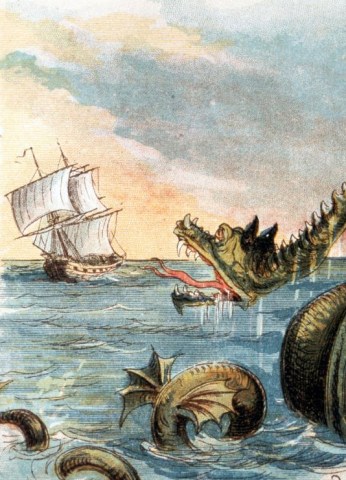
SEA MONSTER

In 1872, Capt. David Morehouse of the ship Dei Gratia found the Mary Celeste adrift in the Atlantic Ocean, in excellent shape but with nobody aboard. The Mary Celeste came with a rowboat capable of being rigged for sailing and it was gone.

Mary Celeste’s part-owner, Capt. Benjamin Briggs, was joined by his wife, infant daughter, and seven sailors when the group left from New York City for Genoa. With them were a liquid cargo of 1,701 wooden barrels of pure grain alcohol whose future mission was to fortify Italian wines.

The voyage was relatively uneventful according to Briggs’ log entries, and the group enjoyed ideal weather. There was a significant amount of water in the bilge and cabins of the ship when it was discovered, but this was consistent with a ship that had been sailing for at least 10 days with open hatches and an opened skylight.

Even in the 19th Century, unfounded conspiracy theories could arise around a bizarre event. There were reasonable suspicions about insurance fraud or pirates, as well as more macabre ideas centering on a mass murder-suicide, then there were notions such as ghost ships, a slithering sea serpent, or a mini-rapture.

Investigators quickly dismissed the idea of a violent end on the Mary Celeste because of the ship’s pristine nature and because many valuables remained. Insurance fraud on the part of the owner was likewise ruled out due to lack of evidence.

Another idea was that the captain, family, and crew abandoned the Mary Celeste because of pump congestion and instrument malfunction. Since investigators found the pump disassembled on deck, they surmised the crew may have been attempting to decongest it.

Natural disasters proffered as explanations included a displaced iceberg or a seaquake. However, hydrographical evidence suggests that an iceberg drifting so far south was improbable, besides no other ships had reported seeing one. A seaquake was an unlikely culprit because of the lack of damage to t the ship and its cargo’s sound condition.

Some speculate that a becalmed Mary Celeste began drifting toward reefs of Santa Maria Island. This idea largely falls flat since, if the ship had been becalmed, all sails would have been set to catch any available breeze and the ship was found with many of its sails furled.

Skeptoid’s Brian Dunning makes a case for empty alcohol barrels being the key clue. Nine of the barrels were undamaged but empty. Those nine were encased in red oak, while the others made of white oak. Dunning wrote, “Of the species of wood sold as white oak, the majority have occluded pores. This makes the wood watertight, which is why white oak is used for wine barrels and other barrels intended to hold liquid. The pores in the wood of the 20 or so species of red oak, on the other hand, are open, allowing liquids to seep through the wood. Consequently, red oak barrels should only be used for dry goods. But for some reason the owner of the alcohol used nine of the wrong type of barrel.”

Eventually, these barrels would have become soaked through. Alcohol evaporates fairly rapidly, so the smell would have permeated the ship’s cargo hold. With just .005 percent of the barrels experiencing this seepage, they in all likelihood were buried beneath the white oak barrels and it would have been impossible to determine the cause of the odor.

In this hypothesis, the captain feared an explosion and put himself, his family, and his crew in the rowboat, where they met a watery demise. Probably not involving a slithering sea serpent.


“Pour some sugar in me” (High fructose corn syrup)

HCFS

I sometimes try preparing new dishes on the weekends. Other times, I am content with oatmeal and orange juice for breakfast, a peanut butter and jelly sandwich for lunch, and a frozen pizza for dinner. There are some folks who would deem the latter a deadly diet. These foods are full of high fructose corn syrup, which according to the scary script, can cause obesity, diabetes, heart disease, hyperlipidemia, insulin resistance, and other miscellaneous maladies.

However, there is no evidence HFCS causes excessive weight gain or health issues beyond what ingesting equal quantities of any other sweetener would lead to. The cause of obesity, some diabetes, and other ailments involves taking in more calories than what are burned. Writing for Skeptoid, Brian Dunning put it this way: “When you consume regular sugar the first thing your digestive system does is break the chemical bond and separate it into glucose and fructose. Once saccharides are in your body, it makes very little difference whether they came in as table sugar or as HFCS.”

The white granular substance most of us think of when we hear “sugar” consists of glucose and fructose, which are chemically bound into a larger, more complex molecule called sucrose. HFCS also consists of glucose and fructose, but they are mixed together rather than bound, allowing it to come in different blends. The more fructose relative to glucose, the sweeter the resultant product.

U.S. companies put high fructose corn syrup in many foods since farming conditions in this country are usually better for corn than for sugar. Indirectly, this means the syrup is cheaper for U.S. businesses and, since it is a liquid, HFCS is easier to handle and more affordable to transport. It further has advantages in baking, browning, fermenting, and moistness.

Historically, corn syrup had been so much cheaper than sucrose that companies used it to thicken foods and retain moisture. But initially, corn syrup was seldom used as a sweetener since it was less sweet than sucrose. Then in 1957, food scientists developed a process to convert some of the glucose in corn syrup to fructose, yielding a product that was 42 percent fructose and 58 percent glucose, which substantially increased its sweetness.

All this is why it is used in so many foods and this ubiquity is no cause for concern. For Science Based Medicine, Jim Laidler wrote, “Many of the sources that demonize HFCS list alternative sweeteners — cane sugar, honey, agave syrup, etc. — and claim they are healthier than HFCS, but those claims usually rest primarily on the fact that these alternatives to HFCS are ‘natural’ rather than any data showing that they are safer.” 

None of this alters the fact that a diet high in fructose could contribute to the diseases listed earlier. But the same is true with other sweeteners and those others may even have a more pronounced deleterious effect since one needs less HFCS to get the same level of sweetness. So if I don’t feel like cooking this weekend, I will eat my PB and J without undue worry.

“Photo slop” (Photographic memory)

PHOFIN

If I’m remembering correctly, photographic memory refers to a supposed ability to recall nearly everything in precise detail – entire books, exact test questions from 15 years ago, every license plate you’ve ever seen. Its less famous cousin, eidetic memory, refers to being able to recall voluminous and minute details of a mental image.

Eidetic memory has been shown in controlled studies to sometimes exist in small children. But does anyone really possess photographic memory? There are some conditions whose characteristics include amazing feats of memory, but they stops short of being able to remember nearly anything that has ever happened to a person.

One category of amazing recall belongs to some people with savantism, a condition whereby a person has substantial limitations but can counter that with an almost superhuman skill in a specific area. Sometimes that area is memory.

Such persons are usually autistic with low IQs, along with having hampered motor skills, social abilities, and learning difficulties. But they may have a pronounced memory skill, the most common of which is calendar calculation, which is being able to instantly and accurately pronounce which day of the week any date in history occurred.

The second most common skill is an extremely prodigious recollection of items like encyclopedic publications, databases, and maybe even War and Peace. The best-known person with this ability was Kim Peek, the inspiration for Rain Man. Other skills may include instant mathematical calculation of large numbers or being able to reproduce works of art or photos with amazing precision. Artist Stephen Wiltshire, for example, has this ability. Other fantastic feats may include being able to forever reproduce a piece of music after hearing it once.

The above abilities are extremely rare, with only about 300 known cases worldwide. And the super skill is not always memory, and when it is memory, it is usually the ability to recall a specific thing, so this would fail to meet the definition of across-the-board photographic memory.

Even rarer than savantism is hyperthymesia, a condition that causes an overdeveloped autobiographical memory. Persons with hyperthymesia can remember nearly everything that has ever happened to them and can recall scenes in precise detail. They know what they saw and did, where they went, what was on the radio, how they felt that day. For example, they could accurately recite exact conversations they had about the 1976 presidential campaign.

However, this stunning ability still falls short of the supposed photographic memory threshold because they lack such abilities as being able to recall long strings of numbers or the word of every book they’ve read. According to Skeptoid’s Dunning, only about 30 persons have ever been confirmed to have hyperthymesia. The condition can be quite debilitating since those with it are unable to forget even if they want to. Anyone can have hurtful memories, but those with hyperthymesia recall exactly how they felt on their worst days and the pain stays fresh.

Beyond these categories, there are those who through repetition, practice, and mnemonic devices will build their memory and increase their ability to absorb information. This could include memorizing every person to ever serve in Congress or being able to recite the winner of every MLB pennant, batting championship, and ERA title (this was once my specialty).

However, this is distinct from photographic memory, where such abilities would be innate and the facts memorized instantly. A talent of such magnitude only exists with savants and those with hyperthymesia, and again, only within the prescribed limits mentioned earlier.

Eidetic memory – the ability to recall an image in perfect detail – is by contrast somewhat common in children. So far, now one has figured out why this proficiency exists in toddlers and preschoolers but is extinguished in adolescence. At least that’s what I remember hearing.

“Will powered” (Will o’ the Wisp)

wisp

The Will o’ the Wisp a natural phenomenon seen by nighttime pedestrians near bogs, swamps, or marshes. They have been described in folk tales as atmospheric ghost lights, with their specifics being tailored to the culture the legends are presented in. The lights are generally portrayed as being wielded by a malevolent entity or prankster intent on misleading travelers with a wayward lantern or torch.

The term “wisp” refers to a bundle of sticks or a paper used as a torch. Will is the male moniker given to the protagonist, who is often said to be sentenced to roam a swamp or marsh to atone for transgressions.

The Will o’ the Wisp has been seen less frequently since the advent of artificial lighting and because many wetlands have been drained and converted to farm acreage.

Indeed, there is a clear scientific reason for Will-o’-the-Wisp sightings. They occur when phosphine, diphosphane, and methane all oxidize as they produce photon emissions. Once phosphine and diphosphane mixtures ignite oxygen and methane, the results produce ghostly images. Furthermore, phosphine produces phosphorus pentoxide, which in turn forms phosphoric acid upon contact with water vapor. This causes the viscous moisture described by witnesses.

Additionally, the apparent retreat of the Will o’ the Wisp when approached can be explained by the disturbing of the air by nearby moving objects, which causes gasses to disperse. This was observed in 1832 by Major Louis Blesson, who noticed that water was covered by iridescent film and, that during the day, bubbles were observed rising from the wetlands. That night, Blesson observed bluish-purple flames in the same areas and concluded that it was connected to rising gas.

There is also a school of thought that some Will o’ the Wisp occurrences may be geologic in origin, as they might be piezoelectrically-generated under tectonic strain. The hypothesis holds that strains which move cracks in Earth’s crust could also heat up rocks, vaporizing the water contained within. Rock or soil containing quartz, silicon, or arsenic, could likewise produce electricity, which would then rise to the surface, resulting in the haunting image. If true, this could explain why the lights often seem electric or erratic.

Further, the phenomenon may result from the bioluminescence of forest dwelling microbes, insects, and larger animals. The eerie glow emitted from some fungal species during chemical reactions form white rot and this could also be interpreted as atmospheric ghost lights.


“Cavalier approach” (Precognition)

Man: 'Doctor I think my life is out of chronological order', Doctor: 'Good morning, how can I help'

In my NCAA Tournament pool this year, I picked Virginia to win the national championship. Psychics also make some correct predictions and others whose wording is vague enough that they claim a shaky prognostication victory. More often, however, they whiff on their picks, as do those who claim no psychic ability, such as stockbrokers or pool entrants, like the year I picked Michigan State to win it all and the Spartans were bounced in the first round.

There have been attempts to bring scientific validity to the concept of precognition, the term for knowing something before it happens. These experiments employ galvanic skin response or MRI measurements. One researcher, retired Cornell professor Daryl Bem, has his worked published in a peer-reviewed publication of the American Psychological Association.

For his experiments, he modified a priming test. Instead of showing subjects a word like “ugly” or “beautiful” before they viewed a picture of something revolting or lovely, he showed the picture first, then measured the response time, and finally showed subjects the word.

There are major flaws with his conclusions that some precognition was observed. Bem has no way of knowing if the readouts generated by the subjects’ physical responses were caused by the stimulus received. He had to assume this to be the case, which is the begging the question fallacy. This occurs when one assumes the truth of one’s conclusions rather than supporting them with separate evidence.

After evaluating Bem’s nine experiments, psychologist James Alcock alleged that they contained other crucial errors. He accused Bem of changing procedures at random points during the experiments and combining results of assorted tests. This enabled Bem to cherry-pick favorable results, resulting in skewed final numbers. He also failed to employ the null hypothesis, which holds that there is no relationship between two measured items until proven otherwise. Moreover, the Skeptic’s Dictionary cited five researchers, who tried and failed to replicate Bem’s findings.

While Bem used MRI, parapsychologist Dean Radin monitored a person’s skin conductance before, during, and after viewing photos that were either calming or upsetting. He then tried to determine if the subjects’ autonomic nervous system responded appropriately before subjects saw the image. The tests were measured by a blip on a screen hooked up to a skin conductance measuring device. Radin concluded that most persons are about to see an evocative image, they will respond before that picture appears. However, the results were at best and mixed bag, and even the seeming successes again require begging the question; Radin assumes blips on a screen are caused by psychic means instead of being a psychosomatic or other physical reaction.

The Bem and Radin experiments put forth no explained mechanism through which precognition would work. And even if there is a mystery method that some psychics have magically accessed, they aren’t using it to warn of terrorist attacks and earthquakes, or even cash in on Virginia’s victory.

“Con-fusion” (Plasma infusions)

DRACSCREEN

I have a great fondness for schlocky black-and-white monster movies and have seen hundreds of them, but have yet to come across a flick called Dracula Meets Ponce de Leon. But that plot is playing out in real life, as some merchants are offering young-blood plasma transfusions that supposedly reverse or slow aging.

The FDA cautions against trying this, and if that’s inadequate incentive, your accountant advises the same. The treatment comes at $8,000 per intravenous session. The FDA states there is “no proven clinical benefit of the infusion of plasma from young donors in the prevention of conditions” that companies offering the transfusions claim to treat.

Some studies indicate that plasma transfusions may be beneficial – though that’s far from certain – but even if real, those advantages do not include arresting the aging process. Angela Chen of The Verge interviewed Michael and Irina Conboy, whose studies revealed possible benefits, but their research dealt with neither  humans nor transfusions. Meanwhile, the biotech company Alkahest is testing a plasma product on Alzheimer’s patients, but the results are still unknown and the goal is not to be eternally young. By contrast, those hawking the Fountain of Youth in plasma form transfuse patients with donations from the young and purport that the donor’s vim and vigor comes with it. But again, there has been no adequate plasma screen, so to speak.

Most research on young blood transfusions has been conducted in mice and the results are mixed. But even when the data seems promising, researchers are still unsure of the long-term results. Moreover, many times developing products look good in lab but fail to translate into human use. Along those lines, Nicole Westman wrote in Popular Science that research on rats has shown that the older ones benefit from a supply of younger blood, but most of those studies use a technique which surgically joins the circulatory systems of the animals. This means when the younger blood flows into the older animals, the rodent recipients also benefit from accessing the younger rats’ organs and systems.

Jesse Karamzin, founder of the transfusion company Ambrosia asked Inverse’s Sara Sloat, “If it works so much in mice, could it work in people as well?” However, much of the research that Karamzin is basing his optimism on was conducted by Tony Wyss-Coray, who has not endorsed the practice of trying it on people. Wyss-Coray injected mice with plasma from other mice and from people, but doesn’t see the benefits extending to human-to-human transfusions. He cites the lack of evidence it would work and he thinks it unethically raises a false hope.

By contrast, he founded Alkahest in hopes of developing drugs from plasma transfusion research instead of selling the plasma itself. The goal is to improve the quality of life as opposed to the quantity. He seeks not a Fountain of Youth but a way to conquer debilitating diseases that accompany aging.