“Fixing a whole” (Holistic health)

quack

In the late 1980s, the word “explicit” became synonymous with the Tipper Stickers on tapes and CDs. By extension, it came to be associated with foul language. Yet explicit means clear and unambiguous, so words can be explicit without being profane and a person can be profane without being explicit.  

“You’re an asshole” is explicit, but so too is “I love guacamole.” In both cases, there’s no doubt about what the speaker is conveying. By contrast, a rambling, incoherent drunk could pepper his language with a profanity every fifth word and be the opposite of explicit.

“Explicit” bears an unwarranted stigma and another perfectly fine word that has been coopted by the agenda-driven is “holistic.” It essentially means considering the whole picture but has been embraced by pretend-medicine practitioners who claim they take a more complete approach than do their traditional medicine counterparts. They insist their holistic approach takes the entire patient into account, not just his or her symptoms. Like “natural” and “quantum,” holistic is a word with legitimate uses, but one’s quackery alarm should be blaring when hearing it in relation to supposed medicine.

Exactly what practitioners mean by treating the whole person is not exactly, um, explicit, yes that’s the word. I have spoken with several of them and found that even the most basic probing about their methods will produce sputtering and stammering. Most people who approach them are desperate for a fix that is quick, cheap, easy, and painless. So the practitioners are used to hearing, “What can you do for my knee pain,” as opposed to “How do you access the Reiki energy you say would cure my knee pain?”

When I have sought additional information on their whole person claims, I have received these types of replies:

“We look into what negative energy may still be trapped from an earlier trauma.”

“Your sense of well-being has been thrown off and we may need to make an aura adjustment to fix it.”

“We will look to optimize the conditions by which the body will tap into its natural ability to heal itself.”

 “Your mind, body, and spirit are connected and must all be regularly nourished or all three will suffer.”

This is usually followed by them flattening the straw man that they try and turn modern medicine into. They claim mainstream doctors treat only the symptoms, that they fail to consider the underlying reason for illnesses, that they don’t treat a patient’s mind and spirit, and that they don’t give patients the attention they deserve.

None of which is relevant to which of these is more likely to cure or mitigate a condition: A medical doctor grounded in Germ Theory and the Scientific Method, and who has access to vaccines, antibiotics, double blind studies, and prescription-writing privileges; or a naturopath who counters with agile fingers, sandalwood, and intuition.

Furthermore, the self-described holistic healers substantially misrepresent mainstream medicine, which does consider more than the disease, symptoms, and treatment. A medical doctor looks at a patient’s health history, habits, genetics, and state of mental health. He or she will also recommend a regimen based on diet, exercise, and healthy habits like handwashing that will lessen the chance of becoming sick.

Another tact under the holistic umbrella is to ponder why an illness arose in the first place. The correct answer is usually germs or congenital conditions, or perhaps something science is still working to unlock. But the alt-med peddler is inclined to identify the causative culprit as Qi blockage, toxin buildup, or mind-body disconnect.

The alt-med clinician and patient can spend weeks or even years undertaking a wild goose chase for the underlying cause. This plays neatly into the whole person ruse. The practitioner can probe, question, support, praise, amuse, sympathize, support, laugh, cry, and bond with the patient, doing everything for them except identifying a cure. The patient can love the practitioner’s attentive nature so much that they gloss over the fact that they are receiving their 20th aura cleansing, ear candling, or spinal adjustment. This approach might help if the problem is loneliness, narcissism, or hypochondria, but not if it’s shingles, cataracts, or gout.

Finally, alt-med is usually far more narrowly focused than the stuffy old doctors it rails against. There are alternative medicine branches that are tailored solely for the eyes, ears, feet, hands, lungs, head, veins, muscles, spine, chakras, or meridians. And proponents of each will claim that their particular area, and theirs alone, is the key to all health. To be explicit, that’s bullshit.


“Aye, robot” (Artificial Intelligence)

ccm

In high school, my history teacher related that in the 1930s, vehicles rolling down the road averaged 5.2 occupants apiece. Cars were still a relative novelty, families who had them likely only had one, and people knew their neighbors better than today. So everyone piled into one DeSoto or Packard and headed to the dance halls and general stores.

As the Depression gave way to a postwar economy and interstate highways were built, more persons began driving, and the average number of occupants per vehicle went down. That dwindling continued until, by the teacher’s 1985 presentation, the average vehicle had 2.3 occupants. Extrapolating the trend, he deduced that by 2020, the average vehicle would have 0.5 occupants, meaning that every other car would have no one in it.

He delivered this with his usual deadpan manner, causing some in the classroom to think he really believed it. In fact, he was demonstrating how statistics can be misinterpreted by mistake or misused on purpose.

The great irony is that we now have the technology to inadvertently validate his faux prediction. Safety concerns will probably preclude that from happening, although that’s not necessarily logical. Computer cars that don’t get distracted and which have built-in safety features are better than the lunatic who almost ran me off the road this morning.

Driverless cars are a reality, although they always have a person ready to take over the navigating and negotiating of the streets if the system fails. The cars are the result of Artificial Intelligence, which has also given us automated financial transactions, Kasparov-vanquishing Deep Blue, and Semantic Scholar, a search engine for academic research.

Despite these impressive gains, the media’s treatment of AI is less than kind. This has always been the case. While concepts like The Matrix and The Terminator far pre-date Shakespeare, even his brilliant work paints a motif about the omnipotence of providence and royalty. Macbeth and similar tragic characters mess with these designs at their peril. From Frankenstein to The Twilight Zone, and even in real life examples such as the first test tube baby, many persons assume ominous results if humans venture beyond what a god or nature has allotted them. 

Hollywood can largely be forgiven. A movie about AI being used to seamlessly improve a car dealership’s algorithms would likely not be a blockbuster even if you spotted it Alec Baldwin and Renée Zellweger. The mainstream press, however, has no such excuse for its sensationalism. One example of the media going overboard is how it handled an open letter about AI’s future which was penned by the Future of Life Institute. The letter read in part, “Because of the great potential of AI, it is important to research how to reap its benefits while avoiding potential pitfalls.”

According to Popular Science, this measured idea was turned into something more disconcerting. Headlines blared, “Artificial intelligence experts sign open letter to protect mankind from machines” and “Experts pledge to rein in AI research.” Contributing to the angst are Elon Musk and Stephen Hawking, two giants in their fields who go beyond their areas of considerable expertise to warn of AI calamities. That they are speaking beyond their normal fields is not a reason to dispute what they are saying – no genetic fallacies here – but their lack of substantiation and support are the issue.

The panic most often takes the form of contemplating what happens when the machines that Mankind has invented reach the Singularity. This is the moment at which AI is capable of improving itself. This, in terrifying theory, could be used to enslave, destroy, or at least inconvenience us.

But at what point would this be possible, and what precisely is AI? Per the Oxford Dictionary, AI refers to computer systems that are able to perform tasks that had previously required human intelligence, such as visual perception, speech recognition, decision making, and language translation.

The Internet has more information stored in it than the most knowledgeable person ever, by a very comfortable margin. But there is a difference between knowledge and intelligence so the Internet would not by itself by AI, though an Internet that could search itself might be. Also, it can be used to facilitate other AI notions, such as those outlined by Oxford.

But this is getting way, way ahead of ourselves and our technology. Computer scientist Oren Etzioni explained in Popular Science why the Singularity is a long ways off, if it’s even plausible.

“We’ve had some real progress in areas like speech recognition, self-driving cars and AlphaGo,” he said. “But we have many other problems to solve in creating artificial intelligence, including reasoning. For instance, a machine would have to be able to understand that 2+2=4 and not just calculate it. Natural language understanding is another example. Even though we have AlphaGo, we don’t have a program that can read and fully understand a simple sentence. The true understanding of natural language, the breadth and generality of human intelligence, our ability to both play Go and cross the street and make a decent omelet are all hallmarks of human intelligence. All we’ve done today is develop narrow savants that can do one little thing super well.”

Besides being a long ways off, if even possible, we cannot say with certainty that AI would even result in what alarmist headlines suggest. Would reaching the Singularity be detrimental in the form of Asimov-defying robots, would it be beneficial like the Jetsons’ maid, or would it be something neutral, like AI keeping itself entertained because we were too slow to be of interest to it?

The entire concept is predicated on well above average human intelligence being achieved, perhaps even going so far as accomplishing the accumulation of as much intelligence as is possible. As such, AI could resolve conundrums we never considered solvable or even knew existed. This super advanced knowledge could include realizing the benefits of altruism, causing AI to gift us with immortality, beyond warp speed travel, and the ability levitate objects so we can retrieve the Doritos without getting up.

Or maybe none of this happens, good or bad, so for now, there’s no reason to arrest a developing technology.

For the risk to become real, a sequence of ‘ifs’ would have to occur: 1. Scientists would have create a human equivalent of AI. 2. This hypothetical HAL would need to achieve a full understanding of how its inner workings function. 3. The AI would need both the desire and means to improve itself. For instance, it might gain the knowledge of how to build a better version, but lack the requisite appendages to do so. 4. If achieved, this self-improvement would need to be able to be continued until it reached a still-undefined superintelligence. 5. It would need to accidentally or intentionally start using this superintelligence to annihilate us. 6. In the decades or centuries leading up to this, our top scientists and computer programmers would need to have failed to account for this or have an effective safety valve in place.

To be fair, working on the issue outlined in number six is what the alarmists are getting at. But right now we are so far from this that we wouldn’t know how to approach the problem. We don’t know what form a malevolent AI would take or how to start working against it. Science works best when it concerns itself with what is observable, knowable, and testable, and these qualifiers currently allow for no room for plotting a preemptive strike against an invading android army. 

“Tasting the fifth” (MSG hysteria)

msgfear

Before GMO was a term or a thing, before gluten was known to anyone besides dieticians, and when “organic” was a word limited to advanced chemistry classes, MSG reigned supreme in the Field of Food Fears.

While it has given way to other unfounded panics, concern over monosodium glutamate still exists and “No MSG” signs are obligatory adornments to Chinese restaurant storefronts.

Meanwhile, umami is afforded grand status and is considered a staple of the culinary in-crowd. Enterprising chefs have built lucrative careers centered on this fifth taste, which is a darling of the Food Network and similar outlets. When an Umami Burger chain opened in New York City, customers waited three hours for a table.

The fifth taste is treated as the culinary equivalent of finding the Fifth Dimension, while MSG gets kicked out like a fifth Beatle. Yet they are chemically related and umami is detected by the receptors that MSG targets. When the three-hour wait was up, customers began chomping on a burger that contained 2,185 milligrams of glutamate.

The tale began in 1908 when scientist Kikunae Ikeda pondered why a certain Japanese vegetarian soup tasted meaty. In his lab, Ikdea isolated the soup’s seaweed, dried it, and noticed that a crystalline form was developing. Tasting the crystals, he found them to be soup’s mystery flavor. Ikeda deduced that the amino acid glutamate was largely responsible for producing this distinctive flavor. He received a patent for MSG and began producing it. He named this taste umami – essentially Japanese for delicious – and salt, sweet, sour, and bitter welcomed a new member to their fraternity.  

A great flavor revolution had begun, but 60 years later, Dr. Ho Man Kwow wrote in the New England Journal of Medicine that he had experienced numbness, weakness, and heart palpitations whenever he ate at Chinese restaurants. He suggested MSG was to blame. This post hoc reasoning gave way to mass hysteria, and Chinese Restaurant Syndrome was born. Anti-MSG books were published and Chinese restaurants moved to eliminate MSG foods from their establishments.

However, a more measured response took place in the form of double blind scientific studies. And in 1993 a study showed that MSG symptoms occurred at the same rate whether a person was consuming MSG or a placebo. That was followed two years later by a report that concluded MSG is safe when “eaten at customary levels.” Then epidemiologist Matthew Freeman published a review of 40 years of MSG research and concluded that, “Clinical trials have failed to identify a consistent relationship between the consumption of MSG and the constellation of symptoms that comprise the syndrome.”

In fact, the no-MSG trend is a Western idiosyncrasy, so the Chinese would be suffering perpetual fatigue and discomfort if this phenomenon were real. Still, to avoid the MSG label and its unfounded stigma, most persons who target the umami audience will use natural glutamates instead of what Ikeda discovered. But chemically, these are the same.

There is little beyond anecdotes to suggest MSG consumption will result in unpleasant symptoms. These symptoms include headaches and other pedestrian annoyances, but for those who prefer their fears more exaggerated, we have Joseph Mercola, who claims MSG will cause brain damage that leads to ALS, Parkinson’s, and Alzheimer’s.

He bases this on an assertion that MSG is a toxin which instigates a pathological process that damages nerve cells by excessively stimulating neurotransmitters. I could come across no science to support this, a distinction I suspect I share with Mercola.

The blogger Skeptical Raptor noted it’s possible that a microscopic percentage of the population could be at risk of negative reactions owing to the relationship between the glutamate ion and neural transmitters. But even if that were the case, it is supremely unlikely that one could consume enough MSG to cause this.

And even if that could somehow happen, the population as a whole wouldn’t need to avoid MSG any more than everyone should bypass Reese’s Pieces because a few among us have peanut allergies.


“Market snare” (Multi-level marketing)

pyramid

Most persons with a product or service will try to sell it directly to consumers, license it to retailers, or go on Shark Tank. Then we have the world of multilevel marketing, where participants attempt to succeed in business by getting people to compete against them.

That’s not how it’s presented in slick brochures, campy infomercials, and high-pressure seminars, but that’s how it works. The company who makes the product sells it to individuals at an inflated price, and the idea is for those people to recruit more salespersons under them, with a percentage of their sales going back up the line. This is an unsustainable business model and is untenable from a profit standpoint.

It’s possible the company could make money just by selling the product like a traditional business, but they have found it more profitable to have a steady stream of captive customers who buy their product and entice others to do the same.

Among the more common MLM products are panaceas in lotion and potion form. I have dealt with bogus medical and nutrition claims before, but here will focus not on the products’ inefficiency, but on the role they play in multi-level marketing. And that role is to give this charade legal cover. Since a product is ostensibly for sale, it is not considered a pyramid scheme in most jurisdictions.

But make no mistake, “multilevel marketing scam” is redundant. If used as instructed, it will fail. The company makes their money from seminars and from selling the products to distributors at inflated prices. Those persons would then have to resell it for even more, so the idea of consistent profit that way is unrealistic. That leaves recruiting others, who would be under you in this supposed non-pyramid scheme. Distributors are to get a cut from those under them, and the typical model is for an individual to recruit five persons, who themselves all get five more, making 25 persons involved. This will be easier for some than others, depending on one’s networking abilities, number of friends, and personality. But it sounds attainable, and in fact is often attained.

But there are two huge problems with this approach. First is the ridiculous business model of recruiting two dozen people, probably in your town and even in the same circles, to compete against you. And again, just selling the product won’t work because you must buy it at exorbitant prices to begin with.

The second problem is the unsustainable nature of the pyramid. If Sam recruits five salespeople and those five recruits bag five of their own, this could only be repeated seven times in a town of 75,000 before the population was exceeded. And these products are not the type that can be reasonably sold online because the original jacked-up prices will balloon ever higher with shipping costs.

Even if Sam is able to get a group of 25 distributors (who have now become his competitors), he receives no wage from the company. The time and labor he puts into selling the company’s product is uncompensated. His only pay comes from the sales generated by those in his section of the pyramid, and that is almost never enough to break even. Sam is not an employee, so he enjoys no legal protections that would entail, and he has no business assets to liquidate or sell.

Moreover, this scheme can take on a creepy feel. I occasionally quote from other blogs to support my positions, but this is the first time I’m borrowing from an evangelical Christian site, specifically womanofgrace.com. It quoted a man named Stuart Adams, who related that his immersion into MLM was akin to his previous experience as a Latter-Day Saint.

Mr. Adams: “There was a cult-like nature to this group. The meetings involved attendees standing up, giving personal testimonials of how they had been cured of their diseases, and talk of why we should not trust the medical profession when it comes to health care, but instead refer to the teachings of our leader, who was brave enough to rebel against medical conspiracy and bring us all the wonderful cures. They were convinced they were in the true group headed by the true leader.”

This particular product was sold by a former Facebook Friend of mine, who unfriended me after I questioned the legitimacy of the product and its associated conspiracy theory, so I have experienced firsthand the unquestioned devotion this cause and its almighty leader can engender.

Customers enjoy going to the mall, chain retailers, or dime stores and also embrace impromptu purchases. This is much preferable to buying cosmetics, mineral scrubs, or a Tang knockoff from their sixth best friend in his living room. And the Internet has eliminated any demand for a small distributor network that might once have worked in rural areas.

The Consumer Awareness Institute analyzed data published by MLM companies and it showed that less than one percent of participants made money. Even cheerier numbers from other sources reveal that just 10 percent of distributors even recoup the money they put in.

If you want to purchase overpriced drinks that you’ll just end up finishing off yourself anyway, head to Starbucks.

“Ego-centric” (Geocentrism)

geo

Of the many anti-science ideas afloat today, perhaps the most egomaniacal is the geocentric one, which requires a belief that the universe literally revolves around you.  

To show this is the incentive for holding such a position, I offer this quote from scipturecatholic.com: “If the earth is indeed the center, then God is trying to tell us that we are special to him. We are unique.”

The website then dismisses contrary evidence with this straw man: “This is why the atheists and agnostics want so badly to disprove geocentrism, because if they can do that, they can argue that there is no God. They want to argue that there is no God because they don’t want to be accountable to him.”

Of course, one could argue that there is no god without bringing up geocentrism, just like one could argue for helicocentrism without asserting it proves there is no god. So without addressing the existence of any deities, we will examine the substantial proof of helicocentrism.

First, the other view. The egotism addressed earlier is, of course, unrelated to whether the sun and its planets orbit Earth, but this position requires suspending what we know about astronomy and physics. Almost all adherents are a subset of Catholics, for whom the Bible and papal dictates are preferable to observation, research, and confirmation. A tiny number of Orthodox Jews and even fewer Muslims also embrace the cause.

I occasionally see digs from fundamentalists that scientists (especially Darwin) are held in such high regard by the pro-science crowd that they are secular saints whose dogma must never be questioned. In truth, Darwin’s ideas have been added to, subtracted from, and refined as more evidence has been gathered since On the  Origin of Species was published. That’s how science works and the development of the heliocentric model is an excellent example of this.

While Ptolemy considered the universe geocentric, he deduced that astronomical bodies were moving, and he came up with the idea of planets being in motion around Earth. In order to account for Mars’ seeming retrograde motion, his model incorporated the Red Planet’s trajectory as having a large circle and a second smaller circle on which it moved.  

About 1,400 years later, Copernicus suggested a heliocentric model where Earth is one of several planets circling about the sun. This accounted for retrograde motion, but was inconsistent with the observed position of the planets. Kepler solved that problem when he hypothesized that planets have an elliptical orbit, and subsequent observations supported this.

The invention of the telescope allowed Galileo to collect strong evidence of helicocentrism, such as noticing that Jovian moons were orbiting Jupiter rather than Earth. Newton further solidified the idea by developing a model for gravity that included planets with elliptical orbits.

This systematic, fact-based approach is far more admirable than the stance of groups such as Catholic Apologists International, whose leader, Robert Sungenis, wrote, “The geocentric cosmological view of the universe is in accordance with the literal, infallible, and inspired Word of God which, according to Pope Leo XIII, is inerrant in all matters.”

A literal reading would also require denying the existence of earthquakes, as Psalm 105:5 reads, “Thou didst set the earth on its foundations, so that it should never be shaken.”

I am unconcerned with a man’s faith, but when he tries to cram into the scientific arena, I respond with counterproofs.

Proofs such as Venusian phases. Venus and the sun could not both orbit Earth and move farther away from each other. Yet Venus appears lighter or darker (and larger or smaller) depending on its phase. In the heliocentric model Venus is largest when it’s closest to Earth and smallest when it’s on the other side of the Sun, and this is consistent with what astronomers observe.  

Let’s continue the stroll through our galactic neighborhood and hit Neptune. If all astronomical bodies were rotating around Earth, then everything more than 2.5 billion miles away would need to exceed warp speed to complete its orbit within 24 hours. The fact that the eighth planet is unable to do so is a fatal blow to geocentrism. Meanwhile, Jupiter and Saturn would need to approach the speed of light to complete a daily orbit, meaning they would be demonstrating relativistic length contraction. Their observed shape would resemble the side of a quarter rather than the coin when looking at George Washington’s profile.

Then there is the Coriolis Effect, which affects satellites, missiles, and long range artillery shells. When the Germans attacked Paris from 75 miles away in World War I, they took the Coriolis Effect into account. This effect exists only because we are on a rotating planet. Someone looking at Earth from space would see objects tending to move in straight lines but being pulled into curving paths by Earth’s gravity.

Also, If Earth moves, the stars should appear to shift in position. A man identified online only as Mr. Emmanuel earned my great sympathy by debating Sungenis, and told him, “Just as a person walking into the rain sees raindrops hitting at a slant, moving with respect to starlight causes the starlight to appear to come at an angle to its true path. If light starts from 300,000 kilometers away, it will take one second to reach Earth. In one second, Earth moves 30 kilometers in its orbit. So the starlight will hit 30 kilometers from its original aiming point.” In what passed for Sungenis’ retort, he chirped, “You’re just parroting someone else without understanding what is being said.” Even if it was parroted and not understood, that wouldn’t impact it being true.

Emmanuel also noted that geocentrism violates the laws of physics. There are no known cases of massive objects circling around lighter ones. The conservation of momentum requires that when one object circles another, the center of mass of that system must remain fixed. When one object is much larger than the other, like the earth and moon or the sun and earth, the center of mass is within the larger object.

It won’t take long to present the other side because there really isn’t one. Unlike Youth Earth Creationists, Flat Earthers, and moon landing deniers, geocentrists seldom mess with sprinkling in a calculus term or attempting to confuse visitors with winding essays. They mostly limits themselves to quoting Bible verses and attacking nonbelievers. For instance, the Kolbe Center’s main plank is that helicocentrism is a moral failing. It never explains why, and even if Earth whirling around its star were somehow ethically bankrupt, that would have no bearing on whether it’s happening.

Similarly, fixedearth.com’s contributions to astronomy are summed up in this unsubstantiated assertion/ad hominem: “Earth is not rotating nor is it going around the sun. The universe is not one ten-trillionth the size we are told. The Bible teaches that Earth is stationary and immovable at the center of a small universe, with the sun, moon, and stars going around it every day. Today’s cosmology fulfills an anti-Bible religious plan disguised as science.”

It also claims that true science supports biblical teaching. So if something seems to support the Bible, they consider it science, neatly completing this affirming the consequent fallacy. Fixedearth.com also throws in doses of anti-Semitism and manages to blame evolution for obesity, UFOs, and Madonna.

There are many more examples but they’re all the same. Sungenis will infrequently throw some mathematics into his argument, but mostly answers science with scripture, a personal attack, or both. When Emmanuel outlined arguments such as those addressed here, and cited astronomers as his sources, Sungeies, responded with, “It’s amazing to me how you can follow these atheists. If I were you, I would take a good hard look into my soul and find out where my allegiances really are.”

Like our planet does to the sun, geocentrists keep going round and round.

“A horse is a tapir, of course” (Mormon anthropology)

tapir

The American Family Association’s resident lunatic, Bryan Fisher, has speculated that the Church of Latter-Day Saints should be considered the fourth Abrahamic religion, along with Judaism, Christianity, and Islam.

I continually stress that an argument is what must be addressed and never the person. Dealing with the likes of Fisher is an excellent opportunity to test that principle. His views are, to be charitable, distinctive. He has argued that the United States is a Christian theocracy because, while the Constitution mentions no gods and forbids establishing an religion, the document was signed using the phrase “In the Year of our Lord.” He has called for the execution of whales and has argued that shaking iPod earbuds in their box disproves evolution. Less humorously, he has defended the genocide perpetrated against Native Americans since Christians needed the land and resources. 

But to do proper critical thinking, we must avoid poisoning the well (and other logical fallacies), and must look at each stance a person takes independent of their other views. And his take on Mormons is that their beliefs are so iconoclastic that they should not be called Christians. Fisher considers it blasphemous to believe that a man can become a god, that virtually no one besides Judas and the demons will go to Hell, and that there is a Mrs. God (sorry for the generic title, I’m not terribly well-versed in Mormon female deities lexicon).

I, however, consider Mormons to be Christians. They believe in the deity of Jesus, in the miracles attributed to him, in the resurrection, and in Biblical authority. At the same time, I think Mormons can be said to be a distinctive brand of Christianity, holding many beliefs not shared by any other Christian sect or denomination.  

Most of their views are untestable. There are many planets out there and there’s no way to determine if one is Kolob. Magic underwear could be tested for its alleged protective properites, but until someone produces it, that won’t happen.

But we are able to determine the Book of Mormon’s accuracy when when it tells of Israeli expatriate tribes that lived in the Americans from about 3100 BCE to 400 CE. These tribes – the Nephites and Lamantites – are now said to be the ancestors of the Incans, Mayans, and Aztecs, though this was shoehorned in about a century after Joseph Smith announced he had received the golden tablets. It was axiomatic at the time that the tribes and their descendants were white.

Even today, it might make Latter-Day Saints feel better to think the whites made it here first, but there is no evidence for that or anything else the Book of Mormon claims about ancient America. One racist rationalization is that God cursed the Nephites and Lamanites by darkening their skin. However, all DNA evidence from Native American tribes indicate they arrived from Asia via the Bearing Strait and not from the vicinity of Jerusalem.

Native American populations are in one of four main branches of the human genealogical tree and are characterized by their Y chromosome markers and mitochondrial DNA, which correspond to known early migrations from eastern Asia. These points are unanimous among biological anthropologists not employed by BYU. 

The website fairmormon.com defends its holey holy book against biology, archeology, anthropology, and logic. It embraces little science other than sometimes cherry picking an outlier that they asset lends credence to their position. It occasionally sprinkles in science terms to make it sound legitimate, but they are not testing their claims for falsifiability or reproducibility and never submit them for peer review.

They also rely on negative evidence, where the fact that we can’t disprove their assertion is counted as a point for their side. For example, the Book of Mormon claims that steel was used by Nephite neophytes. With no anthropological evidence to support this, fairmormon.com speculates that a steel-like substance may have been able to be produced by hammering pig-iron. And maybe Walt Disney stole his characters from the Jew next door, then locked the creator away for 40 years. We can dream up any scenario we like, but should only assert as true what we can back up with facts.  And all the evidence shows that many technologies and species described in the Book of Mormon were introduced to the continent in modern times. Moreover, the evidence also shows that all Native Americans are descended from Asian migrations many thousands of years before the Book of Mormon has Jesus stopping by what is today Arrowhead Stadium.

The Aztec, Incan, and Mayan hypothesis requires ignoring the total lack of evidence regarding these peoples being of Israeli origin or that they worshiped the Abrahamic god. There is also no evidence they had access to many of the animals, food, plants, technologies, and implements Smith had them using.

Smith’s former golden plates tell of a Mesoamerican menagerie of horses, elephants, cattle, goats, swine, deer, and sheep, none of which were around during the time period specified. Some had been galloping and stomping around millennium before that, but the fossil records showed they had gone extinct around 10,000 BCE, and only returned when Europeans reintroduced them beginning in the 15th Century.

Besides creative anthropology, Mormons also show dexterity at linguistic contortions. As one example, they claim the horses mentioned in the Book of Mormon were actually tapirs. They attempt similar tricks with any animal mentioned in the Book of Mormon that is not confirmed by anthropology and biology. This is special pleading, as apologists insist on absolute literalism except when an item needs to be changed into a similar beast/plant/tool in order to make the overall picture fit. This strategy is only used when evidence fails to back their scripture. For instance, if Smith references a buffalo, they never argue he really meant deer.

As to what these animals and their owners were eating and wearing, that too is anachronistic. Wheat and silk was introduced to America by Europeans, yet Smith writes of barley and silken clothing.

Onto the modes of transportation. Evidence of wheeled vehicles has not been found in Mesoamerica, nor would it have even been suitable in most of the land, yet the Book of Mormon contains chariot accounts. 

Also, steel are iron are mentioned several times, yet no evidence has been produced of iron being hardened to produce steel. Primitive metallurgy existed in South America, but metal use was limited to reasons of adornment.

Finally, Smith portrays the Nephites as writing a language with Israeli and Egyptian roots even though no known ancient American people were writing anything similar to hieroglyphic Hebrew.

There are plenty of fine books about imaginary people, fantastic creatures, and advanced civilizations. I suggest grabbing some Asimov, Verne, or Clarke instead. You’ll get a more compelling plot, better developed characters, and you won’t be doubly criticized for downing a Coke and whiskey.


“Feeling board” (Ouija)

ouija

Many persons consider the Ouija Board to be harmless fun, but I disagree. It’s really not much fun.

In my youth, I never really got the thrill of sitting around asking questions of something that couldn’t answer. At least the Magic 8-ball offered a response. I was screwing around with the board once, which showed I had some naivete that it might work. But then I figured if a spirit really knew the answers it could move the planchette by itself. And if it were unable to move a light object a few inches, it wasn’t a very powerful entity.

Ouija sessions can be solo, but are usually done in groups, with everyone placing their hands gingerly on the teardrop-shaped planchette, which itself rests on a board. Imprinted on the board is the alphabet, along with  “yes,” “no” and “goodbye,” presumably so the spirit can tell us when he’s tired of fielding candlelit queries about deceased aunts and the cute new boy in algebra class.

The board was originally a fraudulent spiritualist tool in the 19th Century, then enjoyed a 1960s and 1970s heyday as a bonding experience for sleepover tweens. But among those for whom everything is either sacred or sinister, the boards helped summon demons or angry ghosts.

There is indeed an invisible force behind the gliding planchette and it’s an unconscious, involuntary movement called the ideomotor effect. In motor behavior, there are two parts of brain activity. The first drives motor activity, while the second is the conscious registration of that activity. The ideomotor effect occurs when this registration is skipped, and while neurologists are uncertain of the mechanisms behind it, we know it exists for reasons we’ll address shortly. Instances of the effect were occurring as early as the Fourth Century when messages were divined in held pendulums, and the effect is also the force behind dowsing and facilitated communication.

In a Vox article, Aja Romano wrote, “Paradoxically, the less control you think you have, the more control your subconscious mind is actually exerting. The planchette makes it easier to subconsciously control your muscle movements, because it focuses and directs them even while you believe you aren’t in control of them. The appeal of the ideomotor effect is that you actually may be communicating with something you can’t typically access — your own subconscious — and that the experience can feel like communicating with something paranormal.”

Whenever participants are blindfolded, they are no longer able to produce discernible answers. This means that they were either in charge of the planchette all along or that the spirit is now speaking in its unknown language. In either case, the board is useless for deducing a message from another realm. In some of the experiments, the board is stealthily reversed when the subjects are blindfolded and the planchette is in invariably moved to where the letters had previously been.

Ouija boards were derived from Talking Boards, which assumed a variety of forms and were sold by those preying on the grieving following the Civil War. The boards were touted as a device to communicate with dead relatives and friends, and the various incarnations were consolidated into the Ouija Board and planchette, which were patented in 1890.

In a rare early 20th Century collaboration between Catholics and evangelicals, both condemned the device as demonic, and that reputation still largely holds in these communities.

Then there are those who believe in the board, but who think it’s excellent, not evil. For these types, ad hoc reasoning is used to dismiss the evidence that participants are providing the planchette power. When 1960s studies suggested that the ideomotor effect was behind it all, believers insisted the effect was a manifestation of ESP. And I found one guy online who explained the blindfolded problem by suggesting that the spirit must be able to see through the eyes of its conduits. These seem shaky rationalizations at best, but wanted to consult my go-to source on such matters and was told, “Reply hazy, try again.”

“Con and Quartered” (Ghost hunt)

ghostjail
I prefer when possible to immerse myself in the subject of my posts, so I was disappointed to be out of town when a local paranormal group offered the chance to spend the night in a house brimming with ghosts, ghouls, and goblins.
For one thing, the cost was $20, which is the best bang for your disembodied spirits buck. Similar evenings run $150 or more in other locales. Plus, I’ve never been able to experience one of these first hand, nor are the hosts used to having the questioning within their midst. It could have made for an interesting mix.
 
It was set for two four-hour blocks, beginning at dusk. These are always held in the dark, even though there is no reason to think spirits of the deceased are more active at these times. The times are chosen to create more mood and drama, which is fine if it’s being presented as entertainment, such as with campfire stories. I love a good ghost tale and have a huge collection of black and white monster movies and watching these during the daytime is mostly a waste. With this ghost hunt, though, the promoters were suggesting the sinister spirits were real.
 
The locale also plays on stereotypes, as the evening is spent in a four-story, 19th Century mansion. Along with castles, huge antique homes are the favored locales for ghosts, who always seem to bypass split-level ranch homes, subdivisions, and Dillard’s.
 
Attendees were promised they “will learn how to use equipment as well as how to review audio and visual. We will have our 16 camera systems hooked up as well as some other gadgets and gizmos.” Presumably some nitnoids and doohickeys as well. The hosts were none too specific about what these are, but none of them are manufactured for the purpose of capturing Casper and less-friendly apparitions. For that matter, no ghost hunter ever offers many specifics as to how their equipment works to find their prey, or how we can know the results are indicating a poltergeist presence.
 
The evening took place on Rock Island Arsenal’s Quarters One, which is the second largest federal residence behind White House, and which contains 51 rooms of potential ghostly malevolence. The hunt’s promotional literature lists three military officers who died there. It refrains from explicitly saying their spirits roam the halls, but it does follow that list by announcing, “There are SEVERAL claims of activity.” This is the one part I’m inclined to believe, as I have no doubt many persons think something spooky happened. It’s the confirmation of those claims that I find lacking.
 

Claims such as this: “There is a man in the basement who constantly calls one of our investigators the B-word. He frequently uses fowl language.” I guess they mean he’s either profane or howls like an owl. In truth, it probably does sound more ornithological than human. Alleged ghost voices are usually the result of electronic interference, wind, whistling pipes, cracks, and floors settling, and it requires conditioning, expectation, and suggestion to turn these sources into a misogynistic missive from the netherworld.

Other assertions are that a maintenance man who hung himself lurks about Quarters One, and that there are unexplained opening and closing of doors, pacing of floors, flashlights flickering, doors locking, men chatting, furniture moving, shadows darting, and children leaving footprints in the dust. This is proof of haunting as long as your criteria is unverified evidence instead of data collected under controlled conditions and that is subject to falsification and replication, and which uses defined terms.

The hosts noted that “Weird EMF spikes can be found in certain areas on 2nd floor.” This is probably true, and there are many reasons beyond ghosts that can explain with. The mansion rests on the banks of the Mississippi River, where ships and their electronic devices incessantly pass. EMF sounds that resemble speech are the result of flaws in the equipment and those handling the equipment and was addressed  in an earlier post.

Additional claims include:

“Visitors experience hot and cold spots.” This is very common for huge homes that have seen their sesquicentennial.

“Mists have been photographed.” None that cannot be explained using the terminology of photography. Shots taken in dark by amateurs will likely feature these flaws.

These items all highlight the key problem with ghost hunts, which is that every feature that seems out of place is inferred to be poltergeists. This in an instance of Tooth Fairy Science and magical thinking, plus it usually requires a great deal of imagination and desire to reach these conclusions.

I would have loved to have experienced it first hand to see what tricks were being used and to try and determine if those putting on the production believed it or were just selling it. I would have let my fellow customers have their fun and would not have pissed on anyone’s poltergeist parade. But I would have engaged the hunters privately and would have been most curious about what they would do with a ghost if they ever caught one. 

Ghost hunting is not in the same category as the anti-vaccine movement that inflicts newborns with Whooping Cough. It is not equivalent to activists who convinced two African governments to deny genetically modified food to famine victims. Nor are the hunters comparable to conspiracy theorists who torment victim’s families.

Rather, ghost hunters share terrain with proponents of a Flat Earth and ESP, in that they mostly are only impacting themselves. Still, they promote unproven ideas, encourage post hoc reasoning instead of critical thinking, and assume anecdotes are of more value than the Scientific Method. It is sad to see 21st Century adults gobbling this up and I would have liked the chance to confront it. My schedule did not allow for this, but that’s OK.  The Quad Cities Psychic and Paranormal fair is next week.


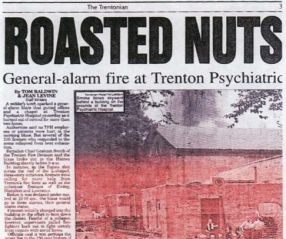
“Mind over blather” (Anti-psychiatry movement)

rnuts

Two centuries ago, caged and chained mentally ill patients were on display for the amusement of customers. If the interned weren’t acting sufficiently insane, guests could purchase sticks and stones to prod them to do so.

While Sigmund Freud helped make psychiatry less susceptible to human rights violations, his teachings have been almost completely repudiated. And not that many generations ago, the field was known for lobotomies and electric shock therapy.

More recently, psychiatrists helped implant false memories of child sexual abuse into patients, resulting in the destruction of families and daycare workers. Other psychiatrists played key roles in the Satanic Panic, facilitated communication, and in prompting fragile patients to relive alien abductions.

But dismissing psychiatry because of its checkered past would be like criticizing  allopathy because physicians once embraced trepanation and leeches. And writing off all psychiatry because of a few morally flawed practitioners would be like embracing anarchy because of the Kim Jong-un’s antics. Yet anti-psychiatry activists exist and they make regular use of the guilt by association and composition fallacies. We will look at some of these criticisms, including the most extreme view, that mental illness is nonexistent.

As an organ, the brain is subject to ill health, just like the liver may succumb to cirrhosis and the skin may break out with eczema. However, most mental illnesses cannot be detected with an X-ray, urinalysis, or blood draw. Animal testing is of no value because there are no bipolar gerbils. All this makes it easier for some to act as though mental illness doesn’t exist. But as Dr. Steven Novella has noted, “Brain disorders are different than other organ systems, in that function relies upon more than just the biological health of the cells and tissue. There can potentially be a brain disorder…with healthy brain cells that happen to be connected in a dysfunctional pattern.” 

Some critics will point to the number of mass shooters who were allegedly on psychotic medication, deducing that the pills drove them toward this behavior. However, the actual correlation here is that the perpetrators were on the medication so that it might stem their violent tendencies. The more jaded might point out that this means the treatment didn’t work. But there’s no way to know if the shooter stuck with the prescription, nor can we even know how many persons never commit such an act because of an effective medication regimen.

There are also claims that we are overmedicating children, transforming them into dazed drug addicts. This may be included with statistics showing how many more children are medicated than 100 years ago. But this is a result of recognizing mental illness and knowing how to treat it. As noted earlier, there have always been metal illnesses, but patients in the past were likely to be “treated” with imprisonment and other abuses.

Most in the anti-psychiatry movement are from the alternative medicine and conspiracy theory communities, though it does contain a religious element. The most zealous and active are from the Church of Scientology, who have declared war on the entire psychiatric field.

Steven Anderson, who with the death of Fred Phelps assumed the mantle of the country’s most unhinged preacher, insists all mental illnesses are the result of demons or spiritual apathy and can be solved by immersion in the holy spirit. A secular equivalent is the meme which asserts that the likes of schizophrenia can be combated with a stroll in the woods.

These ideas are dangerously wrong. Dr. Harriett Hall wrote, “It’s rejecting reality to think that mental illness doesn’t exist. Something is clearly wrong with an individual who is too depressed to get out of bed or eat, who is afraid to leave the house, or who believes he is Jesus Christ. These symptoms interfere with life and are usually distressing to the patient.”

For those who loathe mainstream medicine, the hatred increases in inverse proportion to the urgency. The more immediate the danger, the more likely they are to reluctantly accept the treatment. When naturopaths in Germany were sickened at a seminar, they were unable to heal themselves, instead relying on ambulatory personnel. If Mike Adams was shot in the stomach, even he would be likely to seek an ER surgeon as opposed to the healing ginger sprinkles he sells.

The one exception seems to be cancer, as chemotherapy is sometimes passed over for overdoses of lemon water and zucchini bread. But mostly the rejection of modern medicine increases as the immediacy of the danger decreases. As such, mental illness treatments are among the most frequently rejected among the alt-med crowd.

This is most common with ADHD. Last year, conservative Christian blogger Matt Walsh went so far as to write that it doesn’t exist. This prompted an erudite response from Novella. He noted that Walsh used “disease” and “disorder” interchangeably and without defining either.

“The distinction is important, because it relates to how medicine defines diagnostic entities,” Novella wrote. “ADHD is certainly not a disease, which are entities that involve a discrete pathophysiological condition. In medicine, however, there are also clinical syndromes, disorders, and categories of disorders. ADHD is a disorder of executive function, which is what enables us to pay attention and to plan and inhibit behaviors.”

Walsh asserts that those diagnosed with ADHD merely have normal or perhaps above average instances of wandering thoughts. He next claims that since there is no clear division between how much mind-drifting is too much, ADHD is make believe. This is the false continuum fallacy, where one denies the existence of extreme ends of a spectrum because there is no sharp dividing line.

It would be like arguing that there are no eyesight deficiencies because a patient with 20/21 vision and another with 20/400 would both be considered substandard. Or, as Novella noted, it would be like declaring 159/89 to be optimal blood pressure since 160/90 is the cutoff for being unsafe.

A logical cutoff for these and similar conditions would be the point where, for most people, routine activities would be negatively impacted. Granted, there are multiple subjective notions in that definition, but addressing them in this way is of more benefit that denying their existence.

There are mental illnesses and telling someone to get rid of their clinical depression is like telling them to stop having influenza. Some mental illnesses can be treated more effectively than others and not everyone responds the same to medication. But dehumanizing the mentally ill by saying they don’t exist and belittling their conditions by saying they can be cured by the laying on of hands or a day at the lake is shameful and harmful. It drives mental illness further underground and strengthens a stigma that should not exist any more than there should be a stigma attached to any other biological malfunction.


“Coyne toss” (Race realism)

Color by Number Printables
Because skeptics are a homogeneous bunch in terms of beliefs, I set out a few months ago to determine if there were any exceptions to this. I poured over the Venn Diagram of Irrational Nonsense, the Skeptic’s Dictionary, and similar sources to see if there was any topic where there was disagreement, not with one aspect of a subject, but with the subject in general.
 
I largely came up empty, but there was one area where I found one skeptic and two others who likely identify as such who disagree with every other skeptic I am familiar with. The topic was whether race is a biologic or social construct, with most skeptics saying the latter. The three outliers were former James Randi Educational Foundation president D.J.Grothe, Richard Dawkins, and Jerry Coyne. I dealt with Grothe’s objections in an earlier post and may look into Dawkins’ views later, but want today to consider Dr. Coyne.
 
He taught evolutionary science at the University of Chicago, so it would be hard to imagine a more learned source on such matters. But if he has evidence to support his assertion that race is biological, he has thus far been disinclined to air it.
 
In a column last week, he related how he was filling out a form that instructed him to list whether he was black, Pacific Islander, white, Hispanic, etc., and that the form noted, “These categories are taken to be social constructs only, and are not biological.” Coyne then asserted, “That statement is palpably false. When people say ‘Race is a social construct,’ they’re simply wrong.”
 
I presumed he was then going to delve into points that supported this position.
Instead, he wrote, “The designation of a finite number of easily-distinguished human groups is a futile exercise, because we have differentiation within differentiation, making the whole exercise purely subjective.”
 
Saying that he cannot identify the races and describing the undertaking as subjective seems to undercut his assertion that race is a biologically valid distinction. The closest he comes to making his point is when he writes, “The human species isn’t divided into a finite number of well-differentiated genetic groups, but groups can still be distinguished by combining information from different genes, and those groups tend to be those that evolved in geographic isolation.”
 
This is true with regard to some external features, but not with unseen clines. Normally I would assume Coyne was simply confusing genetics with race. But it seems unlikely that someone with his credentials would be unaware of the difference, so I’m unsure what he’s getting at. I’m left mostly to guess because after Coyne flatly declared twice that race was real, he then somewhat backtracked, and finally meandered into why people might think race was a social construct.
His primary supposition was that left-wing ideology was the culprit, that any attempt to assign traits by skin color would be anathema to liberals. Of course, whether liberals feel this way and what their motivation is for doing so is unrelated to the central question as to whether race is biological. 
Coyne seems to be tilting at a straw man. There are genetic differences in all of us and there may, in general, be traits that are more frequent in certain ethnic groups or areas. But the social construction of race can be seen in the word’s fluid definition.
 
Consider the U.S. Census categories, which includes “American Indian or Alaska Native.” There is no logical reason for a person with Inuit ancestry to be in the same category as another of Seminole lineage. But they both reside in this category constructed by a U.S. bureaucrat, and this pigeonholing also includes someone from El Salvador.
 

No one from Southwest Asia is considered Asian by the Census. I’m not saying they should or shouldn’t be, I’m saying there’s no biological reason for these types of distinctions. Nothing we have learned from the Human Genome Project would justify Cambodians and Japanese being assigned the same category. Ethnic Baluchis are classified as either Asian or Caucasian, depending on which side of the Iranian/Pakistani border they were born on. Jews, Irish, Spaniards, and Italians have all been labeled white or not white depending on who was deciding and when. Hard core racists bicker among themselves as to whether Finns can claim the exalted status reserved for pale faces. Similarly, Antebellum Southerners used the one-drop rule to declare that any person who had even one dark-skinned ancestor, no matter how far back, was potentially subject to the Fugitive Slave Law.  These categorizations of peoples into neat tidy groups based on ever changing criteria is the definition of social construct. While populations have allele frequencies and phenotypic traits, it is society that decides which of these are relevant for racial classification.

 
One group that wholeheartedly believes in the biological reality of race are the aforementioned  debaters of the Finnish question. A recent trend among this group is to have themselves genetically tested to show how white they are. They have been mostly using 23andMe. The company is less than thrilled with this association, and it stresses that the Swastika-tatted slackjaws are misreading the data they are sent.
 
The company’s testing assigns a percentage of regional origin based on the subject’s genome, such as sub-Saharan African, South American, or European. But those ancestral roots don’t correspond directly to race. In fact, 23andMe says it does not report any race-related information. If a racist gets his report back and he is 99.7 percent European, he assumes this to mean 99.7 percent white.
 

Meanwhile, those that get, say, only 80 percent white, are handling this in one of two ways. Some explain away their insufficient Caucasian majesty by saying savage dark-skinned beasts had raped their pure white ancestors. Inverting the color of the rapist and victim is never considered, even though a white master raping his black slave is a more likely scenario to explain this unexpectedly diverse lineage.

Meanwhile, other commenters claim 23andMe is falsifying data. They are doing so in an attempt to convince persons of their mixed lineage, hoping to get them to question their racist beliefs. If so, that strategy is failing. None of the racists have responded, “Oh, I guess I was wrong about all this. Let’s celebrate my new enlightenment at the Hispanic Heritage Festival.”