“Tough cell” (Integrative oncology)

CANCER

Integrative means “to unify separate items.” Oncology refers to the prevention, diagnosis, and treatment of cancer. So, in a strict sense, exercise, nutrition, deep breathing, and meditation that are aimed at reducing the pain, nausea, stress, and other consequences of cancer could qualify as integrative oncology.

However, most people who consider themselves integrative oncologists use the term because it sounds better than “malarkey.” They offer aura cleansings, naturopathy, and energy healing, all of which have no plausible mechanism by which they would arrest rouge cell growth.

While proponents try to spin it as offering the best of both the traditional and alternative medicine worlds, the term is almost never used by those who combat cancer with chemotherapy and surgery; it’s used almost exclusively by those who prefer beef liver regimens and crystals.

Integrative oncologists favor terms like “multidisciplinary, “synergy,” “patient-centered,” “holistic,” “mind-body-spirit meld,” and “optimizing wellness.” These vacuous words gloss over the fact that the techniques they offer won’t help cure a patient’s cancer. To do that, one needs chemo, radiation, targeted drug therapy, immunotherapy, or surgery.  

Again, in the strict sense of the word, there is room for integrative oncology. Wigs and prosthetic brassieres for post-mastectomy patients are examples of how a person can be helped with issues related to cancer without the disease itself being impacted.

Or perhaps a patient suffers from malnutrition, as cancer affects their appetite and digestion. It would therefore be valid to work with a dietician to come up with a meal plan that will provide the extra vitamins and minerals needed while battling cancer and undergoing treatment.

And since a potentially lethal disease causes dread, anxiety, stress, fear, and worry, it follows that meditation, guided imagery, or a massage to help deal with these emotions can be beneficial. Or the patient may be an erstwhile distance runner who is now incapable of much exertion at all. In this instance, an exercise plan that squares with this new reality is another good idea. So tai chi, yoga, meditation, and the like are all fine for dealing with the tangential issues of cancer. As long as there is no claim that any magical, curative energy is at work, it’s fine.

The nonsense comes from thinking, as Dr. Axe does, that one of the nation’s leading killers is going to be stymied by “vegetable juicing, probiotic foods, immune-boosting supplements, stress reducing techniques, and prayer.” He presumably followed his attorney’s advice by adding, “I am not claiming that is a cancer cure.” Having taken care of that legal cover, Axe dovetails back into, “I believe these natural therapies, either used by themselves or in conjunction with conventional medical treatments, may support the healing process.”

Like much alternative medicine, integrative oncology has seeped into our institutions of higher learning. This includes the University of Arizona, which offers a course on the subject. Despite a terse description of the field on its website, the university manages to squeeze in three logical fallacies:

“It is estimated that a great majority of cancer patients are using complementary therapies in addition to conventional care (ad populum). As patients face a life-threatening diagnosis out of their control, they turn to therapies that offer hope and a regained sense of empowerment (appeal to consequences). You will learn techniques such as those offered in Traditional Chinese Medicine (appeal to antiquity).”

Bypassing conventional cancer treatment is almost guaranteed to be fatal. In the last year, there have been heartbreaking cases of persons trying to cure cancer with Gerson Therapy, veganism, or baking soda and lemon juice.

While not as drastic as those tragedies, integrative oncology mixes the legit and the looney. This creates a parasitic relationship, where chemotherapy, surgery, targeted drug therapy, and immunotherapy are considered in the same class of cancer treatment as are coffee enemas, frankincense, B12 overloads, and lots of sunshine. All those are types of naturopathy. The field has many forms, but the underlying theme is that the body has an inherent ability to heal itself if only it can be prompted by the right vehicle. This notion cannot be squared with cancer treatment. Incorporating iridologists, Reiki practitioners, or oily neck rubs is of zero value and could even be dangerous since a somewhat pleasant craniosacral massage is going to seem more attractive than another round of chemo, perhaps prompting the patient to forgo the latter.

That’s why UCLA’s Simms-Mann Center is wrong to proclaim that “the best medicine combines multiple modalities.” No, the best medicine is proven through metadata of double blind studies. More is not necessarily better. The removal of a malignant tumor isn’t going to be aided by listening to binaural beats.  


“Frequent liar miles” (Amino Neuro Frequency)

'Quack'

Amino Neuro Frequency is a treatment system touted as a way to reduce pain and inflammation. During a session, silver dollar-sized discs are applied liberally to the skin and this is intended to emit healing frequencies to the afflicted body part.

From afncourses.com, we learn that, “AFN discs transmit a unique range of frequencies through the neurons in the body. The nervous system picks up these frequencies, starting a self-healing and self-regulating process. They store and transfer radio frequency in the form of sub-harmonic signals, programmed to a specific frequency. The discs provide a biofield with information via sympathetic resonance. The connection from the patch to the body is made through the nervous system and the seven layers of bio energy the body naturally produces. The patch provides the signal to promote cellular communication to reduce stress and anxiety while restoring imbalances.”

That mishmash of pseudoscientific language never gets around to explaining how the treatment works. But it does reference resonance, cells, frequency, harmonics, energy, and the old alt-med standby, imbalance. Proponents are content to toss a hodgepodge of science-like terms into a caldron and hope the resultant gumbo impresses or at least confuses.

They were unable to persuade the folks at factualphysicaltherapy.com, who noted that, “This explanation is so vague, it can be connected to any problem a person has. There is no condition that they can’t help.”

The discs allegedly decrease pain levels within minutes and are effective for 72 hours. There are many testimonials to support this. Skeptic leader Harriet Hall wrote that one such anecdote had a patient describing his pain level going from 10 to 2 in just a few minutes. This prompted her to wonder, “If the pain is caused by injury or inflammation, how could it resolve so quickly, without time for tissue repair?”

Indeed, there is nothing in the way of controlled scientific studies to support this claim or any of the others. Trying it out one’s self is an unreliable method to determine the efficiency of a medical product or treatment. That’s because the self-administering patient will be unaware if symptoms were resolved because of the treatment, some other cause, or merely time. The opposite is also true. If the subject’s symptoms stagnate or worsen, that person might be the anomaly. These are reasons why control groups and double blind studies are needed. When neither the subjects nor the researchers know which group is receiving the authentic medicine and which group is receiving the placebo, the efficiency can be ascertained with much more accuracy, especially when scores of such studies are conducted.

Double blinds studies are especially crucial when researching treatments for illnesses that are not serious or chronic. That’s because the immune system and the body’s recuperative abilities will generally restore good health and this normal course of business can be wrongly attributed to a purported medicine or technique if we rely on anecdotes instead of data. Double blind studies also help determine the proper dose and to develop treatment protocols.

With Amino Neuro Frequency discs, there are the additional problems of practitioners having no idea what a human cell’s frequency would be, how the discs would access and hold energy, what type of energy it is, how it is imparted to the patient, and how this is beneficial.

Embedded frequencies are becoming more of an alt-med buzzword. Hall notes that proponents usually employ the word “frequency” in isolation. But the word is meaningless unless the speaker specifics what kind of frequency it is. Frequency is defined as the number of repeating occurrences of an event per unit of time. When used legitimately, it refers to phenomena such as revolutions per minute, heartbeats per minute, waves of light per second, etc. Just throwing out the word “frequency” is taking a science term, using it incorrectly, and trying to hawk a product with it. In other words, the epitome of pseudoscience.

Further, it is impossible to embed a frequency. One might be able to embed an object that produces vibrations or electromagnetic waves that have a frequency, but that would require a power source. And even if a product contained such a generator, there is no evidence that subjecting a body part to a set frequency would have an identified benefit for a specific organ.

“Fleeced lightning” (Phil Parker)

FL

Phil Parker and his Lightning Process sounds like a bad lounge act, but in fact is an even worse form of make-believe medicine. It is another instance of supposed mind control magic, and while Parker’s claims are somewhat less extravagant than other alt-med peddlers, he boasts of doing plenty, none of which is backed by double blind studies or an explanation of the mechanism behind it.

Parker holds that we experience stressors from sickness, pollution, relationships, work, school, finances, etc., and that these mess with our sleep, immune system, digestion, and rational thinking. This, in turn, creates a wide range of medical conditions. So he offers a three-day training course that allegedly helps patients recognize the body’s stress response mechanism and reduce the frequency and intensity of such stressors. Next, the persons will manage their long-term health through the use of neuroplasticity.

While neuroplasticity has applications in areas such as brain damage, vision defects, or Cochlear Implants, these must be undertaken by medical specialists using advanced technology and is not something persons can tap into themselves during a long weekend retreat.

But after such a weekend, Parker says the Lightning Process will help sufferers conquer Chronic Fatigue Syndrome, migraines, backaches, Multiple Sclerosis, depression, anxiety, panic attacks, overeating, low self-esteem, Obsessive Compulsive Disorder, and general malaise.

Such wide-ranging claims are almost always a pseudoscience giveaway. Consider a legitimate medication, ibuprofen. We know that it treats specific areas: Pain, fever, and inflammation. And in an article for Business Insider, Lydia Ramsey explained that ibuprofen works by “latching onto to an enzyme called cyclooxygenase and blocking it out. This keeps the body from making a molecule called prostaglandin, which generates the inflammation that often leads to pain. With that molecule blocked, the pain begins to subside.”

The language there is a little technical, but we get the basic idea of why the medication works. By contrast, this is what passes for an explication of Parker’s program: “The Lightning Process gives you powerful tools to use brain-body links to influence your health and life. The tools involve gentle movement, meditation-like techniques and mental exercises. With practice you can use them to change the way your nervous system works, switching on pathways which promote health and switching off ones which aren’t so good for you.”

This gives us nothing concrete and there is also no mention of side effects, which is another pseudoscience giveaway. An ibuprofen bottle warns of the risks of nausea, dyspepsia, diarrhea, constipation, headaches, dizziness, rashes, hypertension, and more. The seemingly refreshing lack of side effects in alternative medicine is due to such products lacking any active ingredients, which means they are having no impact on the patient’s body.

Another red flag is Parker’s claims being sometimes vague, such as promising to “help with performance” or “improve esteem,” concepts that are difficult to quantify. But at least that is better than his more dangerous claim of being able to cure multiple sclerosis. While that disease has no cure, there are treatments available, and a patient who eschews those for Parkers’ three-day training program is going to make a bad situation even less tolerable.

Indeed, as the skeptic surgeon blogger Orac wrote, “A cancer patient would be infinitely better off trying immunotherapy, targeted therapy, or chemotherapy, rather than trying to use the brain to create thoughts that will kill cancer cells.”

To be clear, Parker does not claim cancer-killing abilities and most of his assertions are relatively benign in an alternative medicine landscape that includes staring at the sun for weight loss, bleach enemas to cure autism, and anti-vaxxers tormenting parents whose children died from Whooping Cough.

Because he focuses on comparatively tame maladies like chronic fatigue syndrome, back pain, and headaches, Parker’s techniques may seem to work, owing to the fluctuating nature of illnesses and post hoc reasoning. The one area besides MS where he does cross the line into becoming dangerous is claiming that the Lightning Process will help with mental disorders. A person with such conditions should by getting psychiatric care, not attending a seminar.

But plenty of persons do seem to be attending. On his website, Parker writes of “thousands of success stories from those who’ve changed their lives and health.” That is followed by links to newspapers, magazines, television stations, and blogs. What he doesn’t point to is anything the way of double blind studies. His website has one isolated example of research, but this was a lone study featuring a non-random sample of nine persons with no control group. One zero-blind study on a minuscule number of subjects falls well short of the scientific standard, and it’s easy to see why Parker favors the alt-med tactic of emphasizing anecdotes over data.

What he lacks in empirical evidence and research, however, he makes up for in books and videos, which is yet another pseudoscience giveaway. Someone practicing genuine medicine is going to offer only products and/or treatments. Further, they will be able to explain in scientific terms the mechanism behind what they are offering. They will not be hawking multimedia products that take hours to get through, with only a hazy description of how it all works.

In Parker’s description, the Lighting Process is a means to improve athletic performance, relieve chronic fatigue, vanquish anxiety, end panic attacks, zap multiple dclerosis, lose weight, and stop headaches. Such a multi-faceted wonder would be announced in peer reviewed journals and at Nobel Prize ceremonies, not in Facebook posts and advertisements laden with all caps and exclamation points.


“Think tanked” (New Thought)

GIANTBRAIN

The New Thought positon can be summed up as, “Believing something makes it so.” By that logic, since I believe that the New Thought movement is bonkers, it is. But let’s delve a little deeper.

Proponents do not believe that if I think that I am a cow, I am. Rather, they think that consistent and correct thinking regimens will lead a person to get what they want out of life, be it money, love, peace, or that extra-cushy recliner.

The movement’s central point is that our thoughts or beliefs determine our existence, especially in the  health realm. New Thought began in the 19th Century and, rare for the time, was primarily led by women. It had been founded, however, by a man, Phineas Quimby, in days when people were named Phineas Quimby.

He felt that that tapping into the power of the mind was how Jesus performed healing miracles attributed to him in the Gospels. While Quimby was unable to manage the instant fix that his savior did, he saw about 500 patients annually and explained to them that their condition or disease was something their minds could control. By combining low overhead with religious trappings, Quimby developed an ideal business model. Customers came in, emptied their pockets without getting a product or service in return, and left to recruit others.

One of Quimby’s disciples, Mary Beth Eddy, formed the Christian Scientists, who maintain a form of New Thought with their extreme faith in the power of prayer. Contrary to popular belief, Christian Scientists are free to seek medical care in limited circumstances, but the church holds that prayer is most effective when there’s no accompanying treatment. Using medicine is seen a demonstrable lack of faith and if the patient would only show more trust in God, he would heal them.

One of Eddy’s students, Emma Hopkins, took the New Thought movement national. Her contemporary, William Atkinson, attributed his recovery from mental, physical, and fiscal setbacks to the power of belief.

They and others in the movement downplayed creeds and rituals, and most departed from traditional Christianity by rejecting, or at least redefining, the notion of sin. They projected an optimistic view of human nature and felt that the divine could be found within all of us. This gave rise to the idea of a power being inside everyone, and this power could be harnessed to change one’s lot in life, including the vanquishing of mental and physical ailments.

Despite their iconoclastic views, they embraced the Bible when it fit their agenda, such as favoring Mark 11:24 (“Whatever you ask for in prayer, believe that you have received it, and it will be yours.”) These days, the Home of Truth follows the teachings of Hindu advisor Swami Vivekananda and the New Thought movement has some Buddhists in its ranks. Most adherents, however, are quasi-religious in nature and a few are even secular.

One secular example is Tony Robbins, who while not completely onboard with the movement, ascribes an unrealistic amount of potency to mental exercises, affirmations, and self-confidence. Another secular example was Norman Cousins, who treated his collagen disease with intravenous Vitamin C, comedy movies, and a peppy attitude. While he recovered, exactly how much his unorthodox treatment had to do with was never ascertained.

Among the quasi-religious, Deepak Chopra argues that quantum physics enables persons to seize control of all aspects of their lives through the right thinking process. Another quasi-religious version is touted by Esther Hicks, who highlights the Law of Attraction. This holds that humans can bring into their lives whatever they focus on, be it good or bad. Yet all NFL players concentrate on winning the Super Bowl, yet only one team does so. And lovelorn persons obsessively think about the object of their affection without that object ever coming around.

While there are various New Thought schools, most emphasize that something ubiquitous is in control of our lives and is ready to benefit us, if only our thoughts can access this mighty force. It may be described as a god, spirit, energy, or life force, but in any case, health, wealth, and other desirable outcomes are inevitable if we think about them the right way. Adherents believe they can determine their situation by willing a deity or mystical energy to do it for them. This can be attractive because it is free, painless, easy, and gives the practitioner a feeling of being in charge.

But while the power of positive thinking can help with attitude and performance, scientific tests of the power of belief to cure serious illnesses have been uniformly negative. Carol Tavris of Skeptic Magazine wrote that a research team catalogued 179 patients with lung cancer over eight years and found that optimism, pessimism, and neutrality all had no bearing on cures or long-term survival rates. Thinking that the techniques work results from post hoc reasoning, selective memory, and the Forer Effect. And since less-serious illnesses usually fluctuate, their eventual end is credited to finally getting the thought process right.

As far as thoughts helping one succeed in life, we hear stories about Steve Jobs, Oprah Winfrey, or Mark Cuban, and the massive dreams they stayed with until fame and fortune resulted. In these tales, the figure’s positive outlook is referenced. But highlighting only these stories is to commit survivor bias. We never hear about the much more voluminous instances of dreamers who never wavered but also never achieved. The only benefit to their positive outlook was to feel more positive; it did not lead to the desired results.

Indeed, one of the philosophy’s problems is that it equates feeling empowered with being empowered. Another issue is that New Thought holds uncompromisingly negative views of doubt, fear, and worry, even though these are sometime necessary and, in the long-term, often beneficial. A seasoned employee, put on a 90-day probationary period, can use the consequent fear to work harder and become more efficient. A person with a potentially fatal diagnosis can use this fear to get their affairs in order, reconcile with those they’ve hurt or been hurt by, and reevaluate what matters in life. By contrast, a person convinced they can whip leukemia with good vibes and happy thoughts will do none of those things while also succumbing to the disease.

Other detriments of being overly optimistic can include unreasonable amounts of gambling and being unable to realistically analyze one’s financial picture, romantic relationships, or job prospects.

Most distressing is New Thought’s rejection of Germ Theory and our knowledge of how diseases and cures work. Members of Idaho’s Followers of Christ church consider pharmaceuticals to be satanic, while others think mental states are what cause disease. Believing that health and illness are determined by the amount of one’s faith and the fervency of one’s thoughts will lead that person to feel it’s their fault if the conditions stagnate.

And in the end, the strongest evidence against persons being able to control their health and lives by wishing for it is that adherents of such notions keep dying.

“Poison your name” (Kabalarian philosophy)

MAZE

The short version of what Kabalarian Philosophy is: It’s nearly identical to numerology except that letters replace digits.

The long version of what it is can be found in Life’s Purpose, a treatise by the field’s founder, Alfred Parker.

For the medium-length version, continue reading.

According to Kabalarians – if that’s a word – a person’s name is invariably and completely tied to one’s fate. Your strengths, weaknesses, personality, successes, failures, traits, relationships, health, sicknesses, and favorite dessert are all predetermined shortly after birth when your parents name you. Whether you are dubbed Donald, Diane, or Dweezil, your experiences are locked in. So if Donald had a brother Darryl and another brother Darryl, his two siblings would have identical life events and behaviors.

If names had this power, however, persons who have legal name changes would become drastically different persons, and this does not occur. Lew Alcindor took the name Kareem Abdul-Jabbar without any being any different than before, except for his religion, and he adopted the name because of Islam, rather than converting to a new religion because he changed his name.   

Similarly, women who take their husband’s name would, without exception, turn into markedly different persons after marriage. This is not the case, despite protestations to the contrary from some frustrated husbands I’ve talked with.

Nevertheless, from kabalarians.com, we are told that the field is “able to reduce any name to a mathematical formula based upon letters in the name.” The philosophy further teaches that each language’s alphabet has a consistent mathematical order through which a name can be quantified. Analyzing the letters in a name will supposedly reveal the owner’s personality, attributes, and future.

While numerology is the most obviously similar pseudoscience to Kabalarian Philosophy, it also resembles astrology and fortune telling. That’s because the Forer Effect, subjective validation, and self-fulfilling prophecies will convince some customers that it works. Also, much like a horoscope, crystal ball gazing, or Tarot reading, the traits revealed by a Kabalarian analysis will be voluminous, general, and sometimes contradictory (i.e., “You often like to be challenged, but sometimes retreat to your comfort zone”). In other words, every reading could apply to most anyone. By using broad terms and avoiding specificity and detailed predictions, a Kabalarian analysis can seem impressive to the uninitiated.

Of course, the idea of everything in our lives being preprogrammed could be depressing, intimidating, and scary. It would also make for a pointless philosophy to follow. After acknowledging that names determine everything, there would be seemingly be nowhere else to take the philosophy. But, like many good scams, Kabalarian Philosophy presents both the problem and the solution, the latter involving money.

For a price, Kabalarian practitioners will come up with a new name for their customers, who will be shed of their limiting moniker. Amazingly, 100 percent of persons who patronize Kabalarians have a name that needs to be fixed. No client seeking Kabalarian services has ever had a parent that, by chance or design, had come up with a name that benefited their child.  After a session or three with a practitioner, the client will experience “control of their life, happiness, mental freedom, and personal success. A name change will change the conditions in a person’s life and will allow the expression of one’s true purpose.”

While Kabalarian Philosophy does put a creative spin on a time-dishonored principle, it still manages to commit the appeal to tradition and authority fallacies. The website notes that, “China has had name analysis for centuries. Confucius said that if he were made emperor, he would change the names of all the cities because even cities are influenced by their names.”

While the philosophy has similarities to horoscopes and crystal balls, the key difference is that astrologers and seers largely tell their customers what they want to hear. Kabalarians, meanwhile, impart a foreboding vision of what lies in wait. This enables them to retain customers by promising to find them a new moniker and resultant rosy path ahead.

Once this is accomplished, the Kabalarian website promises that the client “will change your thinking pattern. By changing your name, you are consciously invoking a mental law. This is a fundamental step to creating health, mental harmony, and peace of mind. Speak to a qualified Kabalarian consultant to insure you are making the proper change, as it profoundly affects the rest of your life.”

They misspelled ensure, but, hey, they’re the mathematical language experts, so there must be a reason. Still more advantages: “By changing to a balanced name, you can build greater positivity into your thinking and happiness into your life. As you become mentally free of destructive patterns of thought and habits, you will fulfill the greatest potential of your mind.” I’m surprised they didn’t promise the purchase a winning lottery ticket.

Meanwhile, it’s not just the mental attributes of a person that is affected. With the wrong name, which everyone who has not seen a Kabalarian practitioner seems to have, illnesses will also result. These afflictions are unrelated to genetics, lifestyle, and diet, but are determined by whether you are named Barbara or Stephanie. But never fear. The practitioner, for an additional charge, will “predict health weaknesses based upon the imbalance in the name” and will devise a new handle that will destroy your dyspepsia, vanquish your varicella, and put the kibosh on your kidney stone.

Likewise, successful business owners, athletes, scientists, politicians, and entertainers owe their position not to hard work, talent, and vision, but to “the mathematical value of their names.” After a KP session or two, your new name “will attract better conditions” and “develop the resolve to make the changes necessary to free yourself of destructive habits that hold you back.”

So once you become a Fortune 500 CEO, you can buy the Kabalarian empire and help train others on how to succeed. Or better yet, you intentionally run it into the ground so no one will be a threat to overtake you.


“Balancing act” (Neuro Connect clips)

BALANCE

Neuro Connect clips are new on the alternative medicine scene, but the posturing and preposterousness that accompanying them have been seen many times before.

Owners of the company that sells them purport that their product can do all manner of wonders, particularly for one’s balance and athleticism. The product was pitched to credulous investors on Dragons’ Den, which is the Great White North’s version of Shark Tank. Doing the hawking was Ontario chiropractor Mark Metus and his business partner, Greg Phillips, both of whom raved about the clips’ ability to immediately improve balance, strength, muscle function, and joint flexibility.

In doing so, they employed classic pseudoscientific techniques, such as misrepresenting a genuine scientific phenomenon and falsely asserting that their merchandise can harness it. In this case, the principle is quantum entanglement, which Metus said his product creates.

This goes well beyond my area of expertise, so I will keep it basic. But quantum entanglement occurs when groups of particles interact in such a way that the quantum state of each particle cannot be described independently of the others’ quantum state, regardless of distance from one another. Even quantum physicists are unsure why this occurs. The topic is confusing, complex, and science-sounding, so Metus and Phillips take advantage of this befuddlement and pitch their product with assertions that are unsupported by evidence or studies. Again, even among experts, quantum entanglement is little understood, so there’s no reason to believe that the phenomenon is being tapped into for health benefits by two men with no medical or scientific background or training.

According to the company’s website, the clips are infused with a “subtle energy pattern” which travels neurological pathways by means of quantum entanglement and this leads to better health. This description represents a mishmash of misused words, artificially constructed phrases, and unsubstantiated claims. Energy is merely measurable work capability, not the panacea it is presented to be in alt-med circles, where it is the most ubiquitous and abused word. Neurological is an anatomical term, but the clips’ merchants are failing to explain how such pathways would be impacted by their product via quantum entanglement. This use of science terms without explaining the science is another red flag. Finally, the health claims are unsupported by double blind studies or other empirical evidence, to which Metus can only respond, “We just know that it works.”

Instead of the Scientific Method, he and Phillips prefer demonstrations that are easily manipulated. On the Canadian television program, Metus asked Dragon Michele Romanow to stand on one leg and reach up as if she were grasping for an object on a high shelf. He then forces her arm down, attaches the clip, and has her assume the position again.

This time, Metus seems unable to lower the arm and he remarks how much stronger Romanow is, to her amazement. The company’s website is full of such testimonials from customers who also credit the clips with improving their stability, pain management, and motor skills. Glowing reports like these in lieu of double blind studies are yet another pseudoscience giveaway.

The technique that fooled Romanow is frequently used in the alternative medicine field of applied kinesiology. It has also been a central selling point for similar products that purport to improve balance. The technique is less of a demonstration of the product and more of an example of how the range of human motion works.

You can try your own in-home study. Have someone push you with moderate effort from the front. Then turn 90 degrees left or right and have the person again shove you again with the same force. In the second iteration, you will now be much more likely to stay put. This is due to anatomy and physiology, not because a mysterious force or magic dust is at work.

In the hands of charlatans, the usual method is to twice push down on a subject’s arm, which has been raised or otherwise positioned for the “testing.” The first test is alleged to measure the subject’s baseline. The follow-up is meant to show how much stronger or centered the person feels with the product in hand (or around neck or over waist). The patient usually detects a difference, but this is not because a mystical energy has been accessed. Rather, it stems from the client’s positioning and the force exerted by the practitioner.

In a similar deceptive demonstration, the subjects clasp their hands together behind their back while the demonstrator, from about two feet away, pushes down and dislodges the person from their position. Then with the magic bracelet affixed, the demonstrator moves directly behind the person, who now cannot fall back because someone is standing directly behind them.

Another trick is to have the subject stand with their arms forming a T. The demonstrator then pushes on one of the arms around the elbow, outward toward the hand. Unless the subject is Mr. Olympia, the arm is going down. On the next demonstration, with the stupendous product now in place, the push is made again at the elbow, but in the other direction toward the subject’s sternum, and the pose holds.

Since Neuro Connect has yet to conduct double blind studies of its clip, the online news organization Marketplace filled the void. Teaming with science professors from the University of Toronto, the journalists performed tests on 10 volunteers. All were tested on standing balance and grip strength. Each volunteer participant did each test thrice – once with Neuro Connect clips, once was with placebo clips, and once without clips. On the first two of these, neither the subjects nor the evaluators knew which was which. The results showed no difference in strength or balance for any participant in any of the three iterations. Maybe their quantum wasn’t entangled enough.


“The Brady Hunch” (TB12 Method)

bradyps

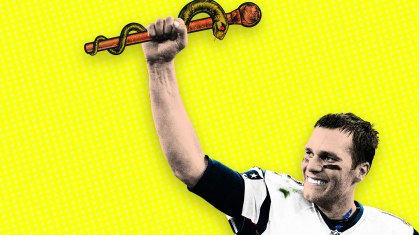
Whatever reasons Tom Brady might give for his key fumble in the closing minutes of Super Bowl LII, he won’t include his breakfast among them. The New England quarterback touts his TB12 Method through his book of the same name and he outlines his dozen guidelines for optimal performance. These include, supplements, stretches, and massage techniques, but the primary focus is on diet.

Brady emphasize foods that he calls “alkalizing,” “anti-inflammatory,” and which improve “muscle pliability.” He writes that certain meal selections lower his pH level, which in turn help with a range of ailments, from low energy to supple bones. However, a person cannot impact their pH balance through diet or anything else, nor would one want to. The lungs and kidneys maintain pH levels and the body deviates very little toward more acidic or more alkaline, instead permanently residing in a balanced, ideal range. In this sense, pH levels are somewhat akin to body temperature. There is little one can do to impact it, one should not be attempting to do so, and if it changes five percent in either direction, medical help should be sought.

Brady avoids alcohol, gluten, GMOs, high-fructose corn syrup, trans fats, sugar, artificial sweeteners, fruit juice, grain-based foods, jams, jellies, most cooking oils, frozen dinners, salty or sugary snacks, white potatoes, prepackaged condiments, flour, caffeine, and nightshade vegetables such as peppers, tomatoes, and eggplant. With a list that extensive, it doesn’t seem like there would be many grub options left, but he does profess his love for coconut oil and Himalayan pink salt, both New Age, alt-med darlings.

Clearly, some of this abstinence is good. Avoiding alcohol, trans fats, and excess sugar are to be applauded. But some items on his list are there because of unwarranted fears, specifically of GMOs and gluten. Moreover, some foods he eschews are good for health, such as the vegetables. The biggest point, though, is that whatever Brady is refraining from or indulging in, there’s no evidence that the diet does what he claims. It neither alkalizes the body nor improves muscle recovery.

One possibly-true-but-with-a-caveat claim is Brady’s insistence that his anti-inflammatory diet helps him stay injury free and recover quickly from a bruising corner blitz or a game played on three days’ rest. It is true that our cuisine choices can impact inflammation, but Brady’s diet is unnecessarily restrictive.

Before going further, let’s emphasize that there are two primary types of body inflammation. One is beneficial and assists the body’s immune system against viral and bacterial interlopers. As an example, the skin may redden as the body turns up the heat in order to fend off bacteria residing in an elbow scrape. Then there’s harmful inflammation, which occurs when the body’s inflammatory responses are overactive and which reduces a person’s ability to fight off invaders and disease.

Unlike our pH levels, there are ways to deal with harmful inflammation. These include regular exercise, maintaining a healthy weight, medicine, and, yes, diet. But anti-inflammatory regimens aren’t nearly as exclusionary as the one Brady is promoting. Per an article cited in PubMed, an effective anti-inflammatory diet would focus on omega-3 fatty acids and colorful, non-starchy vegetables, while eliminating Ding Dongs and the like. On another point, there’s no evidence that these diets boost athletic performance. The only post-exercise food options likely to speed recovery are getting adequate carbohydrates and protein.

Another tip Brady offers is drinking water equal to at least half one’s body weight in ounces per day. For instance, I weigh, well never mind, let’s just go with someone who weighs 180 pounds. That person, per Brady, should be drinking at least 90 ounces of water daily. He claims consuming less could lead to decreased oxygen in the bloodstream, more susceptibility to sunburn, toxin buildup in cells, and an undefined unpleasantness he calls an “unhealthy inner environment.” None of this has any scientific backing, nor does Brady attempt to cite any.

To state the obvious, humans need water, but let thirst be your guide on whether you should drink some. Our bodies maintain sufficient reserves of electrolytes and 538 journalist Christie Aschwanden quoted exercise scientist Tamara Hew-Butler, who said even an endurance athlete will have salts and minerals replaced with their next meal. There is no need for supplements or excess water consumption. She further said, “Even athletes taking part in ultramarathons should not drink beyond thirst, and supplemental sodium has been demonstrated to not be necessary during prolonged exercise even under hot conditions for up to 30 hours.” Besides, drinking extreme amounts of excess water can lead to hyponatremia, a potentially fatal condition.

As to the muscles claims, Gretchen Reynolds of The New York Times took these on. Brady’s idea is that muscles should be pliable for good health and prolonged athletic performance. He suggests less weight training in lieu of “targeted, deep-force muscle work,” which entails “focused massage and contracting of muscles, while also stretching and pummeling them, preferably with high-tech, vibrating foam rollers or vibrating spheres.”

There is no empirical evidence supporting this and Brady is not a subject matter expert with double blind studies and published papers to his name. There’s no more reason to believe his take on this than there would be to turn quarterbacking duties in the Super Bowl over to a kinesiology professor. Stuart Phillips holds just such a position at McMaster University and he said that soft muscles are sick ones, so Brady is not accomplishing what he thinks he is, nor would he want to.

Brady calls muscle pliability the name he and his body coach “give to the training regimen he and I do every day.” In other words, they made the term up and there is no science supporting the purported benefits they attribute to it. Indeed, Reynolds performed a PubMed search with the keywords muscle and pliability, and the only result was a study on the efficiency of various embalming techniques on corpses. Brady’s nutritional notions should likewise be considered dead on arrival.


“Spin the Knight” (Knights Templar)

JESUSWIFE

The Knights Templar were a Christian religious and military order active during the 12th and 13th Centuries. They have assumed mythical forms in fiction advertised as such and an even more fantastic veneer in fiction presented as fact. The former has manifested itself in The Da Vinci Code, Ivanhoe, Indiana Jones works, Assassins Creed video games, The Game of Thrones, and the writings of Maurice Druon and George R.R. Martin.

Meanwhile, a movement seeks to give the pseudohistory surrounding the Knights Templar a cloak of respectability by piggybacking on the aforementioned entertainments. On the History Channel and likeminded websites, order members are said to be responsible for Solomon’s buried treasure, the Holy Grail, the Shroud of Turin, Shakespeare’s lost works, the advent of Freemasons, and scribblings on Jesus’ tomb. They are also alleged to have made a sojourn in present-day Minnesota during the 11th Century. Along the way, they buried treasures off the Nova Scotian coast, which is the focal point of the television program, The Curse of Oak Island.

Turning off the History Channel and opening a history book, here’s what really happened. The Knights Templar were one of several Catholic military orders that lasted for about 200 years during the Middle Ages. In 1054, a chasm developed within Christianity, with those in the west forming what became the Roman Catholic Church and those in the east organizing the Eastern Orthodox Church. In time, the eastern Christians joined forces with Sunni Muslims in Turkey. Feeling threatened by this alliance, Pope Urban II convinced Byzantine Emperor Alexios to help him launch the first crusade in 1096, aiming to reunite Christianity under the papacy.

The effort, at first, was successful. The land that today comprises Turkey, Syria, Lebanon, Israel, and Jordan was divided into four states controlled by the Catholic Church. However, securing these new nations proved problematic, expensive, and logistically challenging. In order to combat these issues, the pope chartered the Knights Templar as a monastic order. Like other orders, the Knights Templar was a charitable organization through which wealthy Catholics could donate money and lands, enabling the order to become self-sustaining and largely autonomous.  

Eventually, Crusade battles gave way to commerce, and the Knights, buoyed by the steady stream of lucrative donations, became merchants, entrepreneurs, bankers, and government officials. Their medieval origins, secrecy, rituals, symbols, and mystical dress, combined with their accumulation of wealth and power and relatively sudden demise made the Knights Templar ideal fodder for conspiracy theorists. There are two primary camps: One holds that the organization became the New World Order, the Illuminati, the Bilderbergers, the Bohemian Club, the Reptilians, or some such gaggle. The kinder, gentler version has these heroic, virtuous men and their furtive heirs protecting some of the Church’s most cherished relics, embarrassing secrets, and massive wealth.     

Whichever of these narratives one favors, it is held than on Friday the 13th in October of 1307, Knights Templar members in Europe were executed at dawn to eliminate the debt owed to them by France’s King Phillip IV. A fortunate few escaped and kept with them the Templars’ valuable assets and hidden knowledge. Further, this knowledge has been passed down in a tightly-guarded secret that almost everyone knows about.

While King Philip IV was in deep debt to the Templars, his main motivation for the purge was to curtail the papacy’s powers. In 1302, Pope Clement had decreed that his was the only true religion and the sole path to Heaven. This was considered an insult and threat by non-Catholics, which included many French citizens, including the monarch. Also, several French officials were Knights Templar that were subject to Pope Clement’s influence. Philip therefore wanted to exorcise them and insert persons sympathetic to his crown.

However, the solution was not the kill ’em all approach of Templar mythology. First, Philip’s power stopped at France’s borders, so only those in his country were effected. Those in the rest of Europe or the Middle East were safe, for now. Second, Templar members in France were arrested, not executed, though some of them were tortured into saying they were heretics.

About a month after the roundup of undesirables, Clement felt pressured by King Philip’s collection of coerced confessions, so he issued a dictate that Christian monarchs in Europe were to arrest all the Knights Templar. To avoid this fate, the great majority of Templar members joined the Hospitallers or otherwise left the order. In the end, about three dozen recalcitrant Knights were killed, but this was three years later, not on a Friday the 13th bloodbath. Two years after that, Clement formally dissolved the Knights Templar by papal bull and transferred their ownings to the Hospitallers. The majority of the arrested Templars confessed heresy since this allowed them to be released, retain their property, and join other orders.   

In conspiracy circles, the Templar members hoarded silk, bullion, spices, royal jewels, and other valuables. They also harbored secrets about Jesus having married Mary Magdalene and about descendants of this union. Another oft-repeated rumor is that the Knights Templar are hiding evidence of Jesus having never resurrected. A further tale has them finding the Holy Grail, which obviously wouldn’t be holy if he never rose from the dead. Other myths are that they became the Freemasons or that the modern hoax order called the Priory of Sion is actually millenniums older and its members were compatriots of the Knights Templar.

The final resting place for their riches is often said to be Oak Island, Canada. In an isolated accuracy, Templar treasure hunter Rick Lagina asks and answers this question: “Has there been a find on Oak Island that we can say is a definitive tie-in to the Templars? No.”

That has not stopped him and his brother from squeezing five seasons out of the premise of finding this nonexistent fortune. There is likewise nothing substantial to corroborate the other alleged aspects of the order.  As an example of how loose the evidence standards can be, consider the assertion that modern Templars run the world from Switzerland. The “proof” for this is that the Templar flag was similar to the current Swiss one, that the country was long associated with clandestine banking, and that Switzerland always manages to avoid wars that leave other countries and regions ravaged.

However, these disparate items can be explained without invoking a lost mystical sect. The two relevant flags are somewhat similar. The Swiss one is square with a white cross on a red background, while the Templars banner was a rectangle with five red crosses on a white background. But there are 31 other countries or autonomous regions whose flag incorporates a cross and most of these also feature  red and/or white. Similarly, many other orders and societies include the cross image and red and white colors on their flag. Yet only the Templar/Swiss connection is alleged; no one is accusing the Red Cross of clandestine malevolence in Tonga.

While Switzerland did become synonymous with anonymous banking, persons took advantage of this for tax reasons and to keep safe the proceedings from shady dealings. It would not follow that the Knights Templar, who per the legend already had this stuff safely ensconced, would stash their cinnamon and myrrh in Zurich safe deposit boxes.

Finally, neutrality was an outgrowth of continual European wars which the Swiss had been involved in and which necessitated forming an exhausting series of continually changing alliances. For example, in the French Revolutionary War, the Swiss served as bodyguards for French royals. Just six years later, the Napoleonic Wars saw France invade Switzerland and splinter the Old Swiss Confederacy, which had been a loose compact of small independent states.

Several centuries of this had left the Swiss weary and presumably confused. So during the Congress of Vienna in 1814, they floated the idea of having an official policy of neutrality and the other parties agreed. This neutrality began about 600 years after the Templars’ dissolution, so the idea that the Swiss no-war distinction has benefited the Knights requires embracing highly selective history and ignoring the total lack of evidence for the claim. But those challenges are easily overcome by those who want to believe the mythic tales. As National Geographic’s Becky Little put it, “The Knights Templar are more interesting as protectors of an ancient secret rather than single men who gave out loans.”


“I Can’t Believe It’s Not Better” (Margarine fears)

FREDBUTTER

These days, it seems that even the most trivial item can become the object of an unwarranted freakout. This includes how we make our English muffins tastier, for a diatribe against margarine has made its way around the Internet. In addressing the faux yellow condiment, the message gets a few items right, but it mostly contains whoppers and misinformation.

It starts with the assertion that margarine was invented as a means to fatten turkeys, but that the concocted food caused the birds to die en masse. Hoping to recoup some of the money lost from the stricken livestock, the farmers added food coloring to the white substance and passed it off as butter to the unsuspecting masses.

In truth, margarine has nothing to do with turkey, or Turkey for that matter, but with France. Napoleon III offered a prize to anyone who could produce a viable, affordable butter substitute that could be consumed by peasants and soldiers. The winner was a mix of beef fat, saltwater, milk, and margaric acid, which gave the nascent substance its name. Today’s margarine is normally composed of refined vegetable oil, water, and sometimes milk.

I have written before that there is enough amazing about science that there’s no reason to make up cool stuff. For instance, humans having landed a probe on a comet is more captivating to me than is pursuing proof that some unknown critters constructed a face on Mars. In the same way, there is enough genuine ghastly gastroenterological unpleasantness that there is no need to fabricate any.

For example, trans fat is legitimately a food boogeyman that increases the chance of Alzheimer’s, cancer, diabetes, liver disorders, and much more. It was prevalent in margarine for years and were that still the norm rather than the exception, the railing against margarine would be justified.

But the key issue is how much trans fat margarine (or any other food) contains. Avoiding all margarine because of the trans fat issue would be like going naked because one dislikes hats. Many brands, including I Can’t Believe It’s Not Butter, no longer contain trans fat, and that’s usually the case for margarine that comes in tubs or in liquid form.

Another assertion from the screed is that butter has been around for centuries, whereas margarine has been around for less than 100 years. The math is off on that, as margarine dates to the 1860s. But the more relevant point is that how long something has been around is unrelated to its other attributes. Trying to score this as a point for butter over margarine is to commit the appeal to tradition fallacy.

The bulk of the rant is a series of unsubstantiated claims that are unsupported by any documentation, evidence, or studies. The claims include: Margarine triples the risk of coronary disease, quintuples the risk of cancer, increases bad cholesterol while lowering good cholesterol, lowers the quality of breast milk, decreases immune and insulin response, increases the risk of heart disease in women by more than 50 percent, and that eating butter increases the absorption of nutrients from other foods.

The claims against margarine would only be true if the specific brand is high in trans fat, and again, that would be true of any food. The boast about butter melts like, well, butter, when examined. Harriet Hall at Science-Based Medicine wrote, “Where did this claim come from? I found no evidence to support it. Perhaps they were thinking about the fact that some vitamins are fat-soluble, but that would apply to margarine as well as to butter.”

Another baseless assertion is that margarine will not attract flies because it has no nutritional value. Any food, by nature, has nutritional value, and while I doubt there is any data on whether winged pests cotton to vegetable oil spreads, I see no evidence for the assertion that they don’t. Feel free to conduct your own experiment and let me know the results.

Like other good fearmongering pieces, this one contains a dose of chemophobia, this time in the form of a caps-friendly alarm: “Margarine is but ONE MOLECULE away from being PLASTIC and shares 27 ingredients with PAINT.”

First, as Hall noted, this is false. She wrote, “Plastics are polymers and completely unrelated to anything in margarine. Paint doesn’t contain any of the ingredients in margarine.”

But even if true, this would be pointless anyway. Any change, not matter how small, in the chemical makeup of a substance can alter its safety, impact, and use. One oxygen atom is all that separates water from hydrogen peroxide, but this would not be a sound reason to drink the latter while using the former to disinfect a scraped finger.

“Doctor and the clerics” (Alphabiotics)

BANGHEAD

Alternative medicine and religion are both areas I have addressed on this blog, the former being a much more frequent topic than the latter. The subjects would seem to have little in common, with a smattering of exceptions. For instance, there is Reiki, which could reasonably be considered a form of Japanese faith healing. And I have sporadically happened upon Christian fundamentalists who feel God has provided grasses, barks, and herbs to heal us, if only we can find the right one for our condition through a mix of experiment and prayer. This is separate from pure faith healers, who are content to let their children die horrible, preventable deaths without trying plants, pills, potions, or anything beyond petitions to a deity.

Today, though, we address an alternative medicine-religious hybrid known as alphabiotics. Just how much it is a purported medicine or a religion, however, is debatable. For instance, websites promoting the field lack quantifiable specifics as to what alphabiotics is, how it works, or what it does. A terse description of the alleged process would be that it is neck manipulation meant to relieve stress and thereby usher in multitudinous, though mostly undefined, benefits for the body, mind, and soul. According to adherents, the procedure is meant to enhance energy flow and remove blockages that cause illnesses. This makes it one of dozens of mostly indistinguishable practices that make similar claims. The only difference here is that an attempt is made to douse the field in religious vernacular and to cloak it with a spiritual veneer. While the two parties don’t get along, alphabiotics is an outgrowth of chiropractic, with the former solely manipulating the neck.

Alphabioticbalance.com ostensibly tries to explain how the field works, informing the reader that “unrelieved stress causes your brain to lateralize, meaning that the dominant hemisphere of your brain begins seizing control, trying to work harder, not smarter, and attempting to operate entirely from its perceived area of singular strength.” It further warns that ignoring this will lead to an unbalanced skeletal system that will be deleterious to one’s muscles, nerves, and organs. An additional claim is that most persons have one leg shorter than the other and that this will put pressure on the hips and spine and even impact persons at the cellular level, as “blood is sent to the extremities of your limbs in a futile effort to correct and operate inefficiently aligned limbs.”

To fix it, a practitioner will employ a “gentle, safe, non-invasive hands-on technique” to make a patient’s legs the same length, to cause its blood to flow to the right places, and to make everything balanced. A similarly glowing report at alphabioticinfo.com describes “a process that deals directly with the negative impact of unrelieved, off-balancing stress on the brain and body.” It makes the unsubstantiated, outrageous claim that up to 90 percent of illness is stress-related and that alphabiotics techniques will result in “lower stress levels and improved health, happiness, disease prevention, and longevity.”  Another website promises reduced muscle tension and an enabling of “the wisdom of the body to better do its job of regulating, controlling, and coordinating physiological function, as well as normal mental activity. Strength is restored, brain-fog is lifted, and people’s lives began to work better.”

This pseudoscientific babble is based on no cited research or clinical studies. The impossibly vague, unquantifiable notions are accompanied by no explanation of what mechanism would cause or how the physiology works. Adherents fail to bolster their claims with even one double blind study, instead favoring testimonials by patients identified only by their initials. And it is all supposedly accomplished in just half a minute by “sending sensory input to the brain that a defensive stress response is no longer necessary.”

The field is awash in empty words instead of solid evidence. It bandies about baffling terms like  “brain hemisphere balance,” “joy of whole person congruence,” “hidden causes of denigrating one’s self,” the “true meaning of inner peace,” and the alt-med mainstay, “maintaining balance.”

One attempt to explain it goes thusly: “The Alphabiotics Alignment involves a process of unification of brain hemispheres and integration of higher levels of life force. It instantly unifies the brain hemispheres, balances the energies within the nerve system and muscles, and releases stress held within the mind and body, manifests our dreams and keep us in a constant state of physical, emotional, and spiritual balance and harmony, achieves inner peace, connects to their inner source of power, and takes advantage of the body’s natural capacity for wellness.” Man, for supposedly lifting brain fog, alphabiotics is leaving my noggin right muddled.

So we have pseudoscientific language, over the top claims, and anecdotes in lieu of double blind studies. There is no empirical evidence, but they do have a positive review in the book, Natural Cures They Don’t Want You to Know About. So all this takes care of the alt-med portion, but where does religion fit in? That’s hard to say because on alphabiotics websites, the spiritual aspect is even more vague than the health claims.

But for starters, this practice is only available to members of the International Alphabiotic Association. This isn’t a religious stance per se, but to the best of my knowledge, this requirement is unique among supposed medical ventures. It is more akin to church membership than a medicinal field, even the pretend kind. Next is verbiage that hints of an esoteric or supernatural nature, such as “being in tune with your inner source of power,” and “mind-spirit connectivity.” Practitioners call themselves priests and insist their neck manipulations are sacraments in the Church of Alphabiotics. Founder Virgil Chrane bestows the title “Doctor of Divinity” to those who complete enough training under him.

Beyond this, adherents don’t seem to say much about the religious aspect publicly. The movement seems threadbare with regard to philosophy, tenets, rites, or instruction on morality, afterlife, and miracles.

It is probable that the adherents adopted the religious veneer in order to avoid taxes and medical licensing. Indeed, Seattle Weekly ran a profile of Karen Labdon, who suffered a stroke while enduring a decidedly invasive, non-gentle alphabitoic treatment at the bruising hands of practitioner John Brown.

Rather than questioning the claims Labdon made against him, Brown merely said that the accompanying investigation by Washington state officials violated his religious freedom. He further described himself as a minister in what’s called the Alphabiotic Church and he stated he was performing a sacrament on a parishioner. He compared his technique not to a chiropractor but to a Pentecostal performing a laying on of hands.

Whatever Brown was doing, Labdon ended up suffering extreme vertigo and violent vomiting as a result, and Brown was prohibited from practicing for 10 years and fined $30,000. In the end, while alphabiotics purports to be both a medicine and a religion, most available evidence points to it being neither.