“Home evasion” (Social distancing and the immune system)

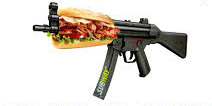
SUBGUN

There are many conspiracy theories centered on the coronavirus. Some of these would seem mutually exclusive but all are still bandied about by believers. For example, the suspicion that China developed it as a bioweapon is at odds with the idea that COVID-19 is mostly innocuous and being greatly overblown by leftists hoping to wreck the economy. Harmless chemical warfare does seem a tad contradictory. Yet this position, at least when broken into two separate charges, is a regular feature of the conspiracy crowd, whose members make appearances on my news feed with annoying regularity.

While there are many COVID conspiracy theories, our focus today is the narrow idea that being mostly homebound damages our immune system. In short, proponents feel that social distancing harms, not helps, the situation. Similar attempts to invert the normal order pop up frequently among conspiracy theorists: Excess carbon dioxide is good for the environment; insulin causes diabetes; vaccines are worse than what they prevent.

In Mother Jones, Keira Butler wrote of three persons who have posted claims about the putative immune system damage that social distancing is causing. She referenced two physicians and one engineer, who made separate videos outlining their positions.

It is telling that these claims were pitched to a sympathetic audience on YouTube and not submitted to a peer-reviewed journal. Alas, we will still assess the legitimacy of their assertions, not where they aired them.

The gist of their argument is that the lockdown is harming the immune system. They base this on the notion that germs and disinfectants are in constant battle, both evolving and adapting as they try to get the upper microscopic hand. Without exposure to enough germs, the trio argue, the immune system may grow lax and put up too feeble a fight. In some cases, there is merit to this idea, which is why some immunologists argue against trying to develop ultra-germ killers since it opens the chance that the germs which survive will further adapt and form a superbug, which is impervious to all treatments.

But this does not apply here since COVID-19 is not a chronic immune condition, but rather a novel virus that attacks the afflicted in ways immunologists don’t fully understand. As a novel virus, our immune system has no defense in place for it.

Moreover, isolated persons are still exposed to germs at home, which is another strike against the notion.

Social distancing helps to slow the spread of the virus and the anti-lockdown fervor, which is based not on the rate of infection or any projections, but on livid persons wanting a haircut and dine-in pizza, figures to be a public health disaster.

I miss the park, PTA meetings, and arcades, but not more than I value the health of my children, myself, and everyone else. A nationwide commitment to social distancing and pursuit of a vaccine would have solved this problem.

But selfishness and the ignoring of science are winning. A virus has no idea nor concern if its host is a Republican, Democrat, Libertarian, or independent, so this should have been the ultimate non-partisan issue. Instead, it is highly divisive and shows how dangerously close to the mainstream anti-science tropes and conspiracy theories are becoming.

Rather than isolation and inoculations, the other side embraces the naturalistic fallacy, where it is assumed that whatever is natural is good and whatever is artificial is bad. Butler cited one error-laden anti-vax group post, which claimed that masks, gloves, vaccines, and synthetic soap damage the immune system. This is another example a topsy-turvy belief where the prevention is labeled as the cause. They also claimed that fear damages the immune system. There is no truth to this, a good thing for the bazooka-toting Subway patron.


“See through it” (Blindfold reading)

BLINDFOLD

In India, there are those who claim children can read and see through solid objects while blindfolded, and proponents dub the ability midbrain activation.The midbrain is part of the anatomy, located at the top of the brain stem. Its purpose is to coordinates eye and body movements, and it also plays a role in hearing, short-term memory, and pupil constriction.

But in a classic pseudoscience tactic, proponents adopt a genuine scientific term then misuse it. Skeptic leader Brian Dunning uncovered a midbrain enthusiast on YouTube who claimed the midbrain remains in an inactivated state until acted upon by a series of mental exercises. Other than select Indian yogis, this portal remains closed, per the video.

Allegedly, achieving midbrain activation gives children the ability to keep their eyes closed and still be able to read, bike, play chess, and identify colors and pictures. Further, the youngsters can recollect readings for much longer and can commence to Shining by telepathically communicating with each other.

All of this is accomplished with a series of brain gym exercises, which allegedly serve to increase the brain’s melatonin production, and allows one to better see in the dark. There is nothing in medical literature to justify concluding that elevated melatonin levels produce an ability to enhance nighttime vision. Nor is there any evidence support supporting such wild ideas as telepathy or being able to see while blindfolded.

A competing midbrain activation theory holds that nāda-yoga, which incorporates sounds into the bodily contortions, can vibrate the brain, with those waves causing activation. Again, this is unsupported by any validated research.

It turns out that the whole deal is nothing more than an illusionary trick, and a poor one at that. Subjects merely sneak glances through a gap on either side of their nose, as they are wearing blindfolds placed in such a manner as to allow this. Children in on the ruse tilt their head back to look at something in front of them, or hold the object close under their face in order to see it by looking down past their nose.

Under controlled conditions, the supposed ability always fails. When researchers have the subjects try and read through a sealed opaque container, or the blindfold is affixed by a skeptic or neutral party, the only magic is that the ability to read blindfolded vanishes.

Which isn’t really a big deal since the kids can just take the blindfold off and read that way.

“Not a chief concern” (Plastic bag bans)

FB_IMG_1581119231367

My sweetest-ever trip to the grocery store was last month, as I gathered items for my oft-dreamed-of and now-realized Chiefs Super Bowl party. The cashier loaded the nacho cheese, Chex Mix, and M&Ms into thin plastic bags, which in some locales would be illegal.

Such municipalities take this measure in the belief that a bag ban will reduce waste and litter, and, by extension, benefit the environment. In truth, these bans are detrimental and are a victory for emotion over science.

Paradoxically, manufacturers of disposable plastic profit from bans on carryout bags. That’s because these humble methods of conveyance make the least money of all the company’s products. The bags also have the least environmental impact, owing to their flimsiness. 

Moreover, even with a ban, customers still need something to carry their Lucky Charms home in. This usually leads to plastic bag manufacturers being able to sell some of their more durable bags, which have a more deleterious effect.

There are three primary myths about the flimsy gray carryout receptacles.

First is that they contribute significantly to ocean plastics. Skeptoid’s Brian Dunning noted that the disposable plastic bags from the U.S. constitute just .5 percent of the sea plastic. While other nations contribute more waste from the bags, bans in the U.S. don’t impact that. In other words, banning bags in the U.S. results in only a microscopic reduction in such waste.

The second misnomer is that bans decrease the amount of disposable plastic leaving the supermarket. That’s because about a quarter of carryout bags are reused, for such purposes as diaper disposal, tossing dog waste, or lining Lilliputian trash cans.

In places where such bags are no longer available, persons still need to get rid of baby and/or canine excrement and to cover waste basket bottoms. When localities implement these bans, sales of small- and medium-sized plastic trash bags sales skyrocket, with an increase anywhere from 50 to 150 percent. And as Dunning notes, the banned bags are extremely flimsy, whereas trash bags are much heavier and contain substantially more plastic.

The third myth is that plastic bags do more ecological damage than other choices. Besides the tiny plastic bags, there are three other common options: Paper bags; Durable reusable plastic bags of polyethylene or polypropylene; and reusable cotton bags.

Dunning laid out the impact of each of these over the course of their existence. He explained that this includes the sourcing of its material, its manufacture, transportation, logistics, number of uses, how many goods it houses, and its final destiny, be it in a recycled product, a landfill, or incineration.

Despite its continual chastisement, the tiny carryout bag has by far the lowest environmental impact, mostly because it contains little material.

Also, it is plastic, which has a low melting temperature. Further, it requires less energy to manufacture and recycle than most other materials. Put another way, the banned bag actually serves to satisfy environmentalist goals.

The second best alternative is paper bags, which have four times the carbon footprint of single-use plastics. This means if a consumer reuses a paper bag four times before recycling it, the environmental impact will be the same as using the plastic bag once. I myself have never taken the same paper bag back to the grocery for a second use. Shame on me. But more shame on those banning plastic bags.

Next is the durable reusable plastic bag, offered by some food peddlers as a low-price alternative (though not as low price as the free plastic bag). These reusable bags are heavier and have 14 times the carbon footprint.

Again, this means a consumer would need to use this item 14 times to match the efficiency of its single-use counterpart.

By far the worst choice are cotton bags. Dunning wrote, “Growing cotton involves tractors and seeds and irrigation and a whole other level of impact.” A consumer would need to reuse a cotton grocery bag a whopping 173 times to match the carbon footprint of bringing home a single-use plastic bag. What many assume to be an environmentally-friendly option is anything but, except for the optional part.

Don’t blame me for any of this. I took the plastic bags from the nachos and Chex Mix and made them into receptacles for the bottles which had held my celebratory libations following the Chiefs win.

“Police scanner”(Scientific Content Analysis)

jeffy 

Scientific Content Analysis, called SCAN, is touted by proponents as a tool to identify deception. Law enforcement has used his method on suspects for decades, even though there’s no reliable science behind it, despite the name.

An article by Ken Armstrong and Christian Sheckler shone a light on this technique which is little-known outside of interrogation rooms. They pair recounted the story of Ricky Joyner, currently incarcerated on a murder conviction.

Police asked Joyner to fill out a questionnaire regarding the disappearance of an Elkhart, Ind., woman, Sandra Hernandez. Remembering what they had learned in SCAN classes, detectives noticed Joyner refrained from using first person pronouns, writing, as one example, “Went home,” instead of, “I went home.” Or that a reference to his love interest was scribbled down as “a girlfriend,” instead of “my girlfriend.”

What would seem to most people to be innocuous was considered signs of guilty by police. Officers also found it suspicious that Joyner’s handwriting was larger and more spread out in the answer’s last two lines than in the previous seven. This can happen when one gets tired from writing nine pages, as Joyner had done, but in SCAN logic, this was indication the author was a murderer. When police asked Joyner why they should believe him, he wrote, “I have nothing to hide.” Detectives thought this was a big deal since he failed to explicitly state, “I didn’t do it.”

Suspects like Joyner fill out a statement that SCAN investigators peruse for signs of deception. They focus on pronouns used, inconsistent vocabulary, what has been omitted, and how much of a suspect’s statement focuses on what happened before, during, and after an event.

Indications of truthfulness are considered to be: Using the past tense; using first-person singular; and direct denials, the best being: “I did not do it.” Signs of deception include lack of memory, spontaneous corrections, and using two different words to convey the same meanings, such as writing “angry” at one point, then “mad” later.

SCAN founder Vinoam Sapir demonstrated on television how the techniques are supposed to work by analyzing some famous examples. He looked at the FBI investigation into the Trump campaign. Sapir told the interviewer: “The report says, ‘whether,’ and not ‘whether or not.’ By the omission of ‘or not’ it seems that the FBI was already concentrating on only one option.” However, the use of “or not” would be redundant, so Sapir is engaging in wild speculation, besides being linguistically mistaken.

He also touched on Anita Hill’s testimony, pouncing on the fact that she said, “I had a normal social life with other men outside of the office.” Sapir arrived at this conclusion: “There is only a certain group in society that can label themselves as normal, and that is people who were labeled abnormal before.” Also a red flag, he continued, was that Hill referred to herself as an “individual” and “a person.” This assertion of her humanity was considered odd by Sapir. “Anita Hill never called herself a woman,” he gleefully noted, and suggested this meant she had issues with her sexual identity.

In another high-profile example from the early 1990s, Sapir recalled how Connie Chung had asked Magic Johnson about whether he was gay or bisexual. Johnson replied, “I’m not gay,” which Sapir interpreted to mean that the Hall of Fame point guard was bisexual. But Johnson had been presented artificially-limited choices. Had Chung added heterosexual to her probing of Johnson’s sexuality, Sapir’s deduction might have had more validity, but even then, wouldn’t be as certain as he is implying.

For all of Sapir’s certainty, there is nothing scientific behind SCAN despite that word appearing in its name. Five studies have shown that the techniques work no better than chance when determining if a statement is true or deceptive.

Psychology professor Aldert Vrij co-authored the most recent of these five papers and has published hundreds of pieces on verbal and nonverbal cues to deception.

He also led a study that included 61 volunteers split into three groups. In this experiment, one group consisted of members who committed a mock theft of a statistics exam from a departmental mailbox, then lied about everything they had done that day in written statements. A second group comprised members who stole the exam but lied only about the paper pilfering, and not about anything else. The third group were subjects who stole nothing and were truthful in all their answers.

Interrogators analyzed the resulting statements using SCAN criteria. Their results failed to show any distinction between the three groups. “In sum, no support for the use of SCAN was found in the experiment,” the authors concluded. Vrij also faulted SCAN for its lack of standardization, noting that the criteria that is considered most relevant varies by interrogator.

I decided be an interrogator myself and use SCAN techniques on a section of Sapir’s home page from what appears to be from Gopher era website.

Sapir gave this synopsis of how SCAN is supposed to work:
1. Give the subject a pen and paper.
2. Ask the subject to write down his/her version of what happened.
3. Analyze the statement and solve the case.

Here is my analysis of Sapir’s analysis:

1. By failing to include ‘a’ or any other qualifier before paper, Sapir shows he is afraid of commitment, never telling us how many sheets are needed.

2. Sapir instructs the person to ‘ask’ the subject something. He should have instead wrote, ‘Have the subject write down…,” since interrogators are not asking questions, but requesting a statement. This indicates Sapir is evasive with regard to his intent.

3. The entire point is to analyze and solve, so this is a superfluous and points to egomaniacal behavior.

“Decreased celery” (Negative calorie foods)

weight
For all the fad diets that come and go, there really is no secret to weight loss. Reduce the number of calories taken in, increase the number of calories burned. There are tips that can help with this, such as planning workout routines with a partner since one is less likely to blow off a friend than one is to skip a gym solo session. Drinking water to feel full or concentrating on satiating foods also helps, but the basics are still less in, more out.

With that, there is the notion that some foods that will take more energy to digest than what they provide in calories, making for a negative caloric intake. Skeptoid’s Brian Dunning noted that the caloric content of food and how much energy the body spends burning calories are both testable claims so let’s test away.

We start by considering the Basal Metabolic Rate (BMR), which is how much energy a body at rest burns in a day. It’s essentially how many freebies you get. You can consume this amount of calories, remain sedentary, and your weight will hold steady.

A formula called the Revised Harris-Benedict Equation multiplies a person’s height, weight, and age by a separate constant then totals them all up with another constant. Dunning wrote that for a man who is 5-6 and weighs 150 pounds, it would look like this:

BMR = (13.397 × weight in kg) + (4.799 × height in cm) – (5.677 × age in years) + 88.362.

In this scenario, our hypothetical test subject has a BMR of 1,607 calories. Those are his freebies. If he engages in a small amount of activity, such as walking to the post office or wherever people walk to in these days of dwindling post offices, we multiply his BMR by 1.2. Moderate activity such as jumping jacks and chopping wood would necessitate multiplying the BMR by 1.55. Strenuous activity such as sprinting uphill while carrying dumbbells means multiplying the BMR by 1.725. This would boost the number of calories he could take in without gaining weight to nearly 2,800, substantially more than the 1,600 he gets for lying on the couch.

Now we consider the thermic effect of food. This refers to metabolic rise needed to digest victuals. A resting metabolic rate when doing nothing beyond daydreaming is what we get we arrive at the BMR of 1,607 calories. But when someone begins digesting food, that rate rises.

Thermic effects differ based on the food and the person. Fat digests easily, and thus has a low thermic effect and lots of calories. At the opposite end of the spectrum we find high-protein foods. These need to be broken down into amino acids in order to be digested and this requires energy. Similarly, foods containing complex carbohydrates and fiber make the body work harder to reduce them into the needed building blocks. The energy required to perform these processing tasks varies by person, with obesity and insulin resistance the biggest factors.

Put all this together and we will see that under specific conditions, negative calorie foods can exist. Someone who is slender and with low insulin resistance might get negative calories from celery consumption. The food is mostly water and the few calories come from fiber, the unraveling and digesting of which produces high thermic effects.

But only a few foods function as negative calorie ones. Further, this only works for the slimmest, healthiest people. For those at normal or above normal weights, celery would likely not be a negative calorie food and, even if it were, a steady intake of the fibrous green veggie would make for a poor diet lacking in nutrients. It is also not very satiating or tasty, to say nothing of how hard it would be to stick to.

“Flop secret” (Rhonda Byrne)

ts

Want to know a secret? You can have whatever you want just by thinking about it happily enough. However, steer clear of negative or scary thoughts, which can cause things you fear to happen. Actually, this isn’t so much as secret as is THE Secret, a movie and book by Rhonda Byrne.

Her premise entails more than suggesting that positive thinking can be one tool in a kit that helps foster desirable results. Byrne claims that wishing for something in a specific manner (which she sells) will have a causal effect. Do it well enough and stage four cancer patients can have the disease cured on the day they win the lottery.

This is accompanied by evidence-free claims that The Secret has been known and utilized by many great persons. The list reads like a casting call put out for history’s most forward thinkers and accomplished geniuses. We’re talking Buddha, Aristotle, Plato, Sir Isaac Newton, Martin Luther King Jr., Thomas Edison, Albert Einstein, Winston Churchill, Andrew Carnegie, Alexander Graham Bell, and Ludwig von Beethoven. Curiously, none of these persons ever made reference to the exponential power of positive thinking. Maybe they were really good at keeping The Secret.

While a positive outlook and the search for silver linings can be of some benefit, the same cannot be said for The Secret’s insistence that people’s thoughts are responsible for bad things that happen to them. Anyone victimized by rape, tornadoes, drunk drivers, or childhood leukemia could have avoided this fate by adjusting their thought patterns.

That’s not the way it’s presented in the book or the movie, but neither is it a strawman. It is taking the idea’s philosophy to its conclusion.

Many persons have a romantic, wistful image about things from ancient days, which is one reason Byrne references Buddha, Aristotle, and Plato. People also like easy answers, even if they come at $179 a pop. They also like to feel in control. Put all this together, and one arrives at The Secret.

While it uses the appeal to antiquity, The Secret also employs that logical fallacy’s opposite number, the appeal to novelty. Byrne claims to be on the cutting edge of science by stating that quantum physics explains The Secret via the Law of Attraction. This can sound reasonable to a lay person, especially one who wants to believe, since attraction sounds like magnetism, which is a genuine phenomenon.

However, Byrne asserts that thoughts have energy and that similar energies are attracted to each other. These feelings are said to flow from the thinker in the form of magnetic energy waves, which force the universe around the thinker to vibrate at the same energy level as their feelings. That is not a genuine phenomenon, but genuine gobbledygook. Further, it has no relevance to quantum physics, which is the attempt to describe what goes on at the atomic and subatomic levels.

Common sense should come into play here. If one has no way to pay the rent that’s due in three weeks, sitting around envisioning money falling into one’s lap is a much worse way to spend precious time than applying for jobs.
There is a grain of truth to the idea that thoughts can influence behavior and actions. But there is no such grain associated with the idea of metaphysical entities existing for our access and manipulation.

“Bird drain” (Avian apocalypse)


FB_IMG_1575504430665

A study of North American bird populations appearing in the journal Science this fall set off alarms about an impending avian apocalypse. But while most of the numbers in the study were strictly correct, mitigating factors make the likely scenario far less chilling.

Cornell conservation scientist Ken Rosenberg led the study, which found that since 1970, the North American bird population has declined by nearly 30 percent, a net loss of around 3 billion feathered flyers.

While the numbers were concerning, Slate’s Michael Schulson talked with experts who analyzed the statistics and found them to reveal a less dire situation than what the media had portrayed.

Writing for Dynamic Ecology, University of Maine ecologist Brian McGill expressed general approval of the article and its findings, but still doubted if the numbers warranted the anxious response. McGill noted that many of the vanishing birds belong to species not native to North America. This is especially important, McGill said, since, “land managers and conservation agencies have spent a lot of money to drive down or eliminate invasive species.” In other words, the numbers suggest that conservation efforts are working, not that birds are declining at an unsettling rate.

McGill also pointed out that species which prefer farmland once had their numbers artificially boosted by the clearing of forests and the destruction of prairie land. Hence, the decline is likely a return to a safe, thriving level, not a harbinger of doom.

Additionally, McGill writes that the species that account for the majority of the dip are among the most abundant bird species in North America. While the numbers are a cause for concern, they don’t necessarily suggest an ongoing extinction event.

University of Minnesota conservation biologist Todd Arnold agreed. “If you take away the 40 biggest decliners from the data set, then what’s left behind is hundreds of birds, some of which are declining, some of which are increasing,” he said. “But, on average, the increases outweigh the declines.”

Manu Saunders, a postdoctoral researcher who studies ecology and insect populations, is an even stronger critic of the Creeping Cataclysm narrative bandied by the press. Some graphics released as part of the study would seem to suggest panic was the correct response. One such chart showed a population line plunging nearly to the x-axis, seemingly suggesting an impending extinction. Yet this eventuality is not supported by the study’s data set and does reflect the paper’s claims.

The stage for this ornithological overreaction may have been set by a previously-released and equally incorrect study that portended doom for insect populations.

McGill worries this Chicken Little approach might cause the public to place less trust in scientific reports and to ignore their suggestions to modify behavior. Even though the scientists made measured claims and  the media sounded the false alarm, people are doubtful to remember that when the bird die-off fails to materialize. Instead, the public may misattribute the panic to the scientists and give less credence to future studies.

“Head trip” (Quad Cities Psychic and Paranormal Fair)

HEAD

On this year’s trip to the Quad Cities Psychic and Paranormal Fair, I concentrated on merchants hawking Supplementary, Complementary, and Alternative Medicine (SCAM). These are all oxymoronic terms. There is no supplementary medicine, complementary medicine, alternative medicine, Eastern medicine, and so on.

Products and treatments repeatedly proven effective in double blind, controlled studies are medicine, with no qualifier needed. If they lack these evidentiary distinctions, they are not medicine.

What proponents and detractors alike label “alternative medicine” are purported remedies that usually have no recommended dosage and carry no possibility of overdosing. This is because the product has no active ingredient and is therefore without medicinal value. I heard many a tale of success at the fair, but no references to double blind studies. And as James Randi noted, “The plural of anecdote is not data.”

Further, I have found that even the most rudimentary probing of the alternative medicine field will leave proponents flummoxed. They are used to being asked, “What can this do for my headache,” not, “Explain the mechanism behind how this will help my headache.”

By way of comparison, chemotherapeutic drugs work by inhibiting mitosis and targeting fast-dividing cells. That is a terse, rudimentary explanation, but that’s the gist of it and an oncologist could go into further detail, all of which would be backed by thousands of studies, peer-reviewed articles, and decades of research. But when I asked for the mechanism behind what was being sold at the fair, my ears were overloaded with fabricated terminology, pseudoscience, and anecdotes.

One reason alt med sometimes seems to work is that it usually tried after other methods have failed. Combined with the cyclical nature of many ailments and illnesses, the treatment or product might then seem effective, when in truth, it has just run its natural course.

My first stop was to a Shamanic healer, whom I asked about my headaches. She pronounced, “There’s more to you than just your physical, mental, and emotional bodies. There’s you energy body and that’s what we work with.”

That leaves me with three more bodies than I thought I had, but let’s see what she can do with the energy one.

She used what she called an energy bundle and what I called a red blanket. With this piece of vermilion fabric, she can “check your energy fields. When we do that, we get information about where there are imprints, maybe things you’re still struggling with.” Yeah, like those headaches, let’s get back to that.

“We would have to look at what’s effecting you.” Um, I said headaches were effecting me.

She continued, “Maybe some ancestral things that are effecting you.” You mean like genetics, maybe we’re getting somewhere. Instead she went down a different pathological path.

“We have a close relationship with our guides and mountain spirits, with powers, and we open up to the divine. We use stones that have connections to power places.”

By the time our conversation wound down, she had clued me on power stones and I had let her know what a double blind study was. A win for both of us.

At my second stop, the lady asked me, “Did you come last year?” It appears I’ve stumbled onto the Reverse Clairvoyance booth. As to why she was there either time, it was “to do all kind of modalities: Reiki, craniosacral, Shamanic healing, and reflexology.”

She explained it thusly: “You lay down (I’m liking that part) and there are different holds around the whole body, and the idea is to sort of calm your chakras so your body can do what it already knows how to do.” If it already knows how, why would I pay someone to do it?

She suggested craniosacral therapy and its “gentle holds” for my headaches. When I fired my standard question about the mechanism behind how it works, she told me,   “Um, gentle holds.” So, gentle holds works via gentle holds. Hard to argue with that.

She continued, “The weight you would use to hold a nickel is all the weight you would use. It can get pretty energyish.”

I love first-time experiences and while I’ve heard scores of references to energy during my annual pilgrimage to the fair, this is the first time some has uttered “energyish.”

Next up was a holistic healing table. There were the usual references to auras, chakras, clearings, blockages, and energy. And the usual dearth of evidence for auras and chakras, no clarifying of what type of energy is in play, or any explanation for why blockages would be harmful and clearings beneficial.

He blamed unspecified imbalances for causing shocks when touching a doorknob or for a light bulb blowing when you turn it on. In truth, the shocks are due to the build- up of static electricity, which cause electrons to flow from a person to a metal object. As to light bulbs being blown when turned on, that can be caused by cheap bulbs, loose connections, mechanical vibrations, or high voltages. No imbalance of a colorful yet somehow invisible energy field is needed.

He further offered that his chakra assessments may reveal that a person needs more vegetables and to carry a blue topaz. Of course, one is going to feel better eating more peppers and carrots regardless of one’s crystal accoutrements.

As to my headache question, he attributed that to my crown chakra and Third Eye. Criminy, my astigmatism makes it hard enough for me to handle two eyes, now I’ve got another one to worry about?

His cohort, who seemed lifted straight from 1967, said my ailment (and everyone else’s) could be caused by WiFi and cell phones. Since the sicknesses also occurred prior to the advent of wireless technology, this seems unlikely. She suggested keeping my energy field balanced and free of other peoples’ frequencies, offering no evidence for any of these things existing or being capable of manipulation.

I asked about the mechanism responsible and was told it was akin to cleaning the top of a swimming pool. That might be relevant if my issue was pruned hands, but I’m here for a throbbin’ noggin.

I moved on to the chiropractic booth, where a woman told me she uses “the alignment of your nerves and your muscles on your spine to align your spine.” Rather redundant. It would be like describing dentistry as caring for your teeth to ensure your teeth are cared for.

When I asked about my head pain, she had me sit next to an ersatz electronics machine. She rolled an implement on my neck, and this resulted in a readout of my back, neck, and skull that showed two red areas. There was no explanation for what this measured or revealed, or how spine adjustment would fix it, or even if it needs fixing. But red in general means bad, so the point was subtly made, or at least would be to someone less skeptical.

Next I came upon another chakra healing merchant. She reiterated earlier claims about needing to ensure my chakras are lined up and needing to see if there are any blockages. There is no way to measure this and it’s hard to imagine anyone being given a clean bill of health and told that neither they nor their money needs to come back.

She assured me that if my crown chakra is blocked, that could cause it, and that she can see each of my chakras. There have been tests of such claims, where a curtain is placed in front of the chakra reader. They are then asked to see what chakra is emanating from the person behind the curtain, or if there is even anyone there. No one has ever performed better that chance at guessing whether anyone and their accompanying chakra was behind the curtain. As I had come to the fair without any interior design merchandise, I had to settle for trusting the previous experiments and not conducting my own.

When I inquired into the mechanism, she answered, “We’re all energetic beings. Chakras are energy vortexes. When we have emotional garbage, the chakras push it out so the universe can take care of it and it also pulls in the good, clean energy.”

I asked, “What kind of energy is it, thermal, kinetic, nuclear?” She answered, “Divine energy and Reiki energy.” Hmm, don’t remember those from school. Then again, I didn’t take a lot of science.

Then I found another shaman who told me he “works with spirituality. I don’t heal you, the body heals itself. It’s a conduit for healing energies that are imparted to you. A good shaman is nothing more than a good plumber.” Interesting analogy. I’ve never heard anyone who was unplugging my bathtub refer to themselves as a right fine witch doctor.

As to the mechanism behind it, he said, “It’s just sending healing energy to that person. It’s also very connected to the spirit world. It is common for us to use drums and rattles to transmit the energy.” If that’s the case, I should just listen to R. Carlos Nakai.

Finally, I paid a visit to a sound healer and his many ringing metal bowls. He suggested I try exposure to various frequencies until I find one I resonate with. This type of approach leads to post hoc reasoning, where the subject keeps trying frequencies and when the pain goes away, they attribute it to that frequency. Yet the headache may have gone away on its own by then. With no plausible mechanism or explanation for how this works, it is mistaken to attribute it to the sound made from rubbing the rim of a copper bowl, no matter how pleasing the result is to the auditory sense.

When I asked the mechanism, he gave me the day’s most honest response, saying he didn’t know and suggested I Google it. I would choose another physician if mine recommended doing a web search to figure out why I have a back rash, so I’m going to move on from this sound healer. And I gotta tell you, a day of having these conversations wasn’t real good for my headache.

“Flash drive” (Reactionless space drives)

gas

Today we will look at an idea which marries lovers of conspiracy theories with aficionados of science fiction masquerading as emerging technology. It centers on a purported ability of humans to travel far deeper into space than they ever have.

Skeptoid’s Brian Dunning tackled this issue and he noted that sizable limits that are placed on such a notion. Flying in space, he said, requires reaction mass. In other words, to change a spacecraft’s direction of movement, those on board must expel mass in the opposite direction. It can either be a lot of mass that astronauts push off from gently, or it can be a little mass which they use to push off from aggressively. In either case, Newton’s Third Law of Motion comes into play: For every action, there is an equal and opposite reaction.

As Mankind has yet to make it to a neighboring planet, there’s little reason to contemplate spacefaring beyond the solar system or especially the Milky Way. But there are some that do boldly go where many man has gone before: Offering baseless charges of a cover-up.

These types are motivated less by a spirit of adventure and exploration and more out of the chance to offer self-congratulation and to get excited about a nefarious plot. If they were intrigued by possible advances space travel, they would be reading astronomy magazines, pushing for funding, and contemplating a return trip to the moon or an inaugural trip to Mars. Instead, they salivate over winning a game of technological hide-and-seek and vacationing in the Andromeda vicinity.

Travel to this star system would require a massive amount of acceleration in order to overcome the literally astronomical distance. If deep space pioneers were to expel that much reaction mass, physics would require them to start the trip with such a quantity of reaction mass that the amount of inertia would mean the spaceship would never budge.

The type of space travel depicted in science fiction often employs a space drive, the name for a hypothetical reactionless drive system. In the real world, there are proposals, patents, and prototypes for these devices, all of which fail owing to the aforementioned Newtonian physics.

But here are a look at a few of them. There are EM Drives, which depend on microwaves or other radio waves bouncing around a closed chamber, which is designed so that pressure on the bouncing waves will be greater on one interior surface than on the opposite one, thus pushing the whole system.

Occasionally, a prototype of such a device will be credited with managing a very short positive thrust, which in theory could be refined and improved upon until extreme space travel is realized. However, even these modest gains have always been proven false during replication attempts. According to Dunning, assorted measurement and experiment errors have caused the false positives.

Next we have the Gyroscopic Inertial Thruster, supposedly based on centrifugal force. The idea here is that the ships carrying future astronauts or space tourists would employ the Thruster, which would swing faster when going in the direction of intended travel. This would fail because any changes to the force needed speed up or slow down the spaceship would be met with equal and opposite reactions. The net will always be zero.

There is also the Dean Drive, a 1950s device whose inventor tellingly never let anyone examine or test it. The Drive would gradually scoot across a table when activated, though observers concluded any movement was just the result of friction and the device’s vibrations.

Finally, we consider the Alcubierre Drive, which is described as being akin to Star Trek’s warp drive. Its inventor, physicist Miguel Alcubierre Moya, claims to have based it on physics and kept it consistent with Einstein’s field equations.

Alcubierre said his device works by coopting a virtual wave of spacetime, thereby constantly shrinking the space in front of it and expanding the space behind it. The problem, Dunning said, is that ,”Doing this would require a region with lower density than an absolute vacuum, a concept that works only if one has ‘exotic matter,’ a placeholder term for any hypothetical matter with properties that deviate from the known types of matter.’”

So Moya is explaining one remote hypothetical with a second remote hypothetical. And even if exotic matter were real and accessible, any Flash Gordon wannabe would need to procure impossibly high amounts of it.


“Of one mindfulness” (Mindfulness meditation)

lamahat

Mindfulness is a type of meditation derived from the Buddhism, with a Western twist. Its intent is to promote the observation and introspection of thoughts, emotions, and physical feelings. The Western influence paints Buddhism as rational, universal, and compatible with science. Like many avant garde approaches to ancient ideas, mindfulness presents itself as way of getting back to the true meaning of the original concept.

Associating itself with Buddhism allows mindfulness advocates to reap the philosophical fruits of attaching itself to a major Eastern religion and appeal to those captivated by such leanings. Yet it maintains enough distance from the most esoteric concepts that mindfulness isn’t considered overtly faith-based, which would drive away those too far in the other direction. And when proponents declare mindfulness to be universal, they further extend their potential reach.

Some research credits mindfulness with a slew of health benefits, which is usually a pseudoscience giveaway. Genuine medicine generally alleviates or cures a specific condition or disease through a scientifically-understood method. The longer the list of supposed treatments, the more likely the product or practice provides none of them.

Also of major note, most mindfulness studies are poorly designed, hampered by insufficient sample sizes, lack control groups, and are not double blinded. In short, evidence for most of the claimed benefits is scant. A review of 47 meditation trials involving 3,500 participants found no evidence for such stated benefits as increasing an attention span, kicking a drug habit, conquering insomnia, or managing weight loss. There are, however, signs that it leads to moderate improvements for some persons in dealing with anxiety and stress. But the technique only works for people for find mindfulness mediation relaxing. A person who finds painting relaxing would get the same benefit from taking brush to canvas.

Another problem is that there is a lack of agreement on what mindfulness is. The various approaches make it difficult to reach a definitive conclusion as to if and how well it works. Dr. Steven Novella of Science-Based Medicine wrote that the lack of definition matters because proper research controls for specific variables. If those cannot be defined or isolated, the topic cannot be studied in any meaningful way.

He explained this by using an analogy to acupuncture: “If we define acupuncture as placing thin needles through the skin at acupuncture points, we can confidently conclude based upon the research that acupuncture does not work. However, proponents continue to claim that acupuncture does work, citing research results that use a deliberately loose definition of acupuncture. Proponents have essentially said, ‘acupuncture works, it just doesn’t seem to matter where or if you stick the needles.’ Then what is acupuncture? And if specific variables don’t seem to matter, how can you control for non-specific effects?” This lead to another issue, there being no way to control for nonspecific results.

One assertion proponents get right is that mindfulness produces measurable changes to the brain. But the type of brain change cited – thicker gray matter – is associated with many different activities, such as sports competition, playing musical instruments, or learning to reason. And there’s no reason to think these brain changes are beneficial or something to strive for. In summary, a person should use mindfulness if it helps them to relax and destress, but they shouldn’t expect any reward beyond that.