“Cosmo’s Fear Factory” (Doomed cosmonauts)

COSMO

The Space Race is one of the great tales in human history, replete with drama, competition, personalities, ingenuity, setbacks, heroes, perseverance, and pride. But some consider it to have a frightening sidebar, with some Soviet spacefarers said to have been aboard a doomed vessel that veered off course and into space, where they met a horrific and terrifying death.

The story of doomed cosmonauts stems from the extensive logs and audio recordings of two radio operators, the Italian brothers Achille and Giovanni Judica-Cordiglia. The polyglot pair, who taught themselves to speak Russian, recorded and documented the space race more thoroughly than any other amateurs. Skeptoid’s Brian Dunning described their space race collection as “by far the most comprehensive private collection known.” They began their documentation and archiving with the Sputnik I launch and kept at it inexhaustibly for the few years.

They even converted a World War II bunker into a radio observatory.
According to Dunning, the pair taught themselves how to detect the Doppler Effect in signals from orbit and then use that calculation to determine a spacecraft’s speed and altitude. They were so efficient that by the time the Soviets launched Sputnik 2, the brothers had assembled equipment that enabled them to hear the heartbeat of the dog on board.

The disconcerting turn came in November 1960 when the brothers detected, from a Soviet space frequency, a continual relaying of “S-O-S.” Doppler calculations showed almost no relative speed, causing the duo to suspect that the spacecraft was on a course heading away from Earth. The signal grew progressively weaker until vanishing forever. It seemed that a manned Soviet spacecraft had permanently left Earth’s orbit.

Three months later, the brothers picked up another space transmission, which some listeners thought sounded like the dying breaths of an unconscious man. A signal from the same flight was interpreted by the brothers’ cardiologist father as being that of a failing human heartbeat. But the most harrowing recording was of a woman seeming to say (roughly translated here), “Isn’t this dangerous? Talk to me! Our transmission begins now. I feel hot. I can see a flame. Am I going to crash? Yes. I feel hot. I will re-enter.”

The Soviets made no mention of any of this. Of course, the USSR routinely covered up its failures, space-related or otherwise. And Dunning noted that its launch record in the early Space Race days was a poor one. And with a state-run media being the only news outlet, the Soviets could squash any inconveniences or embarrassments. Soviet authorities, in fact, did just that when they painted certain cosmonauts out of photographs. Also, the training death of at least one cosmonaut, Valentin Bondarenko, was concealed for many years.

However, deducing that there were cosmonauts who were catapulted to a sci-fi-worthy death in deep space requires ignoring some inconsistencies. Chief among these is that the supposed Morse code tapping and astronaut breaths and heartbeats were recorded when the Soviets were using dogs and mannequins in their launches. And while the Soviets had achieved the ability to escape Earth at this time, the Vostok 8K72 booster they favored used were far too small to be a manned capsule. Also, two Vostok missions were equipped with dummies and human voice tape recordings to test if the radio worked. That would make for a reasonable explanation that requires no doomed cosmonauts and subsequent cover-up of such.

Declassified Soviet documents on its space program have no reference to any of this. In addition, there is a lack of corroborating evidence from the radio tracking stations that were far more advanced than what the Judica-Cordiglias had assembled. Finally, Some Yuri Gagarin biographers suggest that most of the lost cosmonaut hypothesis could be explained by accidents that happened in low orbit, not in space.


“Red, Inc.” (Red mercury)

merc

Red mercury has been held in mystical regard for centuries: From allegedly being buried with Egyptian royals in order to guarantee them an afterlife to the hushed reverence with which medieval alchemists spoke about it to cacophonous Internet pop up ads blaring about its panacea qualities.

Some modern incantations have the substance manifesting itself in vampire bat nests. Unintentionally comedic YouTube videos show a blob of supposed red mercury being repelled by garlic, attracted by gold, and showing no reflection.
In truth, there are no bat nests. The winged mammals instead cling to walls, rafters, and cave dwellings when needing to rest or sleep. Of more importance with regard to this topic, there also is no red mercury elixir. The only red-hued mercury is mercury sulphide, whose main use is in pottery decoration and to which no healing abilities are attributed.

While much less cool than pharaoh tombs or hypothetical vampire bat nests, Singer sewing machines have also been reported to house red mercury. The ridiculous rumor was apparently started by someone who found it a convenient avenue to unload his surplus sewing machines for 2,000 times their worth.

While usually associated with healing, red mercury tales have darker versions that tie it to nuclear weapons or bomb making. These began making the rounds when eastern European communism collapsed. This time of upheaval and uncertainty, combined with legitimate concern about what would become of nuclear stockpiles, led to wild speculation that red mercury was a necessary element to the weapons and that this destructive force about to be purloined by terrorist outfits or unleashed by a government desperate to stay in power. The rumor may have begun since red mercury is a nickname for a certain nuclear isotope. 

Terrorists have apparently tried to make the rumors come true. In 2015, Islamic State members were arrested after attempting to buy red mercury, though exactly what it is they were buying and what their plans were for it are unclear since the substance doesn’t exist.

“Pontificating” (Pope Joan)

JOAN

Pope Joan was a legendary woman said to have reigned as head of the Catholic Church from 855 to 857, while keeping her gender secret. Her story first appeared in the 13th century and came to be accepted as true in most of Europe before being disproven during the Reformation.

Most versions of the tale wax about a talented, erudite woman who disguised herself as a man and who rose through the church hierarchy and was eventually elected to lead the world’s Catholics. Her sex was revealed when she gave birth during a procession, after which was either murdered or whisked away. Of course, if she had been a quick enough thinker, she would have claimed that her miraculous ability to give birth as a man was a sign she was chosen by God.

The first known reference to a female pope came around 1250 in a chronicle penned by Jean de Mailly. This account inspired several more versions, embellishments, and reworkings over the next few centuries. The most popular and influential version was written by Martin of Opava. Historians credit him with giving her a name, specifying when she ruled, and adding a steamy tidbit that Joan concocted the elaborate schemed to aid her lover.

The legend was generally accepted as true until the 16th century, when a widespread debate among Catholic and Protestant writers called the story into question. They noted the multi-century gap between her supposed reign and the first accounting of it. As much as is written about and by the Catholic Church, the idea that not even one scrap of evidence of Pope Joan would exist until three centuries after her lifetime seems untenable.

Proponents of a Pope Joan point to a reference in a chronicle written by Anastasius Bibliothecarius, a contemporary of de Mailly. However, this fleeting reference is inserted as a footnote, is out of sequence, and is written in a different hand.

The legend began to unravel when parliamentary magistrate Florimond de Raemond looked into Joanian texts with the goal of giving historical context to the story. Rather than finding the clues he was hoping to, de Raemond found a loosely-assembled, contradictory, meandering fairy tale entirely lacking in authenticated documentation. Neither de Raemond nor any other investigator ever found any reference or evidence of a Pope Joan during the years of her supposed reign.

This includes church enemies who would have been only too happy to highlight it and embarrassment to the Vatican. Imagine, an institution with immense power, wealth, and privilege, and which denies leadership positions to females, being bamboozled by a woman and spending two years unable to figure it out. Besides, the pontiffs Leo IV and Benedict III were known to have been reigning during the time in question.

“Gravity Fails” (Anti-gravity devices)

CAT

H.G. Wells dreamt up an innovation that allowed anything placed above it to be freed from gravitational constraints and rise or hover indefinitely. This works as science fiction, but in science fact, such a perpetual motion machine would seemingly violate the law of energy conservation.

Further, gravity cannot be blocked as if it were light or sound, said a highly-reliable source, Albert Einstein. For the General Theory of Relativity holds that gravity is a result of the way mass distorts space-time.

Those holding the opposing view embrace a highly hypothetical notion called electrogravitics. This faux field is populated primarily by enthusiasts of UFOs, free energy, and conspiracy theories. Internet videos purportedly show airborne capacitors working in a vacuum, meaning they would be receiving neither propulsion nor wind. The medium in which these devices are being demonstrated – online videos – allows for no independent testing of the claims.

Some proponents grasp onto the notion of gyroscopes, which produce a force that, when twisted, seems to lift operate independent of gravity. Although this force is known to be illusory, it has still led to numerous claims that anti-gravity devices have been achieved. None of these works have ever been demonstrated to work under controlled conditions.

Still, believers have hyped many inventions that supposedly achieved anti-gravity effects. In 1921, high schooler Thomas Townsend Brown noticed that Coolidge tubes seemed to change mass depending on where they were placed on a scale. Inspired, he refined a series of devices until he had managed to create a type of large capacitor which he asserted demonstrated anti-gravity abilities. Scientists who have studied Brown’s devices have found no such effects and instead attribute the observed force to ionic drift or ion wind.

In 1989, it was reported that a weight decreases along the axis of a right spinning gyroscope, but further testing showed null results. Three years later, Russian researcher Eugene Podkletnov claimed to have discovered that a fast rotating superconductor reduced the gravitational effect. Many studies have attempted to reproduce Podkletnov’s experiment, always to negative results.

Then Ning Li and Douglas Torr wrote in Popular Mechanics that they had built a working prototype of an anti-gravity device, but no further evidence of this prototype has been offered.

Meanwhile, Henry Wallace invented a series of rotating devices that consisted of rapidly spinning brass discs which he said created a gravitomagnetic field. Again, no independent testing or public demonstration of these devices followed.

To a skeptic, these repeated failures are a sign the devices don’t work as advertised. To a conspiracy theorist, it’s a sign our overlords are repressing valuable technology. Depending on how far down the rabbit hole a believer is, this technology is sometimes said to be the result of reverse engineering an alien spacecraft.

“Faking your temperature” (Santa Barbara simoom)

hans

Legend has it that on June 17, 1859, Santa Barbara had a most unwelcome visitor, namely a sudden scorching wind that was unprecedented in heat and consequences. Animals were slain, people were injured, and crops ruined, all in three hours. 

As described, the phenomenon seemed more worthy of Venus than Earth and was referred to as a simoom, that being the Arabic word for “a sudden, hot wind filled with sand.” Skeptoid’s Brian Dunning researched the tale and while delving into newspaper archives, found that the term was relatively common in the 19th Century. Maybe it’s one we should bring back, along with gullyfluff (assorted stuff in boys’ pockets) or hobbadehoy (roughly equitable to tween).

To be sure, hot, sudden winds are a reality on California coasts. The Santa Ana winds and their lesser-known cousin, the Sundowner – which frequent Santa Barbara – contribute to wildfires in the region. Dunning described the winds as extraordinarily dry and with gusts that rival a hurricane’s. He added, “The wind is usually hot since it gets heated on the way by adiabatic forces.” I’ll have to admit, that adjective was a new one for me. It had me scurrying to an online dictionary, where I learned it refers to a process or condition in which heat does not enter or leave the system.

Most sources for this tale cite a 1966 book entitled Goleta, the Good Land. The author, Walker Tompkins, apparently used only one source, which had been written nearly a century before and which was penned 10 years after this supposed extreme and localized heat wave. That source was a work published by the United States Coast Survey. Geography professor George Davidson served as an assistant surveyor on that trip, and contributed this passage: 

“At about 1 p.m., a blast of hot air from the northwest swept suddenly over the town and struck the inhabitants with terror. It was quickly followed by others. At 2 p.m. the thermometer exposed to the air rose to 133°, and continued at or near that point for nearly three hours, whilst the burning wind raised dense clouds of impalpable dust. No human being could withstand the heat. All betook themselves to their dwelling and carefully closed every door and window. Calves, rabbits, and birds were killed; trees were blighted; fruit was blasted and fell to the ground, burned only on one side; and gardens were ruined. A fisherman, in the channel in an open boat, came back with his arms badly blistered.”

Of note, Davidson at no point ever claimed to have made these observations himself. Nor has anyone else, it seems. UC-Santa Barbara’s Bill Norrington asked fellow geography professor Joel Michaelsen what he thought about Tompkins’ version of the tale, and was told, “I never found any outside source to validate Tompkins’ story, and I am highly skeptical of its veracity. I don’t doubt that strong hot, dry downslope winds could kick up lots of dust and produce very high temperatures – but 110°F – 115° at most. The 133° just isn’t physically reasonable, as it would require the creation of an extremely hot air mass somewhere to the northeast. And given Tompkins’ well-known tendency to mix liberal doses of fiction into his ‘histories,’ and I think you have a strong case for discounting this one.”

Indeed, Tompkins’ version includes such improbable specifics as birds falling dead from the sky. As to the supposed super-scorching temperatures, those are supported by no official measurement. 

It has plenty of company in that regard. Meteorologist Christopher Burt compiled a list of claimed extreme temperatures and rated them from 0 to 10 for veracity. He found little substantiation for figures like 136 degrees (1920s in Libya) or 134 (1930s in Death Valley). As to the supposed simoom, Burt bestowed but a single point on its likelihood. 

He wrote, “There is no record of who made this measurement or exactly where it was made in Santa Barbara. Some later sources say it was made on a U.S. coastal geo-survey vessel. IF that is the case then the temperature is not possible since the waters off Santa Barbara in June are never warmer than about 70°F and any wind blowing over the ocean would have its temperature modified by the cool water.”

No researcher has ever uncovered evidence of the event and no meteorologist, journalist, or scientist at the time considered it exceptional enough to make note of until 10 years later. Given what we know meteorology and considering the conspicuous lack of documentation, the 1859 simoom seems more hot air than hot wind.

“Wild bore” (Children raised by animals)

FERAL2

There have been reports of children being raised by wild animals, mimicking them, and assuming a feral state since at least Romulus and Remus.  Such tales have made for good works like Tarzan and less memorable ones like Stalk the Wild Child, a 1970s made-for-television movie.

But while there have been rare cases of children spending significant time among packs, herds, or flocks, there are no confirmed instances of a child becoming feral or mimicking animal behavior as a result. Feral children may act in manner reminiscent of a wild animal but this is because of developmental deficiencies, neglect, abuse, or a combination of these.

When a child with developmental disabilities who has been abandoned is discovered, some prefer a fascinating narrative that his or her feral state is owed to having been raised by animals. Whichever animal the child’s behavior and vocals most resembles is the beast he or she is assumed to have been raised by.

Although wild animals sometimes accept the presence of people and might even protect a child, it is difficult to conclude if a youngster has ever been adopted, nurtured, or taken care of by critters for an extended period. The child at the center of these stories is incapable of speech or even communication so they can’t tell us if they lived among beasts. They may have been rescued near or around animals but there’s no way to tell if the wildlife had been their companions and for how long.

There is likely a different explanation for the discovered child’s behavior and it centers on cognitive development and parent-infant bonding. If a child, through developmental delays or neglect, has not learned to speak by age 5, they likely never will, save maybe a few grunts or terse utterings. Also, children who receive little or no nurturing during their formative years will seldom have satisfying personal relationships or normal interaction with others. In an article on a feral child who was rescued after being kept locked in a tiny windowless room for the first seven years of her life, psychologist Karen Armstrong explained that 80 percent of brain development occurs by the time a person is 5.

And without normal attachment to a caregiver early in life, problems may blossom later, such as behavioral issues, extreme anxiety, emotional detachment and lashing out. But these language and developmental shortcomings are owed to congenital or environmental conditions and are not the result of being raised by wolves, monkeys, or salamanders.

Feral children my engage in self-soothing behavior such as yelping, rocking their body, sucking their fists, or making repetitive action with an object. These may all occur in children with developmental disabilities and autism. The repetitive motion occurs in nearly all cases of feral children and is a manifestation of being denied nurturing and bonding early in life and is not the result of acting out a creature feature they observed over and over.

The idea of children spending years being raised by wildlife and mimicking their sounds and behaviors is a staple of the sensationalist press but one won’t find such documentation in anthropology journals.

The most recent alleged case was an Indian girl in April 2017 who was said to have lived with monkeys since birth. She was incapable of speech and acted as her supposed simian sidekicks would have. But a deeper investigation by mainstream journalists found that she was discovered alone on the side of a road and that there was no reason to believe the monkey tale. Hers was a heart-wrenching story of a physically and mentally disabled child being neglected and abandoned. The story of being raised in the wild was fabricated to sell papers.

Skeptoid’s Brian Dunning wrote about a confirmed case of a child being found after years in the wild and it lends credence to the idea of developmental delays and neglect being the determining factor in how feral children act.

In this instance, a healthy, eloquent girl without attachment issues lived in the forest for an extended period and later integrated into society and acted normally. She was a young Native American girl taken captive in Canada and transported to France as a slave. She escaped and, having been trained to live off the land, survived in the forests for before being recaptured and brought back into society.

There, she then learned to speak, read, and write French. Eventually, she led a normal, independent life. This indicates that feral children are afflicted with a developmental disability that has nothing to do with being raised by animals or living among them. Having been nurtured and given the chance to develop normally, the Indian child was more akin to Grizzly Adams than Mowgli.


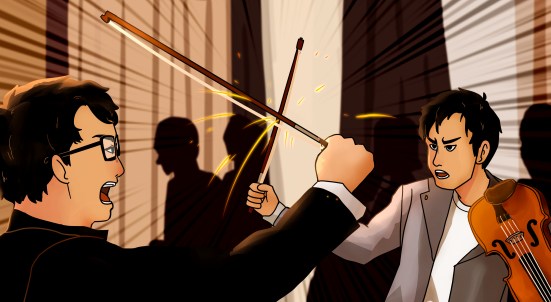
“String theory” (Stradivarius)

VIOLIN

We should always accept evidence arrived at using proper research and techniques even if we don’t care for the conclusions. When shown the proof, I embraced the idea that the War of the Worlds broadcast panic was mostly mythological, even though the idea of millions of impromptu Minutemen fending off an alien invasion was one of my favorite slices of Americana.

Recently, I also jettisoned another of my beloved legends – that Stradivarius violins will forever be without peer due to long-lost secrets and the impossibly high work ethic and pride of their creator. While high-class instruments, their reputation is more owed to exaggeration and expectation that acoustics and dynamics.

About 500 still exist and they are often paired with world-class violinists such as Itzhak Perlman or Joshua Bell. The latter played one to unsuspecting commuters in a subway terminal in an experiment to determine if beauty could be appreciated regardless of surroundings.

Brian Dunning at Skeptoid wrote the Stradivarius violins have been subjected to CAT scans, chemical analyses, and computer simulations to unearth the instrument’s elusive secrets. Musicians and scientists have puzzled over this fiddle riddle and conducted experiments to determine if the key lay in the wood, glue, shape, varnish, the way the violins were treated, or something else.

There has even been speculation that climate played a factor. Stradivarius plied his trade during a time of extraordinarily low sunspot activity, when European winters were colder than today. Dunning explained, “Trees grow more slowly in the cold, the rings are tighter, and the wood is more dense.”

Therefore, luthiers using the same type of wood today as Stradivarius did would be working with a less-dense material. Knowing this, scientist Francis Schwarze developed a fungal treatment for wood that increased its stiffness and made it comparable to the wood that Stradivarius held. Schwarze had a violinist play both a Stradivarius and a modern instruments, and a panel of experts thought the new violin had been made by the Italian legend. While this might seem to suggest that climate was the answer to the oft-pondered mystery, we will soon see that a more likely answer is that the Stradivarius rests more on reputation than results.

While opinion is involved when deciding if something is good, bad, or so-so, not everything is completely subjective. Three different persons could rank Twain, Dickens, and Poe, and reasonably arrive at three different orders. But musical instruments have quantitative aspects that are measurable – sound waves, pitch, frequency, and tone, all of which can be assessed and objectively identified.

A research team at a 2010 international violin competition did just that when they assembled six violins and 21 performers for a controlled test conducted by world-class musicians and sound scientists. The tested stringed instruments included three modern highest-quality violins, an 18th Century Guarneri, and two Stradivariuses, one from 1700 and one from 1715.

The experiment was doubled blinded; neither the participants nor the researchers knew which violin was being played. Each violinist tried 10 pairings of instruments, playing each for one minute. Afterward, they identified which one they preferred. In a second test, violinists were given access to all six instruments for 20 minutes, then asked to evaluate which was the best and the worst in five categories: tone colors, playability, response, projection, and which one they’d want to own.

In the one-minute tests, the clear loser was the 1700 Stradivarius. The other five won their head-to-head matchups about half the time, but no one ever picked the earlier Stradivarius model. In the 20-minute evaluations, the five other instruments again all played .500 ball, with the earlier Stradivarius again finishing deep in the cellar.

This was just one test and perhaps another Stradivarius or two or 10 would have a performance worthy of the instrument’s iconic image. But based on this double-blind study by experts, it seems that the Stradivarius is comparable to other high-quality violins, or in some cases, even a bit beneath them. Much of its value, then, comes from its name, prestige, and historical relevance.

Preparing its annual ranking of U.S. colleges, Time inputted all the data to be considered and Yale came in third. The editors then decided to bump Yale to first because it was Yale. Time considered Yale’s name to be of enough value that a degree from there would be worth more than one from anywhere else. A similar mentality seems to have caused music aficionados to catapult the Stradivarius from an excellent instrument to one incapable of ever being matched.


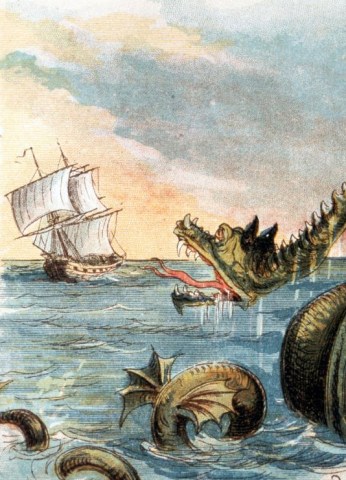
“Ship of ghouls” (Mary Celeste)

SEA MONSTER

In 1872, Capt. David Morehouse of the ship Dei Gratia found the Mary Celeste adrift in the Atlantic Ocean, in excellent shape but with nobody aboard. The Mary Celeste came with a rowboat capable of being rigged for sailing and it was gone.

Mary Celeste’s part-owner, Capt. Benjamin Briggs, was joined by his wife, infant daughter, and seven sailors when the group left from New York City for Genoa. With them were a liquid cargo of 1,701 wooden barrels of pure grain alcohol whose future mission was to fortify Italian wines.

The voyage was relatively uneventful according to Briggs’ log entries, and the group enjoyed ideal weather. There was a significant amount of water in the bilge and cabins of the ship when it was discovered, but this was consistent with a ship that had been sailing for at least 10 days with open hatches and an opened skylight.

Even in the 19th Century, unfounded conspiracy theories could arise around a bizarre event. There were reasonable suspicions about insurance fraud or pirates, as well as more macabre ideas centering on a mass murder-suicide, then there were notions such as ghost ships, a slithering sea serpent, or a mini-rapture.

Investigators quickly dismissed the idea of a violent end on the Mary Celeste because of the ship’s pristine nature and because many valuables remained. Insurance fraud on the part of the owner was likewise ruled out due to lack of evidence.

Another idea was that the captain, family, and crew abandoned the Mary Celeste because of pump congestion and instrument malfunction. Since investigators found the pump disassembled on deck, they surmised the crew may have been attempting to decongest it.

Natural disasters proffered as explanations included a displaced iceberg or a seaquake. However, hydrographical evidence suggests that an iceberg drifting so far south was improbable, besides no other ships had reported seeing one. A seaquake was an unlikely culprit because of the lack of damage to t the ship and its cargo’s sound condition.

Some speculate that a becalmed Mary Celeste began drifting toward reefs of Santa Maria Island. This idea largely falls flat since, if the ship had been becalmed, all sails would have been set to catch any available breeze and the ship was found with many of its sails furled.

Skeptoid’s Brian Dunning makes a case for empty alcohol barrels being the key clue. Nine of the barrels were undamaged but empty. Those nine were encased in red oak, while the others made of white oak. Dunning wrote, “Of the species of wood sold as white oak, the majority have occluded pores. This makes the wood watertight, which is why white oak is used for wine barrels and other barrels intended to hold liquid. The pores in the wood of the 20 or so species of red oak, on the other hand, are open, allowing liquids to seep through the wood. Consequently, red oak barrels should only be used for dry goods. But for some reason the owner of the alcohol used nine of the wrong type of barrel.”

Eventually, these barrels would have become soaked through. Alcohol evaporates fairly rapidly, so the smell would have permeated the ship’s cargo hold. With just .005 percent of the barrels experiencing this seepage, they in all likelihood were buried beneath the white oak barrels and it would have been impossible to determine the cause of the odor.

In this hypothesis, the captain feared an explosion and put himself, his family, and his crew in the rowboat, where they met a watery demise. Probably not involving a slithering sea serpent.


“Photo slop” (Photographic memory)

PHOFIN

If I’m remembering correctly, photographic memory refers to a supposed ability to recall nearly everything in precise detail – entire books, exact test questions from 15 years ago, every license plate you’ve ever seen. Its less famous cousin, eidetic memory, refers to being able to recall voluminous and minute details of a mental image.

Eidetic memory has been shown in controlled studies to sometimes exist in small children. But does anyone really possess photographic memory? There are some conditions whose characteristics include amazing feats of memory, but they stops short of being able to remember nearly anything that has ever happened to a person.

One category of amazing recall belongs to some people with savantism, a condition whereby a person has substantial limitations but can counter that with an almost superhuman skill in a specific area. Sometimes that area is memory.

Such persons are usually autistic with low IQs, along with having hampered motor skills, social abilities, and learning difficulties. But they may have a pronounced memory skill, the most common of which is calendar calculation, which is being able to instantly and accurately pronounce which day of the week any date in history occurred.

The second most common skill is an extremely prodigious recollection of items like encyclopedic publications, databases, and maybe even War and Peace. The best-known person with this ability was Kim Peek, the inspiration for Rain Man. Other skills may include instant mathematical calculation of large numbers or being able to reproduce works of art or photos with amazing precision. Artist Stephen Wiltshire, for example, has this ability. Other fantastic feats may include being able to forever reproduce a piece of music after hearing it once.

The above abilities are extremely rare, with only about 300 known cases worldwide. And the super skill is not always memory, and when it is memory, it is usually the ability to recall a specific thing, so this would fail to meet the definition of across-the-board photographic memory.

Even rarer than savantism is hyperthymesia, a condition that causes an overdeveloped autobiographical memory. Persons with hyperthymesia can remember nearly everything that has ever happened to them and can recall scenes in precise detail. They know what they saw and did, where they went, what was on the radio, how they felt that day. For example, they could accurately recite exact conversations they had about the 1976 presidential campaign.

However, this stunning ability still falls short of the supposed photographic memory threshold because they lack such abilities as being able to recall long strings of numbers or the word of every book they’ve read. According to Skeptoid’s Dunning, only about 30 persons have ever been confirmed to have hyperthymesia. The condition can be quite debilitating since those with it are unable to forget even if they want to. Anyone can have hurtful memories, but those with hyperthymesia recall exactly how they felt on their worst days and the pain stays fresh.

Beyond these categories, there are those who through repetition, practice, and mnemonic devices will build their memory and increase their ability to absorb information. This could include memorizing every person to ever serve in Congress or being able to recite the winner of every MLB pennant, batting championship, and ERA title (this was once my specialty).

However, this is distinct from photographic memory, where such abilities would be innate and the facts memorized instantly. A talent of such magnitude only exists with savants and those with hyperthymesia, and again, only within the prescribed limits mentioned earlier.

Eidetic memory – the ability to recall an image in perfect detail – is by contrast somewhat common in children. So far, now one has figured out why this proficiency exists in toddlers and preschoolers but is extinguished in adolescence. At least that’s what I remember hearing.

“Will powered” (Will o’ the Wisp)

wisp

The Will o’ the Wisp a natural phenomenon seen by nighttime pedestrians near bogs, swamps, or marshes. They have been described in folk tales as atmospheric ghost lights, with their specifics being tailored to the culture the legends are presented in. The lights are generally portrayed as being wielded by a malevolent entity or prankster intent on misleading travelers with a wayward lantern or torch.

The term “wisp” refers to a bundle of sticks or a paper used as a torch. Will is the male moniker given to the protagonist, who is often said to be sentenced to roam a swamp or marsh to atone for transgressions.

The Will o’ the Wisp has been seen less frequently since the advent of artificial lighting and because many wetlands have been drained and converted to farm acreage.

Indeed, there is a clear scientific reason for Will-o’-the-Wisp sightings. They occur when phosphine, diphosphane, and methane all oxidize as they produce photon emissions. Once phosphine and diphosphane mixtures ignite oxygen and methane, the results produce ghostly images. Furthermore, phosphine produces phosphorus pentoxide, which in turn forms phosphoric acid upon contact with water vapor. This causes the viscous moisture described by witnesses.

Additionally, the apparent retreat of the Will o’ the Wisp when approached can be explained by the disturbing of the air by nearby moving objects, which causes gasses to disperse. This was observed in 1832 by Major Louis Blesson, who noticed that water was covered by iridescent film and, that during the day, bubbles were observed rising from the wetlands. That night, Blesson observed bluish-purple flames in the same areas and concluded that it was connected to rising gas.

There is also a school of thought that some Will o’ the Wisp occurrences may be geologic in origin, as they might be piezoelectrically-generated under tectonic strain. The hypothesis holds that strains which move cracks in Earth’s crust could also heat up rocks, vaporizing the water contained within. Rock or soil containing quartz, silicon, or arsenic, could likewise produce electricity, which would then rise to the surface, resulting in the haunting image. If true, this could explain why the lights often seem electric or erratic.

Further, the phenomenon may result from the bioluminescence of forest dwelling microbes, insects, and larger animals. The eerie glow emitted from some fungal species during chemical reactions form white rot and this could also be interpreted as atmospheric ghost lights.