“Bland Old Party” (Porn crisis)

bela-smoking

If the topic is cleaning up dirty air, dirty water, or a smoker’s dirty lungs, the Republican Party takes a hands-off approach. But when it’s dirty movies, magazines, and websites, the platform encourages legislation, if not censorship. At the 2016 convention, the GOP added a plank that declared, “Pornography, with his harmful effects, especially on children, has become a public health crisis that is destroying the lives of millions.”

If this alarmist language were correct, society would have started hemorrhaging in the mid-1990s, when Internet access became more common. And with most persons today having about four ways to access porn at any time, our country would be in a total freefall and a zombie-infested dystopia.

This is not the case and no evidence was offered for the plank’s claims, nor does there seem to be any. According to The Hill, a 2009 review of studies concluded that porn was not addictive, was unrelated to unsafe sex practices, and did not make purveyors more like to commit rape or assault. Focus on the Family founder James Dobson is fond of pointing out that a majority of rapists have regularly viewed violent pornography, but he was committing a causation/correlation error. Persons inclined to commit these crimes want to view images that fuel their twisted fantasies. By contrast, someone disinclined to rape would be no more likely to do so after watching I Spit on Your Grave than they would be to hit the links after reading Golf Digest.

There is also a linguistic issue. While a few persons may struggle with watching obsessively or have other problems with pornography, that would be an individual concern, not a public health issue. “Public health” suggests something that impacts everyone: Clean water, improved sanitation, quarantines, immunization, and water rationing during droughts.

Legitimate public health initiatives would be eradicating malaria-carrying mosquitoes, giving free polio vaccinations to underprivileged children, and testing food for e. coli. These are all attempts to protect individuals who are not engaging in risky behavior. That could not be said of restricting pornography.

Similarly, bans on Big Gulps, trans fat, clove cigarettes, and even heroin and methamphetamines are unrelated to public health. True, some of those issues can indirectly impact others, but none will have widespread impact. For that, you need unregulated emissions, an invasive venomous species slipping through customs, or a previously eradicated disease becoming endemic.

A smoker who eschews seatbelt use can cut his risk of disease and improve his chance of making it home alive by snuffing the cigarettes and buckling up. No collective action is needed, nor is there public benefit to the lone smoking driver doing so.

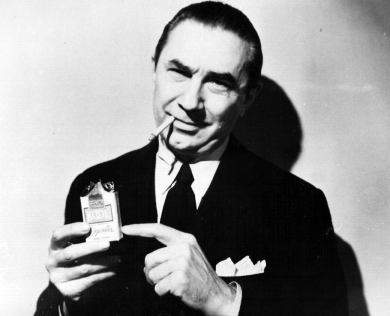
Porn is certainly not my thing. It is the only movie style that keeps action from being my least favorite genre. I’m more of a Bela Lugosi man. But if you’re into it, watch away. It’s almost certainly harmless to you and definitely harmless to me. It will no more unravel society than my watching Dracula will cause mass exsanguination.

“Braking the mold” (Black mold hysteria)

blackmold

A quarter century ago, almost no one besides mycologists gave any thought to black mold, and even fewer persons were sickened by it. But a few panicked misreports turned black mold into the hot new toxin to fumigate, douse, and fret over. The Berlin Wall had come down and 9/11 was a seven years away, so something needed to be the threat to good order.

A corrected report was issued, which few in the media paid attention to. As skeptic leader Brian Dunning put it, the media seldom reports that a sensationalized story was wrong because it’s busy reporting other sensations.

The humdrum truth is that mold has always grown in our buildings and is no more a threat now than it was 500 years ago. But, with black mold having no PR department, the charges leveled at it have lingered. It doesn’t help that mold is unsightly and that definitions of “black” include sinister, gloomy, calamitous, and grim. So it was easy to make believers of scientifically illiterate viewers, especially when dramatic music accompanied an alarmed voice warning about the latest danger. And it was even easier than appealing to the fears of terrorism or crime because this threat was so close to home it was inside it.  

The reports were taken from what read like a collaboration between the Centers for Disease Control and Rob Zombie. This real-life horror tale centered on infants with pulmonary hemorrhaging. Specifically, 10 babies who lived in Cleveland homes with water damage contracted a bleeding lung disease in 1993, and this was attributed to spores from a black mold variety. As a point of order, mold breaks down organic material it lives on and reproduces through airborne spores. Any danger comes not from the mold itself, but from the released spores.

Not that there’s much cause for concern. A subsequent report revealed that the Attack of the Thing From Cleveland was overblown. Some of the babies had lung maladies, but not all of them, and other than that partial truth, everything else was wrong. For starters, there was no reason to suspect that black mold was responsible. Not all black mold produces mycotoxins, and mycotoxins can come from other than the black species. Second, the water damage was not associated with an increased level of mold and the homes contained only an average amount of it.

As flawed as the original report was, the purported dangers were limited to bleeding lungs in babies who had been exposed to excess amounts. But with the urban legend trifecta of bad reporting, repeated water cooler retellings, and unscrupulous merchants, black mold’s bad reputation grew faster than the mold itself had ever grown on living room walls. It was now responsible for chronic fatigue, insomnia, memory loss, Parkinson’s, cancer, birth defects, blindness, deafness, and organs going kaput. Gloomy, calamitous, and grim indeed.

In truth, few of the 100,000 species of mold are ever going to pose a danger, and even then, only to persons with asthma, allergies, or a compromised immune system. For most people, the afflictions will be limited to coughing and wheezing. We breathe spores all day, in all buildings, and without incident. If a mold species is in walls or carpet, it’s because spores in the area brought it there, and they will do it again. One could tear down the house, but that would be as ineffective in the long run as razing it in order to eradicate flies. Getting rid of the mold has little value beyond esthetics.

Still, some persons will pay $20,000 for crews in hilariously overdone hazmat gear to demolish, eradicate, sample, scrutinize, and rebuild. Homeowners could get rid of the black mold themselves with bleach and elbow grease. Either way, the effort will serve only to eliminate an almost-certainly harmless substance that will grow back.   

“Fears of a clown” (Greenville clown sightings)

clown2

There have been reports from Greenville, S.C., in the last month about a clown attempting to lure children into the woods. Unlike claims of aliens or Elvis doing the same, this claim is believable and there have been multiple children and at least one adult who reported the incident, so there is probably some merit to the notion of clowns  (or possibly multiple harlequins) in the woods.

However, I want to address the intent of those clowns, which admittedly involves some speculation. This is different from citing the scientific implausibility of applied kinesiology or pointing out inconsistencies of 9/11 Truthers.

Clown sightings in unexpected places have happened every few years in the U.S. and Europe since the early 1980s. Most of these reports turned out to be pranks, publicity stunts, fabrications, and even one instance of a photo essay being produced. The only crime ever associated with a roving band of jesters was when a 90-year-old Paris woman had her money snatched at an ATM from two men in clown masks, who were likely wearing them for concealment.

However, third- and fourth- hand reports of clown sightings aren’t suggesting they are movie promos, photo shoots, or senior muggings. Invariably, children are the target. Criminal clowns are the latest anonymous boogeymen out to snatch grade schoolers, following the terrifying trail blazed by witches, demons, homosexuals, and Satanists.

In the most recent case, the children suspected the clowns lived in a house near a pond and trail, but a police search of the area turned up nothing suspicious, jester-related or otherwise. The most specific account came from ABC News, which interviewed a woman who said she investigated a report and saw several clowns in the woods flashing green lasers. Child abductors don’t normally work in teams or employ light tricks, so the culprits were most likely bored high schoolers who became wannabe kidnappers after enough retellings.

No one was hurt, grabbed, or even touched, which makes this incident consistent with about a half dozen similar clown stories over the last 35 years. The first U.S. report seems to have been in 1981, in Brookline, Mass. In this version, clowns used candy to attempt and lure children into a van. In nearby Boston the next day, reports of children being bothered by clowns while walking to school surfaced. Police investigations turned up nothing and this set the pattern for every abduction-by-clown report since. The trend goes as follows: A child reports being approached by a clown, parents freak, warnings are issued, media outlets stoke the fear, and law enforcement comes up empty. No child is ever harmed, no suspect ever identified.

There are solid reasons to doubt whether kidnapping is the motive of clowns spotted outside of circus tents. First, child abductors prefer to be inconspicuous and stealthy, two qualities missing in someone with enormous yellow shoes, a bright red nose, and towering orange hair. Second, none of these alleged abduction reports have been successful, nor are there any instances of genuine kidnappers acknowledging they used this method. The only murderous clown ever verified was John Wayne Gacy, and he did not perform his deeds in costume, nor was he targeting little children, though some of his victims were teens.

Some of the scary clown tales have their genesis in an older child attempting to frighten younger ones. This same ploy is sometimes done with monsters or giants, and in these instances, parents can placate the fear. But when the perpetrator is a clown, this is believable, so the parents might instead spread the fear. Details are enhanced and the danger increases as the anecdote spreads from person to person. Even if the tale has a basis in reality, it can be exaggerated in retellings, either for effect or out of panic. But for these panicked versions to be true, there would need to be a series of nefarious clowns out there, who are incompetent at abduction, yet extremely proficient at escape.

Folklorists Gillian Bennett and Paul Smith assert that the clown panic was born in an urban legend initially circulated among children, and eventually fueled by parents in a time when there was no Snopes to squelch it. Today’s pranksters likely got the idea from this legend, and while these clown clones may be out only to get their jollies, motivation becomes irrelevant when panic spreads.

Part of the reason for the fright is location. Genuine clowns are performers that need an audience and spotlight, and for a clown to be alone in the dark contradicts that. The notion of someone dressed as a clown being a danger to children is also bolstered by circus clowns often failing so miserably at their jobs. While their role is to amuse children, a majority of preschoolers are instead frightened by the exaggerated features, strange colors, and over-the-top antics.

Another factor is the change in how clowns have been portrayed in pop culture. The 1940s gave us Emmett Kelly, the 1950s featured Bozo and Clarabell, and the 1960s saw the advent of Ronald McDonald. But there was a radical shift by the early 1980s. Now,   clowns were more likely to be an animated doll pulling a boy under the bed in Poltergeist or terrifying Losers Club members in It.  Less-known joyless jesters were portrayed in Killer Klowns from Outer Space and Clownhouse. This abrupt shift in portrayal matches neatly with the reports of clowns like the one in South Carolina. So while some of these events are probably happening, they are likely the result of successful pranksters, not unsuccessful predators.


“Worried sick” (Wind Turbine Syndrome)

windturbine

Unlike the hysteria over chemtrails or cancer-causing WiFi, we know the birthplace and time for Wind Turbine Syndrome. This syndrome refers to a variety of maladies purported to be caused by proximity to the giant twirling devices after which the sickness is named.

Technical advancements frequently cause unfounded angst about health. Microwave ovens, TV sets, and home computers were all accompanied by concern amongst  hypochondriacs and those fearful of new technology. The same was true for telephones – first landlines, then cordless, and finally cellular, all of which were going to be responsible for nonspecific yet serious conditions.

The turbine panic began when pediatrician Nina Pierpont deftly sidestepped peer review and the Scientific Method to self-publish Wind Turbine Syndrome: A Report on a Natural Experiment in 2009. Pierpont placed an advertisement seeking anyone who both lived near a wind turbine and felt sick, then interviewed the 23 persons who responded. Next, she tied it up in a nice bow of post hoc reasoning and gave her newly-discovered phenomenon a name.

There are no studies to back up Pierpont’s conclusions. Instead, 18 research reviews about wind turbines and health have concluded there is no reason to suspect they are detrimental. Also, a meta study from 2014 showed there is no association between the turbine and unpleasant symptoms.

The symptoms most cited are fatigue, headaches, anxiety, insomnia, dizziness, and irritability, all of which are experienced by those not living near wind turbines. If wind turbines did cause medical problems, one would expect to see a connection between their installation and nearby persons experiencing symptoms. This is not the case. And there is no reason to believe that symptoms have increased since the early 2000s, which is construction of turbines became commonplace.

Furthermore, China has the most wind turbines in the world and there are virtually no reported cases of the syndrome there. In fact, the syndrome is limited almost exclusively to English-speaking countries, which are the ones whose media has featured coverage of this non-event. Additionally, surveys have shown that no one who has leased their land for the turbines has reported suffering from the syndrome. The same surveys also reveal that the residences of those reporting the symptoms are no nearer wind turbines than is the general population.

There have been suggestions that the syndrome could be caused by sound pressure, but this is Tooth Fairy Science, which is when an explanation is proffered before establishing that the condition is genuine. Besides, the idea falls flat because the level of sound pressure generated by wind turbines is far too low to cause people harm. An opposite but equally mistaken claim is that exposure to sound waves below the hearing threshold may be the cause.

In truth, this syndrome is an example of the Noncebo Effect, which is when harmful symptoms result from receiving negative information about a product. For example, some medical trial volunteers who are warned of potential side effects experience those effects even though they’re being treated with a sham medication. Wind Turbine Syndrome, then, is a psychosomatic disorder generated by heightened awareness of turbines and their alleged deleterious effects. It is caused not by proximity to wind turbines, but by proximity to information about the syndrome.


“No need to get snippy” (Circumcision)

NOSCISSORS

Because a Middle East nomad wrote a myth during the Bronze Age, U.S. males routinely have their healthy flesh mutilated at birth in a procedure as painful and unnecessary as slicing off an earlobe.

In the tale, Yahweh told 99-year-old Abraham that his nonagenarian wife would give birth to Isaac, and that the subsequent generations would make Abe the patriarch of a favored nation. Yahweh asked in return that Abraham and his male descendants be circumcised. So, to continue being blessed, Jewish parents then and now practice the procedure. 

It consists of strapping down and restraining a baby, then cutting off the foreskin,  dividing tissues that don’t come apart easily. This is so painful that some African and South Pacific religions use it as an initiation ritual for teenagers. Being able to weather highly-innervated tissue being cut off shows that the youngster is worthy of manhood.

For those born into other religions, specifically Judaism and Islam, the procedure is  performed at birth. Even though Christians reject most Old Testament rules, slicing off parts of infant penises is one that has been kept.

There is one other religious reason that infant circumcision has remained the norm in the United States. In 19th Century America, circumcision was part of the anti-masturbation movement. For reasons unclear, crusaders believed removing the foreskin would take away the pleasure and thereby discourage boys from accessing the self-service pump. I know I’m not much on anecdotal evidence, but I can attest this is an ineffective strategy. While this theory, and anti-Onanism in general, has fallen out of favor, the accompanying circumcision has endured.

Some of the reasons cited by circumcision advocates are so that the baby will look like his father, or would be made fun of in adolescence, or be unattractive to potential mates. These are horrible justifications for subjecting a baby to an unnecessary painful procedure that slices away a healthy, functioning part of the body. Another pro-snip plank is that an intact penis can produce a buildup of sebum and skin cells, but this innocuous substance easily washes away.

There are rare times that circumcision makes sense, such as in instances of penile cancer. But wholesale whacking is as nonsensical as removing breasts from every developing female in order to preempt breast cancer. If we performed routine infant appendectomies, appendicitis would be eliminated. But we don’t do that because of the risk/reward analysis. Abdominal surgery is too dangerous to justify without there being an immediate need.

While uncommon, there are instances of babies suffering long-term effects from circumcision. These effects include deformity, infection, amputation, and death. This century in New York City, at least 11 babies have been infected with herpes when Ultraorthodox rabbis passed the disease onto them during a hybrid of religious ritual and sexual assault. In this rite, rabbis slice the newborn’s penis, then suck the blood out. There have been at least two infant deaths that have resulted from this contracting of herpes. That’s a mighty steep price to prevent potential mocking in a middle school locker room.

“Tunnel vision” (Near Death Experiences)

HELL

While skeptic is the adjective I most use to describe myself, it would be fascinating to learn that there really are Yetis, Venusian visitors, or jasmine extracts that cure Multiple Sclerosis. And the most pleasant example of my doubts being proven unfounded would be to learn of irrefutable evidence of an afterlife. There is clearly death after life, but does another life or series of lives follow that?

Bill O’Reilly and Dennis Prager have touched on this subject and argued that if there is nothing to look forward to when this is over, then all life is ultimately pointless. I find that unnecessarily pessimistic. To me, hopelessness would be knowing there is an eternity and that it will be spent in a North Korean gulag. But the larger point is that O’Reilly and Prager are committing the Argument From Consequence fallacy. How much value there is in our Earthly existence has no bearing on whether it’s all we get.

The term Near Death Experience was coined by psychiatrist Raymond Moody, who interviewed hundreds of persons who had reported unusual experiences while hovering near death. The best-known elements are a light at the end of a tunnel, being detached from the body, and reviewing one’s life. Other than a buzzing or ringing sound, the experience is usually pleasant, though about 15 percent of respondents found the experience upsetting or even terrifying. Some report seeing deceased relatives or a religious figure, always someone from the dying person’s faith, as portrayed in their culture’s artwork. Some persons have increased religious fervor after these experiences, but there are no reported conversions. Muhammad has never appeared to a dying Jew, nor Buddha to a moribund Hindu.

These are NEAR death experiences since no one reporting them has died. This means they are not proof of an afterlife. The persons could be entering another plane, portal, or state of existence, but they could also be experiencing what happens to someone with a dying brain.

Vision researcher Tomasz Troscianko speculates that an overload of information in the visual cortex creates an image of bright light that gradually increases. NDE researcher Susan Blackmore, meanwhile, attributes the feelings of extreme peacefulness to endorphin release.

One of the stronger pieces of evidence that NDEs are all in the mind come from the experiments of Dr. Karl Jansen. He has produced the effects of Near Death Experiences using a short-lived hallucinogenic dissociative anesthetic. According to Jansen, this anesthetic reproduces features such as traveling through a dark tunnel toward light, communing with a higher power, and feeling detached from one’s body. Excessive release of dopamine and noradrenaline could explain seeing dead relatives and religious figures or watching key moments from one’s life pass before you.

Neurologist Kevin Nelson suggests a reduced oxygen supply is the main culprit in NDEs, as this causes various brain regions to slow down in order to conserve energy. This messes with the hypothalamus and temporal lobe, thereby impacting emotion, memory, and limb control.

While backed up by some data, these skeptic speculations involve some guesswork. The nature of NDE claims make them impossible to falsify, measure, or reproduce. This means they fall outside the scope of being dealt with by the Scientific Method. Thus, it is impossible to definitively conclude if NDEs are the result of persons entering a new consciousness that begins when biological functions cease.

But the same standard applies to the other side. P.Z. Myers exchanged online pieces with Salon writer Mario Beauregard, who had offered a series of vivid tales centering on NDEs. Myers explained why these anecdotes were inadequate evidence: “Beauregard could recite a thousand vague rumors and poorly documented examples with ambiguous interpretations, and it wouldn’t salvage his thesis.” Beauregard attempted a vague scientific spin by throwing in the word “Quantum,” which is the New Age version of God of the Gaps argument, where anything that can’t be explained is brushed away with this buzzword.

Meanwhile, Mike Adams at townhall.com related the tale of “Carl” and his NDE, and noted there are many such stories. He’s right, there are many undocumented, unverified, anonymous anecdotes out there. I hope Adams is right about Carl having glimpsed the unending bliss that awaits us all. Or really, even perpetual mediocrity punctuated by occasional doughnut breaks with Chuck Connors and Benjamin Franklin would be enough. But until proof is available, I’ll focus on making the best of this life, which is the one I’m sure I have.

“Healthy, wealthy, and lies” (Anti-GMO seminar)

MONSANTO

I strolled past the signs near the entrance proudly proclaiming that gluten-free food was available within. The store’s names stressed that the food was natural, leaving an unstated assumption that this was necessarily good. There was a detox section, although no one in it was receiving a liver transplant. There was also a sizable aromatherapy section and I was here for an anti-GMO presentation, so I figured I was deep in enemy territory. The organic dog food removed all doubt.

I was one of about a dozen attendees and presumably the only one doing undercover skeptic blogger work. I expected a one-sided presentation, but figured the speaker (a 67-year-old naturopath) would at least be aware of pro-GMO points in order to try and counter them. However, she had never heard of Golden Rice until I mentioned it. This is rice that is infused with Vitamin A, with a goal of preventing blindness in Third World children. Her retort was that Vitamin A should be distributed in other forms, without specifying this form, or how it would be paid for, transported, and delivered.

I thought we might have a chance at some evenhandedness when she described a GMO as “an organism which has been altered.” Anti-GMO types frequently prefer phrases like “manipulated into an unnatural state.” However, that hope vanished when she told us, “In the original Omen series, the antichrist was the CEO of a company thinly veiled on Monsanto. That is fitting, and they knew something.”

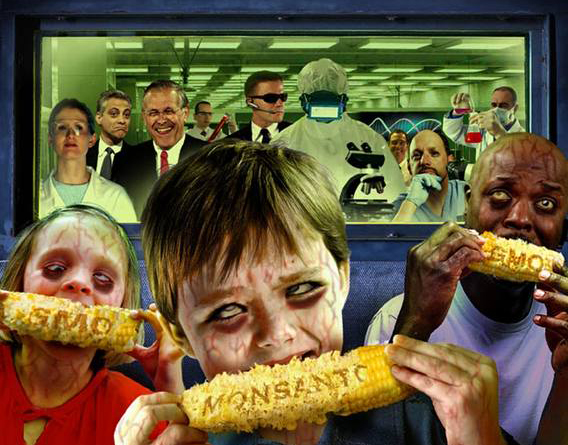
She touched on foreign policy as well. “Russia has totally banned GMO foods. They won’t have to launch a war, they will just be able to walk in and take our country because people here will just be zombies from eating that stuff.” I know the undead has been a saturated pop culture topic lately, but burned-out Commies vs. capitalist zombies, I think we’ve got a ratings winner there.

By the end she was explaining “how to avoid these Frankenfoods.” She also regretted that GMO opposition in the United States hasn’t mirrored what has happened in France, where she says the citizenry has ripped up cobblestones and dumped farm animal excrement in the streets. Indeed, the drive home was the one part of my seminar attendance that was without bullshit.

The Omen and Frankenfood references nicely mirrored the naturopath’s own horror tales. These included how 70 percent of U.S. foods are genetically modified and that these products cause liver malfunction and heart failure. And we are washing these GM foods down with aspartame-riddled drinks, which causes Multiple Sclerosis, Alzheimer’s, and Parkinson’s. Yet we were somehow all alive and spry enough to be hearing this. The other attendees presumably douse themselves in patchouli oil before heading out to buy organic pears and honey lemon shampoo, but that wouldn’t explain why I’m still healthy.

There was frequent praise of organic produce. “Does it cost a little more? Up front, yeah. But do you know how much it costs to be in a nursing home’s Alzheimer’s unit?” This was asked without offering evidence that this is the inevitable destination for the GMO corn-fed amongst us. It also glossed over the fact that Alzheimer’s substantially predates the appearance of GMOs .

She repeated the usual ad populum associated with anti-GMO talk. She pointed out that 26 nations have banned GMOs, with “Europe” being one of the countries she listed. In truth, most of the countries she cited only ban portions of the GMO process. I was unable to get a definite picture, but I could only verify that Zambia and Zimbabwe have truly banned GMOs, meaning they outlaw their cultivation, import, and sale.

“There can be contamination in organic produce, but there’s a difference between 90 percent clean organic produce and 100 percent bad for you regular food.” What is 100 percent bad for your diet is no food, as some Zambians and Zimbabweans can attest.

In any case, the number of countries that have banned it has nothing to do with whether they are safe. Governments can and do pass bad laws based on bad information.

She described GMOs as “Round Up Ready,” which is only true occasionally. Most Round Up ready crops are GMOs, but not all GMOs are Round Up Ready. She used this introduce the idea that glysophate is a danger. Indeed, it can be, but like all chemicals, toxicity is determined by dosage.

I raised this point, asking, “Since the dose makes the poison, what is a safe amount of glysophate? For instance, if you had two acres, how much glysophate could safely be spread?” She answered, “There’s no safe level of glysophate, just none.” I decided to fact check this and came across the National Pesticide Information Center at Oregon State University. Its information about glysophate shows potential danger in certain conditions and doses, but it is far from the death sentence our neighborhood naturopath had guaranteed.

We were shown photos of severely bloated rats that supposedly had been fed GM soy. I’ll give the benefit of the doubt and assume that these rats were bloated for this reason. But if so, the studies test for such dangers, and when proven unsafe, the food is not allowed to be sold.

She made no mention of the 1,783 studies that indicate GMO safety, other than to say such studies are pushed through by wickedly wealthy Monsanto executives and a compliant government. Not all studies are industry-funded, though many are, and with good reason. Most automobile safety tests are funded by the industry, in part because they are liable if they sell a defective product. The same is true with those who sell genetically modified organisms.

Next, the naturopath offered, again without evidence, that industry and government elites “who push all this junk on us, you better believe they’re eating high-quality organic food.”

Between what she said and audience members chimed in with, here were some other memorable quotes from the day:

BEST POST HOC REASONING: “I have a friend whose adult daughter was struggling with infertility. She asked what she could do, and I said, ‘Get her off soy and tell her to eat organic.’ Now she’s pregnant with her second child.”

BEST POLITICAL BIPARTISANSHIP: “It doesn’t matter if it’s Republicans or Democrats. GMO stuff is Obama, and aspartame was Bush and Rumsfeld.”

BEST GRAMPA SIMPSON IMPERSONATION: “These people that are 20 and 30 years younger than I am are idiots and zombies, out there eating all this stuff. It effects the way you think, the way you reason, and your reaction time. In places where they don’t have GMOs, people are bright, they’re engaged, they’re energetic.” Or in the case of Zimbabweans, they are starving because President Mugabe won’t accept GM corn for drought victims.

As mentioned earlier, the only countries I could determine that have banned the cultivation, import, and sale of GMOs are Zimbabwe and Zambia. So unless the naturopath is vacationing exclusively in the Victoria Falls vicinity, at least some of the peoples she’s encountering on her travels are consuming GMOs. Attributing all pleasant character traits to a GMO-free diet, and all negatives traits to consuming GMOs, was part of the presentation’s continual post hoc reasoning.

BEST NON-GMO TERROR CITED: “Fluoride reduces people’s IQ by 10 percent.”

BEST OMINOUS, HUSHED, REPEATED USE OF THE WORD “THEY”: “They created the Zika disaster and then they say we’ve got a vaccine to treat it. They do that again and again.”

BEST REFERENCE WITH WORLD WAR I OVERTONES: “It’s mustard gas when you take a shower because the chlorine heats up the water and turns the water into it.”

 The naturopath closed with what she said was a true tale about a Greek nun.

 “She never kept more than a day’s supply of food. She ate what anyone offered her and she never got sick. Then she had a girl who came to stay with her who tried the same approach, and she got deathly sick the first day. The difference was that before the nun ate anything, she prayed over it, and the young girl didn’t.”

It seems, then, that the naturopath and her kind can dump their anti-GMO food campaign in exchange for praying before consuming it. I can live with that compromise.

 

“The Kids Are All Might” (Indigo children)

SKID

Indigo children are said to be youngsters who possess highly desirable supernatural abilities. These awesome offspring are variously suspected to be multidimensional beings, human-alien hybrids, super-evolved hominids, or prophets destined to lead humanity to full enlightenment. While none of these distinctions have been confirmed in indigo children, we can be certain of their parents’ traits, most notably a massive ego.

The concept of indigo children originated with Nancy Ann Tappe, who attributed her discovery to her synesthesia. This is an neurological phenomenon where a person is using one sense but has another stimulated. Everyone does this to some extent. For instance, if someone hears the word giraffe, they likely will “see” this giant animal in their mind. But synesthesia primarily refers to such experiences as hearing a car start and associating it with the color green, or looking at a circle and getting an itching sensation. Tappe, then, attributed synesthesia to her seeing an indigo glow around select children.

A fairly minor point here, but that would not be synesthesia since only sight was involved. Perhaps she was claiming the color was her “seeing” the sixth sense. In any case, whether or not she is seeing shimmering children would be easy to determine. A dozen partitions could be set up, and behind each would sit either a person she considers indigo, a person she does not consider indigo, or an empty chair. She could then tell testers which partitions had an indigo glow rising from them. However, New Agers don’t normally care for these types of tests, instead preferring feelings, intuition, and client gullibility. Boyued by these elements, Tappe writes books on the subject and holds seminars, where hundreds of disciples bathe in each other’s bluish brilliance.

In her writings, Tappe lists traits to look for to know if your child is indigo. It’s unclear why this is needed, since having Tappe look at the kids would seem enough. Also, the list of indigo traits is so long and vague it could apply to everyone and so the Forer Effect comes into play. These descriptions include being curious, headstrong, unusual, driven, intuitive, intelligent, and resistant to structure.

Thinking one’s child is a hyper-evolved multidimensional being is attractive to those whose credulity is matched by their vanity. But author Sarah Whedon suggests the indigo label also appeals to parents who seek to excuse their child’s behavior and their parental responsibility to do anything about it. For instance, pro-indigo authors Jan Tober and Lee Carroll say such children may function poorly in conventional schools due to their rejection of rigid authority, their being smarter than their teachers, and their inability to embrace discipline.

Whedon suspects that many children who have ADHD or autism are instead labeled as indigo by their parents. This also gives a fabricated reason to avoid Ritalin or other medication, a plus in this mostly anti-vax, anti-Big Pharma community. Here, autism is just another word for telepathy. Skeptic author Robert Todd Carroll said, “It’s much easier for them to believe their children are special and chosen for some high mission instead of having a brain disorder.” Anthropologist Beth Singler considers the movement as part of a moral panic about children, parenting, ADHD, autism, Big Pharma, and vaccinations.

From a list of identifiers at indigochildren.com, we learn, “If this seems to describe you, chances are you are an Indigo,” followed by an exhaustive list of personality traits. Most are positive, such as creative, honest, sympathetic, and confident. Like astrology, it is kept general, while also telling the listener what it wants to hear. There are handful of negative traits thrown in – rebellious, antisocial, strange – in order to have cover for ADHD and autism.

I doubt if anyone who has wanted to know if their child was indigo has looked into it and decided the answer was no. If someone has gotten to the point of seriously asking that question, it reveals their motivation and mindset.

“Sour sweetener” (Aspartame)

diet soda health risks

The main argument against the supposed dangers of aspartame is that I’m alive and healthy enough to write about them.

The artificial sweetener was the target of one of the Internet’s first wide-ranging smear campaigns, and has since been linked to serious disease and even death. Given the number of diet sodas I drank from ages 25 to 45, I should be either be dead or writhing in agony wishing I was. The 1998 e-mail was forwarded millions of times and, despite being almost completely inaccurate, is still cited in some credulous circles.

However, an FDA report called aspartame, “one of the most thoroughly tested and studied food additives the agency has ever approved.” Indeed, metadata of hundreds of peer-reviewed studies done by private industry and government agencies showed the sweetener to be safe in normal doses. The one exception is that it should be avoided by those with the genetic disorder phenylketonuria.

Aspartame’s beginnings are similar to that of LSD, minus the crazy visions and sounds. Chemist James Schlatter was working to create an anti-ulcer drug when he licked his finger, unaware it had aspartame on it, and he noticed the sweetness. Had it not been for this accident, aspartame would have been an obscure gastrointestinal medication, as opposed to one of the world’s most ubiquitous substances. It also would not be part of Internet lore, specifically, the chain mail written by someone using the pseudonym Nancy Markle. The letter linked aspartame to Gulf War Syndrome, lupus, Multiple Sclerosis, and birth defects. Much of the e-mail consisted of silly correlation-causation errors, such pointing out that a significant percentage of lupus sufferers were diet soda drinkers, without offering evidence of a direct connection.

One isolated accuracy was the claim that aspartame ingestion produces methanol and formaldehyde. However, the author omitted just how little of these are made. The amounts are less than what is found in citrus fruit, which some anti-aspartame crusaders recommend being 75 percent of a person’s detox diet.

Like anything else, it’s the dose that matters. Two Tylenol will ease your backache, while two bottles will permanently relieve it and all other pains. A soda drinker would need to down 20 Diet Cokes a day to do damage.

The conspiracy allegations centered mainly on suggestions of an improper relationship between regulators and industry executives. Two persons, Samuel Skinner and Arthur Hayes, had worked for both government regulators and (indirectly) with G.D. Searle, an aspartame producer. An extensive review by the Government Accountability Office determined there was no impropriety and that the relationships did not impact the studies’ results. Depending on one’s viewpoint, this either ended the controversy or expanded the conspiracy, which now included the GAO.

For those that embrace the latter interpretation, Janet Starr Hull hosts a website where persons with scary sweetener stories can relate their experiences to others in a perpetual communal reinforcement party. Hull also issues dire warnings about adverse reactions and side effects from aspartame that seem to include almost every disease or malady ever identified. The absurdly exhaustive list is here

Per this list, diet cola aficionados should be a raging hoard of blind, deaf, suicidal epileptics. Any health concern, from a scratchy throats to lymphoma, can be blamed on aspartame. Hull even cautions that if nothing is wrong, that could be the artificial sweetener playing tricks: “It is typical that aspartame symptoms cannot be detected in lab tests and on x-rays. Textbook disorders and diseases may actually be a toxic load as a result of aspartame poisoning.”

Using pseudoscience standard operating procedure, Hull cites no peer reviewed studies, conducts none of her own, and wraps it in a commercial bow by selling products to fix the mess. She throws in the usual detoxing message, glossing over the fact that only the liver and kidneys can manage that. She also recommends a 10-step program, which includes such groundbreaking advice “be happy” and “get control of your life.”

Additionally, she advises asking people drinking diet soda if they have any of the symptoms Hull had outlined. So next time you see a strange woman downing Tab, ask her if she has been experiencing irritability or severe PMS. I’ll bet the reaction will indeed be hostility, one of the items on the list.

“Sickening accusation” (Munchausen By Proxy)

DYSFCIn 1977, Roy Meadow claimed to identify a phenomenon he called Munchausen Syndrome By Proxy. This referred to someone intentionally sickening someone in their care, then seeking medical attention for it. Since then, there have been some rare documented cases, but many more instances of unfounded accusations.

Most of the problem lies with the supposed identification signs. These include: 1. The patient’s mother having substantial medical knowledge for a lay person; 2. The mother being unenthused when the doctor informs her of a possible cure or mitigation. 3. An illness that is difficult to diagnose, with new symptoms periodically creeping up; 4. The mother questioning the doctor’s conclusions or challenging treatment options; 5. Changing doctors, especially more than once.

But these signs describe normal behavior for a mother whose baby has a rare, mysterious illness. This unexplained sickness will cause the mother to look for as much information as possible, a search that is much easier now than in 1977. Further, mysterious illnesses may lead to multiple unsuccessful attempts to diagnose and treat them. Hence, a mother who is told that we now know what is wrong may be hearing that for the fourth time, so the reaction may be less than complete joy. Moreover, the reason she has been going to doctors and hospitals for years is precisely because the disease cannot be pinned down. It is counterintuitive and cruel to use repeated trips to medical centers against her.

Before going further, a word on why I am using gender-specific language. Every false MSBP accusation I’ve come across was leveled at a woman. There may be a microscopic percentage of MSBP accusations thrown at fathers, but this is overwhelmingly suffered by mothers.

Mannie Taimuty-Loomis, who was falsely accused of the syndrome, told Psychology Today, “If it were the man demanding help, wanting to know more and wanting to be involved, no one would think anything of it. But when a mother displays the same characteristics, she’s deemed difficult to work with, overly interested, and very controlling.”

Taimuty-Loomis was a mother with medical knowledge, asking detailed, complex questions while moving from doctor to doctor trying to find the cause of her child’s unexplained illness. This was fertile ground for a MSPB accusation, and she temporarily lost custody of her children. Yet when her son died at age 3, it was learned it was from mitochondrial disease, which had manifested itself in an array of symptoms.

Once a mother is suspected, almost any action can be considered further evidence. While being challenging is one of the supposed signs, so too is seeming to want an intimate relationship with members of the medical staff. So if a mother seems to be seeking approval from nurses, that can be used against her, as can her being seemingly indifferent to them. Being overprotective can be seen as a sign, as can coming across as negligent. Acting calm can be considered evidence, as can being agitated. The same thing with being either congenial or confrontational.

Besides tormenting the falsely-accused mother, focusing on MSBP can also divert doctors from the hunt for the disease and cure. Julie Patrick had her son Phillip taken when doctors at Vanderbilt University suspected MSBP, when the child had actually been struck with a gastrointestinal illness. This was only discovered after his death at age 11 months. The confounding nature of the disease was very stressful to Patrick, whose constant questions and challenges were used as evidence of MSPB.

Loren Pankratz has seen this unfold many times. He is a psychologist who is regularly called to testify in cases involving MSPB accusations. He said there have been two cases he investigated where he concluded MSPB was happening. But there are other times, he said, where, “I have seen mothers accused of MSBP simply because physicians disagreed about the medical management of their child. It is vastly over-diagnosed.”

When a child is removed from the mother, it is partly in an attempt to see if the patient gets better. But this has limitations, as the illness may be subject to flare-ups or fluctuation. Pankratz considers the separation test unreliable since conditions can improve for a variety of reasons, including changes in medical treatment.

The first major backlash against this mass hysteria centered on UK lawyer Sally Clark. She was exonerated after being convicted of murdering her two sons who had died in infancy from unknown causes. Meadow testified the odds of this happening were one in 73 million, when the Royal Statistical Society found this to actually be one in 200.

An investigation revealed the babies had died of staphylococcus aureus. Clark was released but the trauma of the two deaths and a false imprisonment led her to drink herself to death. The Clark case was one of four that Meadow testified in that later resulted in the mother’s vindication. In view of that horrible record, Meadow now concedes that the diagnosis is made far too often.

In another case, though not involving a MSPB accusation, Russian immigrants Anna and Alex Nikolayev had their child seized for a few weeks for merely seeking a second opinion. There have been other cases like this, with Justina Pelletier’s being the most infamous. These abuses of power are somewhat common, as is the infiltration of pseudomedicine in hospitals. As such, I’m wondering if we’ll someday see children seized because their skeptic parents objected to a hospital treating their child’s hepatitis with Reiki.