“Revisionist herstory” (Amelia Earhart disappearance)

skpmary

Amelia Earhart started flying 50 years before states began considering the Equal Rights Amendment. Given her iconic, trailblazing status, her literal vanishing makes for a human tragedy and represents much unfulfilled promise. However, it also creates easy fodder for those who wish for a more exciting conclusion than a plane crash. The somewhat-still-respectable Nat Geo and the not-at-all-respectable History Channel have broadcast schlock fests promoting creative viewpoints about her disappearance.

Probably the wildest idea is that Earhart served as a spy and was captured by the Japanese, who groomed her to become Tokyo Rose. Competing for least likely scenario is the notion that she was held by Japan, but released after World War II and returned to the United States under an assumed name. The New Jersey banker identified in a book as the one perpetuating this ruse successfully sued the publisher and had the terrible tome withdrawn.

A hypothesis centering on Earhart and navigator Fred Noonan making it to Gardner, another South Pacific island, seems a little more credible by comparison. But these claims evaporate when one considers geography, navigation techniques, and Coast Guard logs.

One of the few areas of agreement between the mainstream and alternative camps is that Earhart and Noonan departed Papua New Guinea on July 2, 1937, bound for a refueling stop 2,500 miles away on Howland, a treeless speck of flat coral measuring barely two square miles.

At 6:14 a.m., the aviating duo radioed to the U.S. Coast Guard cutter Itasca, which was situated near Howland to assist with flight logistics. At the time, Earhart reported they were within 200 miles, but at 7:42, she alerted Coast Guardsmen that her Lockheed Model 10-E Electra was running low on fuel and that she saw no land. Her last known attempt to communicate came an hour later. A massive search conducted by nine ships and 66 aircraft produced no sign of the aviators or their plane.

The best evidence suggests the globetrotting duo ran out of fuel after miscalculating Howland’s location. It was dark, the atoll is tiny, and if they were very far off at all, the smoke plumes the Coast Guard was offering for visual support would have been unseen.

The Itasca crew could only pin the likely crash location to a broad expanse encompassing 23,000 nautical miles north of Howland. The fuel supply would have been insufficient to get beyond this area, and the two certainly would have been incapable of reaching Gardner. Alternative guesses are hypotheses at best, though unrestrained conjecture is more abject description. Claiming that her disappearance was caused by the Pacific Ocean’s version of the Bermuda Triangle would be nearly as convincing.

Earhart’s final radio transmission to the Itasca said they were in the immediate vicinity of Howland. However, Howland’s position was misplaced on Earhart’s chart by about five nautical miles. This would still have placed the island within the her vision, but if piloting or navigation errors were added to the mix, and the plane was beyond those five miles, the results could be fatal.

The only true mystery is exactly where in the ocean Earhart met her doom. Still, members of the International Group for Historic Aircraft Recovery (TIGHAR) argues that she managed to make it to Gardner, where she and Noonan lived as castaways and made unsuccessful attempts at radioing for help or otherwise escaping their Pacific predicament. This resembles Gilligan’s Island and, in fact, the premise is about as goofy. Gardner sits 350 nautical miles north of Howland and getting there from Papua New Guinea would have required flying in a far more northeasterly direction than someone setting out for Howland would have employed.

TIGHAR, buoyed by the Nat Geo, maintains that debris and bones found on Gardner supports its position. However, the island has been frequently populated since the 19th Century by sundry types, to include pearl divers, colonists, Coast Guardsmen, and yachtsmen. There is no DNA evidence from the bones or other items that tie them to Earhart or Noonan.

An even more outlandish scenario, championed by the (cough cough) History Channel, is that the doomed duo were taken aboard a Japanese boat, which evaded the 4,000 search party members looking for them, and that they were then held as prisoners of war, even though the U.S. and Japan would not come to blows for another four years. The most prominent piece of evidence offered for this position was a photograph in the U.S. National Archives that show a man and woman on Jaluit Atoll.

Fittingly, this idea crashed spectacularly. Japanese military historian Kouta Yamano searched the photo database of Japan’s equivalent of the Library of Congress and it took him half an hour to find the photo in a 1935 book.

These types of conclusions are reached only if one begins with the assumption that Earhart and Noonan made it to Gardner, and then attempts to shoehorn in photos, bones, campfire pits, and artifacts to meet a predetermined storyline. Trying to ascertain if there could by another source for the items is not part of the equation. Instead, proponents jump to the least likely conclusion – that the debris belonged to someone who was never known to have been to the island and who had never planned on doing so.

For example, a partial human skeleton was found in 1940 and its discoverer, Gerald Gallagher, shipped the bones to Dr. David Hoodless, who determined the bones to be a relatively small male of European descent. That was enough for TIGHAR to conclude that the bones belonged to Noonan, as opposed to any of the hundreds of British colonists who were known to have made it to Gardner.

In more pretzel logic, ITHGAR considered the heel of a woman’s shoe found on Gardner to have be Earhart’s. Far more likely was that it belonged to a pearl diver, colonist, military member, or a victim of a 1929 shipwreck in the area. Unless one has a predisposed, insatiable desire to attribute this neglected footwear to a lost aviation pioneer, there is no reason to do so.

“Inflamed issue” (Anti-inflammatory diets)

ORANGRIND

Detoxing, boosting immunity, and decreasing inflammation are the trifecta of ill-defined alternative medicine gimmicks.

Only the liver and kidneys detox and if those are failing, you need the ER, not a Gwyneth Paltrow organic bean falafel.

And except in extreme cases, such as HIV positivity or late-stage cancer, immune boosting is neither possible nor desirable. In fact, it is the defining feature of autoimmune disorders such as arthritis and lupus.

Meanwhile, inflammation is blamed by some alternative medics as the cause of many diseases. This assertion comes with an accompanying claim that certain foods will prevent inflammation from ever occurring. There are a myriad of putative anti-inflammatory diets, none of them backed by empirical evidence that disease is caused by inflammation, that inflammation should necessarily be avoided, or that dietary choice would impact this.

Inflammation is unpleasant and its trademarks include redness and swelling. But in the same way that our nervous system lets us know if we’ve back into a hot pipe – giving us a temporary discomfort in exchange for avoiding long-term serious damage – inflammation promotes overall health. It is often the result of the body fending off an infection or healing an injury. Trying to halt it in such cases would likely be futile, and if one could somehow succeed, doing so would be detrimental.

Not that inflammation is always beneficial. It sometimes aggravates rheumatoid arthritis, diabetes, and asthma. Then there’s chronic inflammation, which accompanies a lingering illness or other long-lasting condition. But it’s crucial to understand the relationship between disease and inflammation. Inflammation does not cause a disease; Rather the disease can lead to inflammation. Inflammation can be good or bad, depending on the situation, and trying to halt it in all cases is a poor idea.  

If one is determined to try, ibuprofen is the way to go, as no foods have proven effective at decreasing inflammation. However, one can experience increased inflammation through overeating, especially after gorging on vittles high in saturated fat. After such gluttonous behavior, the body churns into overdrive as it struggles to metabolize all the munchies you’ve crammed into your pie hole while stretched on the recliner. Any such inflammation disappears after digestion. So the relationship between food and inflammation is that eating moderate portions will prevent it, other than the times where it’s the result of disease or injury, in which case it has curative properties you wouldn’t want extinguished. The key is the size of the meal, not its contents.

Some proponents of allegedly anti-inflammatory diets will blame processed foods, but this is another ill-defined term. Any change is a process, so a list of such foods would include any that are cooked, sliced, juiced, peeled, frozen, pickled, dried, sugared, fermented, dehydrated, canned, or pasteurized. As Skeptoid’s Brian Dunning put, “An uncut, unpeeled fruit or vegetable is about the only unprocessed food that it’s possible to get.”

So unless one is prepared for a diet of orange rinds and the like, the intake will include processed foods. And again, from an inflammation standpoint, as long as the portions are reasonable, a diet of cucumbers, beans, and salmon will produce the same results as one of pizza, French fries, and maple long johns. Now that’s an anti-inflammatory diet I could get into, and it would work as well as the rest.  

“Crimes with orange” (Glyphosate in OJ)

OJDRINK

It is difficult to find orange juice containers without a Non-GMO label affixed. However, this is a redundant distinction since there are no genetically-modified oranges. These notices annoy food scientists and farmers, along with their skeptic allies. But they appeal to those who dread GMOs, such as the fearmongering group Moms Across America.

But kowtowing to this organization has done food companies little good since Moms Across America has launched another baseless attack against orange juice producers – that they drench their product in glyphosate.

This would seem highly unlikely for two reasons. First, glyphosate is made specifically for genetically modified foods, which oranges again are not. Second, it is never sprayed on trees, which is where oranges grow.

According to Kevin Folta, a University of Florida horticulturist and pariah to anti-GMO groups, the laboratory that announced the findings about glyphosate in orange juice is not an independent organization but is led by biotechnology opponent John Fagan. Of course, to dismiss findings because of their source is to commit the genetic fallacy ad hominem, which we strive to avoid. So let’s look closer at the claims and analyze them on their merits.

The testing of the tangy citrus drink was performed using a technique called LC-MS/MS, which Folta said can detect and measure glyphosate. “However,” he added, “the compound is detected in everything, so there’s no way to discriminate between a signal caused from glyphosate and a signal caused by some other compound that behaves in the same way during the chemical separation.” There would be no way to determine this absent a negative control, which the study failed to employ.

Further, there is no suggestion the testing was randomized, double-blind, or repeated. This means it’s unclear what kind of variation there was within the test or between samples. And even if the glyphosate detection was somehow real, Folta writes that the alleged amounts would be far too low to impact human health.  

Whatever the methods, the results were posted on the research organization’s website and not submitted to a peer-reviewed publication. The number one giveaway that someone is practicing pseudoscience is when they take their findings to a a sympathetic audience rather than submitting them for rigorous inspection to subject matter experts. So go ahead and drink orange juice unless you’ve always preferred Tang.


“Focal plane” (Survivor bias)

HAVEACIGAR

I sometimes hear tales about a childhood that consisted of unsupervised swimming, heavy whiskey drinking, riding in the back of a pickup truck, and living with asbestos and lead paint. This penalty-free daring continued in adulthood with helmetless motorcycle rides, and we’ve all heard from the 95-year-old great aunt who boasted about smoking a pack a day for three-quarters of a century. The insinuation is that none of these are a big deal since the person made it through unscathed.

But these are instances of survivor bias. Those who died doing those things are not here to tell us about it. There are also those who suffered nonlethal harm as a result. Dismissing those occurrences, especially when they are the norm, is the epitome of survivor bias, which relies on anecdotes over data. A person committing survivor bias focuses on entities that have made it through some selection, ordeal, or process, and assumes that represents the whole.

A person may say, “I wasn’t vaccinated and I’ve stayed healthy, so they’re unnecessary.” Or, “I have voraciously consumed ribs, eggs, and whole milk all my life and have below-average cholesterol. Those doctors and scientists don’t know what they’re talking about.” These conclusions take a sample size of one and apply it to the entire populace. They may even entail dismissing decades of properly-done research and empirical evidence. 

Moreover, even if a person turned out OK with a childhood of frequent smoking, drinking, and spankings, maybe he or she would have been even better without them. It might be more accurate to say that they turned out fine in SPITE of those things.

Then there’s the matter of where the ‘fine’ threshold lies. Is it merely maintaining mediocre employment while marrying, having children, and avoiding prison? I’ve heard persons who have managed not much more than this proclaim that they’ve “done OK.”

With regard to spanking, consistent research shows an increase in likely negative outcomes for those who are subjected to it. Unilaterally declaring that one has achieved an arbitrary benchmark of “doing OK” to assert that spanking is harmless is to dismiss sizable evidence to the contrary.

Another way of how it might work. One may say, “Vegans are so annoying, they always have to mention what they don’t eat.” But you are only hearing from vegans who tell you their dietary choices, not from those who refrain from doing so.

Survivor bias is also a regular feature of religion. In an interview with Larry King, Billy Graham cited a women who avoided a fatal crane plash through a series of delays that at the time seemed annoying but proved serendipitous. When Graham credited this to God, King pointed out there were scores of others who DID get on the plane.

Speaking of manned flights, the survivor bias term took root in World War II when Navy researchers studied damaged aircraft returning from missions. Their consequent suggestion was to add armor to the most-afflicted areas.  However, statistician Abraham Wald noted that researchers were only examining fighter planes that had made it back, meaning they could survive heavy hits to the affected areas. The better idea, he said, would be to galvanize parts of the plane that showed little to no damage since that is probably where planes that were shot down had gotten struck.  

Let’s look at some other examples. A study showed that cats which fell from less than six stories paradoxically had greater injuries than those who fall from six stories or higher. The initial suspicion was that the falling felines reached terminal velocity after righting themselves at five stories, after which they relaxed, leading to less severe injuries. However, a Straight Dope column suggested this was probably survivor bias since few dead cats would be brought to the veterinarian. Most of those who fell from six stories or more we likely killed on impact.

Now onto the plant world. Lianas are parasites that feast on trees, and the hosts of these unwelcome guests were seen to mostly be slow-growing and shade-tolerant. This led to a belief that lianas have stronger negative effects on these tree types. But further research showed liana infestation is actually more detrimental to trees that are light-demanding and fast-growing. So much more damaging, in fact, that it usually wipes them out, meaning researchers are less likely to find them.

The trees died, while failing mutual funds have a more figurative death. They are shuttered or absorbed into another fund. This means an investment company can accurately claim to be offering a better opportunity than what its track record would suggest since the mutual funds they are advertising are succeeding while those that failed have gone away.

During my time in Germany, I gazed in awe at the beautiful baroque architecture. But while it was amazing craftsmanship, that doesn’t mean J.S. Bach was surrounded only by stunning building designs in his time. It means those were the ones that survived because they were so amazing while the ugly ones were torn down.  

Likewise, most of us love stories with heroines like Barbara Corcoran, the Shark who turned a $1,000 loan into multibillion dollar business empire. But the idea that anyone with the right grit and inspiration can likewise become a successful entrepreneur, author, actor, soccer player, or inventor is survivor bias because we never see the failures. Nirvana and Apple both started in a garage, but there are many more bands and businesses who never left it.


“Baby, it’s cold denied” (Echinacea)

FLOWER

Most traditions this time of year are pleasant enough: Gift exchanges, The Nutcracker, eggnog. Alas, the late fall and winter months also bring an annual uptick in the common cold, although the weather only indirectly causes this. Lower temperatures don’t cause persons to catch cold, but it does prompt them to stay indoors, where they inhale stale air and spend more time next to family members, co-workers, and friends who may be housing a virus.

Meanwhile, a tradition that operates regardless of season is otherwise reputable media outlets pushing pseudoscience. The latest pitiful, predictable instance is Time boasting about Echinacea’s ability to tame the common cold. Like tales that push an even more implausible scenario of secret cancer cures, the story a herbaceous flowering plant’s cold-conquering powers confuses a multi-faceted concept with a single entity.

There are hundreds of cancer types and just as many viruses that are labeled the common cold.  It is not one illness, but scores of indistinguishable ones, each caused by a separate virus. They all impact the upper respiratory system and bring familiar maladies so they seem the same. But they are merely similar, meaning the idea of a catch-all cure is unrealistic.

In a tepid defense of the Time author, I should point out that he quoted self-described experts. This means he was accurately reporting what they said as opposed to just making up stuff himself and flinging it. Still, Time bears the ultimate responsibility for any medical misinformation appearing on its pages or website.

They should have done what Dr. Steven Novella did, which was to delve into published research on the matter. In so doing, Novella found a trio of studies, including two systemic reviews, that showed Echinacea to be of no value in speeding recovery from cold symptoms.

First, there was a 2010 study in the Annals of Internal Medicine which found cold-suffering subjects had the same results whether they received Echinacea, a placebo, or nothing. Then a 2014 review concluded that Echinacea users had no statistically significant benefit beyond what placebo poppers were experiencing. That same year, a Cochrane systemic review likewise showed that Echinacea was without benefit to cold treatment.

Despite these consistent underwhelming performances, Echinacea endures in part because proponents cherry pick and misrepresent lines in the reviews that suggest there may be some benefit. For example, the exhaustive Cochrane study contains the this sentence: “The results of individual prophylaxis trials consistently show positive (if non-significant) trends, although potential effects are of questionable clinical relevance.” Proponents pass this off as “consistent positivity,” even though the review as a whole made it clear that Echinacea has not shown to be effective at reducing cold effects. There are insignificant differences to some aspects and the review makes it clear that even that minor plus likely has no clinical relevance and is likely the result of statistical noise.

This refers to unexplained variation or randomness within a data sample. This noise is usually the result of error and this deviating data is unlikely to be replicated under the same, controlled conditions. In other words, Echinacea won’t take away your scratchy throat, make your eyes less watery, or reduce your cough’s intensity.

Proponents sometimes lean on the Appeals to Tradition and Nature Fallacies since the flowering plant was used as a sort of panacea by some 19th Century Native American tribes. Favoring anecdotes in lieu of data is another tactic. Or they cite a poorly-documented article in a media giant that should know better.

“Facial miscues” (Intelligent design)

TUFK

Since Intelligent Design is not testable, falsifiable, or provable, it has no place in science class. It would be OK for philosophy course, but even then the idea withers under scrutiny.  While the body has some amazing attributes, its numerous flaws speak against the notion of it having been designed by a flawless, all-knowing, all-powerful being. However, our bodies make sense when one considers the limits and misfires of evolution.

The SkepDoc, Harriet Hall, wrote that examples of a lack of design in humans would include backward retinas, tail stump remnants, and an inability to naturally produce needed vitamins and minerals.  

Most Young Earth Creationists accept what they call microevolution, or minuscule changes within a species. This might include fur becoming darker so the animal can blend into brush to escape a predator. But an intelligent designer creating flawless masterpieces should produce flora and fauna that never require any change.

However, we do change and are mostly the better for it, but it hasn’t always gone well and there have been some evolutionary errors. This is to be expected in an ongoing, imperfect cycle of random mutation and natural selection. These defects come in three types: Characteristics that developed in our distant ancestors as they fought to survive in a prehistoric world much different from the one we occupy; incomplete adaptations, such as the knee being ill-suited to our bipedal stride; and shortcomings that are constrained by evolution’s limits. For example, we have inherited structures that are inefficient but will never be re-designed through random mutation. Or as Hall put it, “No robot arm will ever be designed to imitate our nonsensical bone structure.”

And it’s not just arms that are the issue. There exists a great meme of Ken Ham calling the eye a perfect organ created by a perfect designer – said while Ham is wearing glasses. The only thing Ham and I have in common is that we use eyewear, as do one-third of Westerners and a whopping 75 percent of Asians. This would never happen with perfect design, to say nothing of those who are born blind or become so through congenital defects.  

Meanwhile, the eye’s facial neighbor, the nose, contains nasal sinuses that drain up instead of down.  Not only does this fail to take advantage of natural gravity, it leaves us move vulnerable to colds and sinus infections than other mammals, whose sinuses run the other way. Then there’s the question of why illness would exist at all in a world created by a benevolent being incapable of error.

But with evolution, this again makes sense. Biology professor Nathan Lents explains, “Evolution cares little about the individuals who will die of cancer. This is a sacrifice worth making for the diversity that comes from mutations.” Hall adds, “If a mutation causes harm late in life after the individual has reproduced, such as in Huntington’s disease, natural selection is powerless to stop it.”

Moving down to the throat, the windpipe’s positioning opens the possibility of choking to death through accidental inhalation of food. An intelligent designer would place the path to the lungs and the path to the stomach in separate compartments.

Hall wrote about another throat feature that belies intelligent design: “Our recurrent laryngeal nerve loops under the aorta, following a circuitous path that is more than three times as long as it needs to be. The error originated in fish, which don’t have necks and have a circulatory system very different from that of humans.” Again, this would never happen with intelligent design but can be seen as the result of man and fish having common ancestors.

Those are some flaws in our bodies, now consider what we have to put in it and how that also discredits ID. Unlike most animals, humans are incapable of making nutrients that our diets lack.  To maintain optimal health, we need to eat a varied diet to provide vitamins and micronutrients because we are incapable of producing them internally.  

But that eating often does us in. In the wild, one never sees a fat feline, obese ostrich, or rotund rabbit. But some humans overeat to the point of obesity and this is partly the result of the evolutionary drive to stuff ourselves in order to offset the long stretches of being unable to successfully forage or hunt. So if all this has been produced by an intelligent designer, that creator is also getting in a cruel joke at our expense.

“Sham-rock” (Irish slaves)

LEPCHAIN

As anyone who has successfully navigated fourth grade knows, west Africans were captured in their homeland, forcibly shipped to the Americas, and sold into slavery. The purpose here is not to rehash an elementary school history lesson but to delve into a contemporary counterclaim about a supposed subclass of those held in bondage.

Early in the 17th Century, penniless immigrants, most of them Irish, received an all-expenses-paid trip to North America in exchange for indentured servanthood upon arrival. This voluntary contract obligated them work off their debt for a set period that generally ran about five years. They received complimentary room and board but no other compensation. They worked off the cost of their transatlantic journey and gained training in a trade that provided them a valuable résumé boost.

All the while, slave labor helped fuel the agrarian economy in Colonial America. Slaves continued to be held for nearly 100 years after the signing of the ironically-named Declaration of Independence. Those held in this condition had no say in the matter, had no date of expiration to look forward to, and were never trained on a skill set that would benefit them later.

There are some aspects of slavery about which there are common misconceptions. For example, while Colonial America and the early United States are seen as the lone destination for those captured in west Africa, only about 1 in 12 ended up here. The rest toiled in the West Indies, present-day Mexico, or South America. And those who did end up here were more likely to work on a small farm, perhaps being the only slave there, as opposed to laboring on a plantation.

Many non-historians would be surprised by these facts, but they are accurate, and stating them is not an attempt to lessen the extent to which forced bondage is horrific. By contrast, claims that there were Irish slaves belong almost exclusively to white racists, who charge that modern blacks should get over it because decedents of early Irish settlers aren’t complaining about their lot in life.

But there are many errors with this way of thinking that go beyond bigotry. Most obviously, indentured servitude is voluntary, while slavery by definition is forced. Second, slaves were property and could be legally beaten or killed. While a destitute, indentured 17th Century Irishman servant may not have had the cushiest life, he was entitled to same rights and privileges of all free persons. Someone smacking his indentured servant upside the head could be punished for doing so.

Additionally, servitude was for a fixed period and was not an inherited condition. Finally, the servants were legally entitled to what the conditions of their contract laid out. This was not the case for those held in bondage, nor was there a Fugitive Indentured Servant law. Skin color was a necessary element to being a slave in the Americas. There were no white ones.

In most cases, indentured servitude in North America amounted to an apprenticeship. Persons barely in their teens would enter into an agreement that taught them a trade in exchange for putting this new talent to use for the other party. By the time they reached adulthood, they had years of training and practice that served them well.

The falsehood about Irish slaves has its roots in the distorting a late 19th Century treatise written by someone known only as Col. Ellis. Titled White Slaves and Bond Servants in the Plantations, it told of how someone named Gen. Brayne suggested to Oliver Cromwell that African slaves be imported to Jamaica. The goal was to reduce the reliance on indentured servants, who were treated poorly. Ellis explained that since owners “would have to pay for slaves, they would have an interest in the preservation of their lives, which was wanting in the case of bond-servants.” Those pushing the fabricated narrative of Irish slaves change this so that “bond-servant” reads as “Irish” or “Whites.”

Another lie is to portray skeletal Civil War prisoners as Irish slaves. One more absurdity asserts that 300,000 Irish slaves were sold over a decade in the 1600s. This number is nearly double the number of Irish immigrants, indentured servants or otherwise, who made their way to America between Plymouth Rock and Yorktown.

Irish slave claims have zero historical merit and are reserved almost exclusively for those who are working without compensation to push them, in a sort of indentured servitude to the alt-right.  


“Wheat’s eating you?” (Glyphosate fears)

SSSS

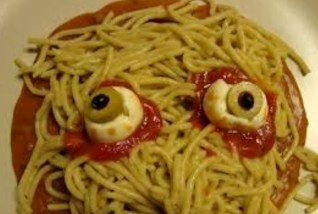
Spaghetti can be topped with meatballs and Parmesan cheese, but according to some crusaders, it can also be accompanied by digestive aliments. Not only can spaghetti pose a risk, they say, but with any food made with wheat, thanks to the herbicide glyphosate. But these concerns are based on misunderstandings of how glyphosate is used, how widespread it is, and its toxicity level.

The most frequent claim is that wheat is drenched with glyphosate just days before going to market, leaving unsafe levels of dangerous residue which cause health issues when the food breaks down inside us.  

However, only about five percent of North American wheat farmers apply the herbicide in the days immediate before a harvest, and this is done because of its power as a drying agent. This may be needed in northern climes during wet summers. However, glyphosate (trade name Roundup) is not the most efficient method of achieving this, so it is not the first choice for most farmers.

Whatever product they use, one must always consider dosage when assessing safety. Herbicide labels are not suggestions, but rather federal law. Restrictions on the concentrations of glyphosate mandate that its dosage be equivalent to 20 ounces of Kool-Aid being mixed with 10 gallons of water and spread over a Canadian Football League field. 

On a related note, toxicity is determined by amount, not ingredient. “Lethal Dose 50” is a term for how much of an ingested substance will kill half of laboratory test animals. On this scale, vinegar and salt are more toxic than glyphosate. In fact, the EPA classifies glyphosate as a Group E, which it reserves for products that show no evidence of human carcinogenicity. Glyphosate has negligible toxicity, and any dose a person might be exposed to will be well within safety limits. Furthermore, farmers must abide by a Maximum Residue Level, which is the highest amount of pesticide that can safely remain on crops after application.

This entails more than just taking farmers at their word or believing that government regulations are adequate. There is substantial science behind the assertions of glyphosate safety.

A systemic review in 2000 found that, “No significant toxicity occurred. The use of Roundup herbicide does not result in adverse effects on development, reproduction, or endocrine systems in humans and other mammals.” 

More recently, a 2011 review reported that there was “no evidence of a consistent pattern of positive associations indicating a causal relationship between any disease and exposure to glyphosate.” 

Then in 2012, a review showed there was “no solid evidence linking glyphosate exposure to adverse developmental or reproductive effects at environmentally realistic exposure concentrations.” That same  year, another study “found no consistent pattern of positive associations indicating a causal relationship between total cancer or any site-specific cancer and exposure to glyphosate.”

Still, claims persist that glyphosate-saturated wheat is causing digestive ailments in North America, though these alarms are in the form of anecdotes instead of data. The panic is partly attributable to glyphosate’s indirect connection to GMOs, which are a boon to agriculture but which misinformed detractors see as a bane. Glyphosate has been used for 44 years, but has become much more common since genetic modification came along. The connection is that GMOs are Roundup resistant.

Glyphosate prevents nearly all plants from producing proteins they need to survive. So while it would kill a noxious weed, it would take out the desirable wheat as well.  At least until Monsanto devised a method to make GMOs Roundup resistant. Now, genetically modified wheat can be treated with glyphosate, a herbicide which repeated studies have shown to be harmless and which has a low toxicity.

So go ahead and safely eat that spaghetti. Or give into unfounded fear and leave more for me.

“Hardcore wrap” (Weight loss wraps)

BUBWRAP

My yo-yo physique hasn’t rebounded for a while so I could handle this in multiple ways. I could choose to be indifferent about my waistline. I could decrease the calories consumed while increasing the calories burned. Or I could combine the two ideas and lose weight without effort through stomach wraps.

This should bring weight loss. But that is different from fat loss and the effects would be temporary. Water would be lost through sweating, which would cause modest, temporary effect to take place over the entire body, not just the wrapped area. I could wrap my chest or legs and get the same result, but purveyors of these products instruct customers to use the stomach because that’s where the bulge is.

In a world where mainstream media regularly gives credulous coverage to folk remedies, it is refreshing to see major outlets call bunk on this one.

CNN interviewed medicine professor Dr. Erica Brownfield, who told the network, “These results are going to be temporary and there is no scientific data to support what they’re claiming. Those fat cells, once you decompress them and take those wraps off, they’re going to go back to their usual shape and size.”

Meanwhile, ABC consumer correspondent Greg Hunter examined Suddenly Slender Body Wraps, which founder Victoria Morton claims will result in a whopping 6 to 20 inches from a one-hour wrap session. Like Brownfield, Quackwatch contributor Dr. Victor Herbert says that any weight loss will be through water and the effect will be fleeting.

Morton claims that in addition to water, customers lose “the waste, the stuff that builds up and makes us sick and tired.” Similar merchants claim toxin removal, but none identity what waste or toxin is being exorcised or how that would affect cellulite reduction.

For the ABC experiment, two volunteers wrapped themselves before dancing to an exercise video. Morton took before and after measurements and insisted both volunteers lost at least six inches. But upon further review of the video, Hunter noticed that “before” measurements were taken right above the navel, while “after” measurements were done several inches above that. Additionally, the “before” measurement came with Morton affixing her fingers behind the tape, making for a larger circumference. The “after” measurement came with the tape taut. If there was any loss in the belly button vicinity, it was gone by the next day when ABC conducted a follow-up measurement.

Some are attempting a more futuristic spin on the weight-loss wrap notion by implementing infrared generators. Clients lay on a bed while silicone pads are strapped one the subject and they remain under a heated blanket during the session. The supposed value is that the infrared waves will penetrate deep into fat cells, impacting body temperature, metabolism, and blood circulation. The heat then breaks down fats into a liquid form, which are in turn excreted along with still-undefined toxins.

But Discover spoke with Williams College physiologist Steven Swoap, who put the scientific kibosh on this notion by stating simply, “Fats don’t come out of sweat glands.” So for me it’s either apathy or more treadmill and less Pop-Tarts. And with a special this week on cherry and chocolate flavors, it’s an easy decision.

“That’s owl, folks” (Mothman)

MANMOTH

In November 1966, a motorist and three passengers on a late night drive outside Point Pleasant, W. Va., saw what appeared to be a six-foot-tall monstrous humanoid with fiery eyes. Other than its flaming peepers, the creature lacked discernible head and neck features. The frightened foursome hightailed it in the other direction, at which point the beast pursued them with use of silent, stationary wings.

Over the next year, similar sightings were reported in the area, with speculation that the alarming apparition was an alien, omen, demon, cryptid, or multi-dimensional spirit. Skeptic leader Joe Nickell, who specializes in examining ghost and cryptozoology claims, thinks the Mothman had shredding talons and a head whose swiveling could rival Linda Blair’s. He also thinks it comes out at night to feast and howl. That’s because he strongly suspects the creature to be an owl. Of note, during the spate of original sightings, a rancher fired at what he thought was the Mothman and it turned out to be just what Nickell has guessed, specifically a snowy owl.

As to why this solitary, nocturnal bird of prey morphed into a man-sized otherworldly terror, that speaks to characteristics of both owls and humans. “Because of the owls’ size, their shining eyes, their nocturnal habits, and noiseless flight, they’re really noted for fooling people,” Nickell explained.

Nickell never accuses Mothman eyewitnesses of making up the stories up or even intentionally exaggerating them. But he believes expectation, faulty memories, and even worse lighting create a mix that makes monstrous visions and interpretations more likely. When deciphering such reports, Nickell said he “takes people’s description, allows for some error, and matches it to an animal in the real world.”

In the same article, audobon.com quoted ornithology expert Ryan Barbour, who said owls prefer old, abandoned buildings; they regularly yelp, hoot, and hiss; and they can take on a creepy appearance. All this could be disconcerting for someone who’s already spooked.

There are other reasons to think an owl was behind the sightings. The Mothman’s shape as originally reported greatly resembled the bird, with a head and body that blended together, along with large, intense eyes. Nickell suspects this look was caused by eyeshine, which is a feature in nocturnal animals. Barred owls are an especially pronounced example of this because of the many blood vessels that encircle their eyes.

While the bird of prey explication suffices for the sounds, silent flight, and piercing eyes, what accounts for the Mothman being four times the size of the average owl? A 2010 episode of the schlockfest MonsterQuest may have provided the answer. On the program, Nickell drove subjects down a dark road lined with plywood Mothman cutouts with bike reflectors for eyes, and all reported that the object was larger than it actually was.

Nickell explained, “It’s very hard to judge the size of something seen at night at an unknown distance, and if you misjudge how far away it is, you misjudge its height by the same proportion.” Also, intense fear and disturbing memories can cause the object grow in size over time in the person’s mind.

It’s also telling the there are no diurnal Mothman encounters. Just like UFOs land in the Nevada desert as opposed to Times Square, very few retold cryptozoological run-ins take place during the day. That doesn’t make for near as compelling a campfire tale or sleepover story.

Moreover, exaggeration and revision became prevalent in subsequent retellings of Mothman confrontations as such tales became folklore. Like the Mothman, folk tales take on various forms that reflect the interest, motivation, and mindset of the narrator. That’s why the creature has been described as a demon, alien, beastly bird of prey, or hideously overgrown insect escaped from a Kafka novella. It can have horns, claws, or bulging eyes, depending on the storyteller. But while just such a statue of the beast stands in Point Pleasant, it bears little resemble to the creature reported by the original 1966 eyewitnesses.