“Netflix and shrill” (13 Reasons Why)

TAPE

13 Reasons Why centers on the suicide of a high school girl who leaves behind cassettes for friends, enemies, and frenemies that outline her motivation for taking her life. 13 Reasons Why could also refer to the number of justifications there are for rejecting claims that the show has led to a nearly 30-percent increase in real-life suicides.

The program has been a flashpoint from its inception. When 13 Reasons Why debuted, the National Association of School Psychologists used the occasion to caution that being exposed to graphic accounts of death can be a factor in pushing a troubled youth to end it all.

Now, a research team has announced a study that purportedly found a connection between the Netflix offering and teen self-harm. It notes that suicides spiked in the months after 13 Reasons Why began airing. The Dallas Morning News declared this sufficient reason to drop the show. Meanwhile, The Daily Mirror blamed the program for a British pre-teen’s suicide, and other reputable publications have reached similar conclusions.

It’s true there was a rise in teen suicides in the month following the first airing. However, researchers offer no proof that the teenagers had watched it, knew about it, or offed themselves because of it. It was just textbook post hoc reasoning unbacked by supporting evidence. The same scenario unfolded in 1993 when detractors blamed Beavis & Butt-Head for a fatal fire started by a preschooler, only to learn later learned that the accidental arsonist lived in a home that had no cable or satellite television.

Moreover, while the month immediately following the release of 13 Reasons Why experienced an uptick in teen suicide, the month before that did as well. To dance around this, one researcher offered an ad hoc hypothesis that this was due to the show’s trailer being released that month. This is another instance of the researchers committing a basic correlation/causation error that is unbecoming of someone doing what they do for a living.

Writing for Reason, Robby Soave raised the key point that the rise was only taking place among boys, whereas studies consistently indicate that suicide contagion primarily impacts those who feel empathy with and identify with a previous suicide victim. Since 13 Reasons Why focuses on a girl’s suicide, this makes the chance of a connection even more remote, as does the stagnation in suicide rates of teen girls during the show’s run.

Writer Daniel Bier chastises the researchers for merely counting “the months that suicides went up, even when there is half a year between them and no logical basis for attributing the increases in June and December to the TV show released in April.” He also noted that similar jumps occurred during various months in the years before 13 Reasons Why began airing. Failing to consider this and control for it shows either extreme laziness on the part of the researchers, or it reveals their  predetermined agenda.

I suspect the latter, and the researchers likely betrayed this agenda when they wrote, “There is no discernible public health benefit associated with viewing the series.” This opinion, of course, has no bearing on whether Netflix can be fairly blamed for anyone ending it all. Besides, if the show had that the impact the researches claim, the suicide rate of viewers, especially females, would be much higher than it is. But they aren’t ending it all at an alarming rate for the same reason that Forensic Files doesn’t turn its fans into serial killers.


“Pour some sugar in me” (High fructose corn syrup)

HCFS

I sometimes try preparing new dishes on the weekends. Other times, I am content with oatmeal and orange juice for breakfast, a peanut butter and jelly sandwich for lunch, and a frozen pizza for dinner. There are some folks who would deem the latter a deadly diet. These foods are full of high fructose corn syrup, which according to the scary script, can cause obesity, diabetes, heart disease, hyperlipidemia, insulin resistance, and other miscellaneous maladies.

However, there is no evidence HFCS causes excessive weight gain or health issues beyond what ingesting equal quantities of any other sweetener would lead to. The cause of obesity, some diabetes, and other ailments involves taking in more calories than what are burned. Writing for Skeptoid, Brian Dunning put it this way: “When you consume regular sugar the first thing your digestive system does is break the chemical bond and separate it into glucose and fructose. Once saccharides are in your body, it makes very little difference whether they came in as table sugar or as HFCS.”

The white granular substance most of us think of when we hear “sugar” consists of glucose and fructose, which are chemically bound into a larger, more complex molecule called sucrose. HFCS also consists of glucose and fructose, but they are mixed together rather than bound, allowing it to come in different blends. The more fructose relative to glucose, the sweeter the resultant product.

U.S. companies put high fructose corn syrup in many foods since farming conditions in this country are usually better for corn than for sugar. Indirectly, this means the syrup is cheaper for U.S. businesses and, since it is a liquid, HFCS is easier to handle and more affordable to transport. It further has advantages in baking, browning, fermenting, and moistness.

Historically, corn syrup had been so much cheaper than sucrose that companies used it to thicken foods and retain moisture. But initially, corn syrup was seldom used as a sweetener since it was less sweet than sucrose. Then in 1957, food scientists developed a process to convert some of the glucose in corn syrup to fructose, yielding a product that was 42 percent fructose and 58 percent glucose, which substantially increased its sweetness.

All this is why it is used in so many foods and this ubiquity is no cause for concern. For Science Based Medicine, Jim Laidler wrote, “Many of the sources that demonize HFCS list alternative sweeteners — cane sugar, honey, agave syrup, etc. — and claim they are healthier than HFCS, but those claims usually rest primarily on the fact that these alternatives to HFCS are ‘natural’ rather than any data showing that they are safer.” 

None of this alters the fact that a diet high in fructose could contribute to the diseases listed earlier. But the same is true with other sweeteners and those others may even have a more pronounced deleterious effect since one needs less HFCS to get the same level of sweetness. So if I don’t feel like cooking this weekend, I will eat my PB and J without undue worry.

“It’s not a game” (Momo Challenge)

panic.jpeg

I had little doubt the Momo Challenge was a hoax when I first heard about it. And last week my news feed became overwhelmed with articles testifying to that conclusion. I was pleased to see this moral panic squashed in a world populated by flat Earthers, anti-vaxxers, persons who think a cold Minnesota January disproves climate change, and non-GMO labels on foods that have no genetically-modified equivalent. Score one for reasoned thinking.

Momo is a sculpture created by a Japanese special effects company and there is no evidence she has been coopted by a shadowy organization dedicated to fomenting a mass suicide of teens and tweens.  

Still, an online legend tells of children being enticed to harm themselves by a creepy, bug-eyed critter who is equal parts reptilian, avian, and woman. Momo is said to pop up on social media posts, messaging apps, and videos. She then instructs, encourages, or threatens children to complete increasingly dangerous tasks like pill-popping, slicing their skin, or stabbing others. She often warns participants to never tell authority figures about the challenge, which often ends in suicide.

While there is no evidence this game is real, it plays on concerns of legitimate phenomena such cyberbullying and sextortion. It also repackages campfire tales of hook killers and dead children embedded in a drunk driver’s car grill and fits them for the modern age and today’s technology.  Skeptic leader Benjamin Radford considers the Momo Challenge to be a continuation of folk tales where youngsters are challenged to conduct a bravery ritual. This could including laying on train tracks, spending time in a haunted location, or chanting “Bloody Mary” into a mirror.

Beyond panicky parents, irresponsible TV networks are also fanning the fearful flames. CBS Baltimore reported that Momo “can target kids through Peppa Pig or Fortnite when parents aren’t around.” Yes, this creature is so frightening and cunning she somehow knows when adults leave the house. Not just a certain set of parents, but any adults worldwide who have children at home. Asserting that such a skill exists should have been a huge tipoff that none of this was real and the network was negligent to not better question this story before airing it.  

The decision may have been partly driven by there being several dozen 24-7 news outlets competing to fill space or airtime. Part of that airtime was spent on CBS Baltimore going so far as to claim Momo has been “reportedly linked to suicides in other countries,” without specifying where this happened or what the victim’s name was. Indeed, while the game has been blamed for a handful of suicides, none of those deaths have been confirmed as being part of a twisted viral challenge, for which no evidence exists.

The character is now one of the most ubiquitous and well-known in the online universe. Yet none of the many Momo images that have been shared show her taking a menacing tone with vulnerable youngsters. Instead, we’re just seeing the same picture of the same sculpture. She is touted as a widespread danger in a time where everyone has multiple ways of recording at any moment and we still lack any documentation of this twisted game happening. The closest thing are edited Peppa Pig videos with Momo sliced in, and these are not tied to anyone committing self-harm.

Still, news reports include boilerplate language about police warnings and sick cyber stalkers. There are also exhortations to monitor children’s activities and regularly check their apps and devices. Those are sound ideas, but a nonexistent threat need not be the impetus to follow through on them.

One UK parent told the credulous Daily Mail the game bore the responsibility for her 5-year-old cutting off part of her own hair. I can affirm that self-administered Kindergartener trims take place without a disturbing online presence being involved. A Kansas mother likewise blamed Momo for her son’s angry outbursts. This continues a long trend of cursing culture icons for leading youth down a wayward path. Before Momo, there was Beavis and Butt-Head, before Beavis, there was Elvis, and before Elvis there were wood-pulp paper books.

Indeed, the Momo Challenge has the features of a moral panic. First, it centers on a demented group or activity that attack us decent folk. Second, the response to moral panics is disproportionate to the threat they pose. Finally, for all the alarm they cause, moral panics have a relatively short shelf life, and this has been exacerbated in the social media age. Society has overcome its fear of comic books, Buddy Holly, and Dungeons & Dragons, and Momo seems headed for a quick retirement. Just as certain is that the resulting moral-panic vacuum will be short-lived.


“Traffic cops” (Human trafficking hysteria)

HK

From communists to drugs to terrorists, the US has had its share of panics. While each of those entities existed, the putative cure often brought additional ailments and instead of fixing the problem, exacerbated it. We are seeing the same drawback today with the focus on human trafficking. Alarmist language, stereotyping, and relying on those without expert training are leading to the same problems we saw with the other panics.

Elizabeth Nolan Brown, writing for Reason, profiled how hotel giant Marriott, in a now-deleted Tweet, boasted that its employees are trained to “spot an escort, to “keep an eye on any women who are traveling alone,” and to “not allow some women to drink at the bar alone.” Certainly, no decent person would want human trafficking anywhere and it’s easy to understand a business being vigilant about making sure it never took place on its premises.

But the deleted Tweet insinuates that a woman cannot be trusted to be by herself or to be left to her own devices. Not that men get a free ride, either. Some airlines conspicuously move adult males seated next to an unrelated minor and some men have even been accused of having an underage concubine at a hotel when the teenager was actually his daughter. None of these measures are eradicating human trafficking.

Often, the paranoia takes on racial overtones. Cindy McCain, co-chair of the Arizona Governor’s Council on Human Trafficking, made a minor news splash when she contacted airport police about seeing a woman and toddler of different ethnicities together. She recalled, “Something didn’t click with me. She was trafficking that kid. She was waiting for the guy who bought the child to get off an airplane.” 

This overzealous effort to foist a kidnapping turned out to be nothing more than McCain inconveniencing and embarrassing a mother and her child. Terry Firma at Patheos wrote, “A passion for or against a movement or a great cause often leads people to look for, and then to see, examples of their bugbear everywhere.”

McCain was likely unaware that 14 percent of the population is biracial, and with surrogacies, adoption, and remarriage, mixed race families are common. Also, about 20 percent of women keep their maiden name when getting married, and this can result in immediate family members having different last names. But these changing demographics are ignored in favor of alarm at airports, bus stations, and hotels.

One example cited by Reason involved an Asian woman and a Puerto Rican man sharing an orange juice, with this being touted by an airline employee as one sign that something wasn’t quite right. Another time, members of the Korean band Oh My Girl spent 15 hours detained at LAX on suspicion they were being trafficked. Keeping with the ethnic stereotyping, hospitality industry personnel are trained to consider references to massage parlors and Southeast Asia as potentially being a trafficking tipoff.

Like other panics, this one encourages citizen spying, which is now augmented by enhanced digital surveillance capabilities. Traffic cameras, indeed. Employees are cautioned to be on the lookout for travelers who seem fatigued or sleep deprived, even though these are common and expected conditions for someone who has spent hours on the road. Also under suspicion are guests with little luggage, with pornography, with multiple phones and computers, or who decline to have their room cleaned. Other signs are said to be: A waiting woman who is picked up by a man (especially if she’s scantily clad and he’s older); a car parked with its license plate away from the door; multiple rooms booked under one name; and having too many condoms. Even shabby clothes, sunglasses, and an oversized hat can be considered evidence of wrongdoing.    

For all this hyper-vigilance, we are seeing no uptick in trafficking convictions, and in fact, this nightmare seldom occurs. Firma wrote, “Sex trafficking is so rare that an experimental court in Delaware, set up to fight it, had to close for lack of victims. In the UK, the biggest ever investigation of sex trafficking failed to find a single person who had forced anybody into prostitution in spite of hundreds of raids on sex workers in a six-month campaign by government departments, specialist agencies and every police force in the country.”

Police, specialized agencies, and prosecutors are finding very few human trafficking victims. It’s hardly fair to expect flight attendants, bus drivers, and hotel housekeepers to manage it.  

“Sweet and dour” (Artificial sweetener hysteria)

SBArtificial sweeteners have been the subject of mass hysteria for decades. In the 1970s, studies fueled worries about the possible carcinogenetic nature of saccharin. However, this research involved rats being force-fed the synthetic compound at a rate that would have been like a person drinking 100 diet sodas a day for years.

In the early 1990s, the Internet’s first wide-spread smear campaign listed every malady in the history of Mankind as being the result of aspartame, which raised the question of why humans hadn’t been immortal prior to the artificial sweetener’s creation.

This year, there was an alarmist report about diet soda being responsible for Alzheimer’s, cancer, dementia, and the Smog Monster. This freak-out was based on a horrible misinterpretation of the study, which is what’s happening in yet another fabricated fizzy fear. This latest scare is that artificial sweeteners wreak havoc with one’s gut microbiome.

The human gastrointestinal tract is amazingly complex and is composed of multitudinous organisms that can either help or hinder digestion. These organisms can have a substantial impact on our health, either good or bad. Because of the microbiome’s key role in human wellbeing, research is constantly being done on it.

That includes a study which some media have given plenty of panicky play to. In this experiment, scientists poured artificial sweeteners on bacterial cells. At very high concentrations, most of the bacteria began to act stressed, and researchers deduced that artificial additives were the culprit. This was translated in the press as sweeteners being detrimental to human health.

This was an unfounded conclusion. For starters, the research considered only a few strains of e. coli, which are among the millions of different types of bacteria that have taken up residence in our gastrointestinal tracts. Further, the stressed reaction only occurred when e. coli were subjected to extremely elevated dosages. The bacteria started showing agitation after exposure to four grams per liter of aspartame. The human equivalent of this would be chugging two gallons of Mountain Dew in 15 minutes. Incidentally, I’d be might riled myself if strangers kept dousing me with sticky liquids.

Also, reactions from one type of organism seldom translate into the same experience for another type. Epidemiologist and skeptic blogger Gid M-K wrote, “Exposing cells to artificial sweeteners in a lab is very different to a person drinking diet soft drinks.”

Indeed, a 2016 systemic review of studies concluded there is little evidence of a substantial health detriment or benefit to ingesting moderate amounts of artificial sweetener.

This is much shorter than most of my entries, but I’ve got to prep a Thanksgiving meal, one that will safely include some Diet Cherry Dr Pepper.

“Taking baby from a candy” (Halloween hysteria)

SCARYCANDY

It’s time for ghosts, goblins, and gremlins, but if seeking still further imaginary fright, consider some Halloween urban legends and hysterics.

First we have the time-dishonored account of poisoned candy. Even before the Internet and 24-7 news channels, these dark tales made the rounds and almost everyone knew about them. Ann Landers, notorious for passing off urban legends as fact, helped spread the terror. I remember presenting my candy to my parents for inspection and losing one piece because it seemed to be an off-brand, although the neighbor’s long hair, being affixed to a 20-something male in 1974, may have been another factor.

Police departments and hospitals offered free X-rays of the confectioneries, with the uniformly negative results being inconsistent with the panic that the candy from strangers was causing. The munchies madness hit its peak in the mid-1990s when Halloween parties began being held in lieu of neighborhood knockings. Surprisingly, the transformation of the Internet from relative novelty to ubiquitous entity over the last quarter century has not pushed the alarm to greater heights and, in fact, it has tempered somewhat, though warnings still abound.

Fortunately, such advisories are based on fear, not facts. Only one person is confirmed to have died from poisoned Trick or Treat candy, and the victim was targeted by his father, who slipped his son cyanide-laced Pixy Stix. He did the same to his daughter and four of his children’s friends, hoping to make the event seem random, but none of the four other intended victims ate the tainted treat.

While the granular candy was not passed out by a neighbor answering the door, the murderer was trying to take advantage of the myth that such occurrences had been happening nationwide for decades.  Ironically, his attempt to emulate an urban legend helped to spread it. But this was not a case of a homeowner handing out lethal candies. The killer did not pass them out at his door, nor were the Pixy Stix put in his son’s plastic Jack-o-Lantern by someone else. 

There are still periodic reports of children dying after ingesting laced confectioneries, but investigations have always concluded there was another cause. It should be noted that razors, pins, and needles have been found in Halloween candy multiple times so caution against this occurrence is justified.

But as to toxic treats, the Los Angeles Times quoted Cal State sociology professor Joel Best, who said, “We checked major newspapers from throughout the country from 1958 through 1988, assuming that any story this horrible would certainly be well reported,” and his research group found no cases of intentional, random Halloween candy contamination.

With that, we move from poison to pedophiles to satisfy our All Hallows Eve hysteria.  

According to Reason’s Lenore Skenazy, each October the website Patch publishes maps that show where registered sex offenders live. This is publicly available, accurate information, but the insinuation is that residents of these homes pose a specific danger on Halloween. However, those persons are prohibited from handing out candy on this date and a study of 67,000 child molestation cases showed no increase in such incidents on Oct. 31. Besides, the great majority of crimes against children are not committed by strangers; an infinitesimal amount are committed by a stranger on Halloween; and probably zero have been committed by a stranger passing out Halloween candy on his doorstep. Parents should protect their children and they do so by accompanying them as they seek sugary snacks on these  nocturnal excursions.

Patch defends its actions because a Wisconsin child was raped and murdered on Halloween in 1973. But such tragedies can occur on any date and this one taking place on Halloween was coincidental. Besides, almost all persons convicted of raping and murdering a child are still in prison or have been executed. The killer in this case had not struck before and would not have been on any registry had those existed at the time.  

While such a person should be locked away for life, it is a myth that all sexual offenders are incapable of redemption. In fact, sex criminals have the second-lowest recidivism rate, after murderers. Also, public urination, soliciting a prostitute, and teen sex all land people on the list that Patch distributes.

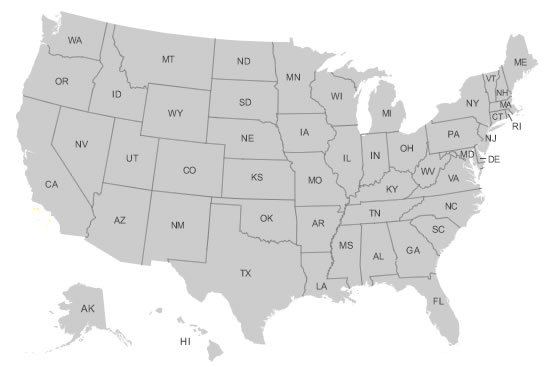
It promotes this as a public good, so I will counter with my own such public service map. Any red dots below indicate cases where persons already on sex offender registries attacked another child who was Trick-or-Treating:


us map


“Milking it” (Baby formula fears)

BOTTLE

When my children were born, the biggest decision for me was figuring out which stuffed animal to buy for the crib. But their mother, already suffering through mental and physical anguish, had to decide whether to feed by breast, bottle, or both. The pressure to do the first can be substantial, based on the notion it is always best. Going this route means further taxing exhausted new mothers since, despite their bundle of joy status, newborns need nursed about 10 times a day. These feedings may happen at 3 a.m. or 11 p.m., and while mothers can sleep while fathers handle formula feedings, only the maternal antecedent can perform nursing duties.

The reason well-meaning folks laud breastfeeding is because infants so nourished show lower lifetime rates of asthma, cancer, and diabetes, as well as having fewer instances of infancy infections and mortality.

Similarly, Emily Oster at 538 cited a study of 345 Scandinavians which compared IQ scores for children who had been breastfed for less than three months with those who had been breastfed for more than six months. The authors found that the children who nursed for longer had higher IQ scores.

But, as always, we must consider correlation and causation. In the developed world, women who breastfeed tend more to be nonsmokers, educated, affluent, and given better access to quality health care. Mothers with those distinctions who choose formula see no more health problems in their offspring than those who breastfeed.

In the Scandinavian study, breastfeeding mothers were wealthier, better educated, and had higher IQ scores than those in the other group. Once researchers accounted for these variables, the seeming advantage of nursing evaporated.

Now let’s consider mothers in the developing world. There, breast milk substitutes are often prepared without clean water and in unsanitary conditions. Health issues for their newborns arise because of the environment and what the formula was mixed with, not the formula itself.

Because breastfeeding is wrongly presumed always be best, mothers can be guilted into acquiescing, and this can lead to further problems. Science writer Kavin Senapathy noted there is occasionally an issue with some mother’s breastmilk supply immediately after birth, especially for first-time moms. According to Senapathy, about 15 percent of mothers are incapable of producing enough milk, so if they rely entirely on this source, their baby may suffer dehydration, high blood pressure, hypoglycemia, and excess sodium in their blood.

Senapathy cited Hannah Awadzi, a Ghanaian whose daughter experienced jaundice and hypoglycemia while Awadzi exclusively breastfed her despite inadequate milk supplies. This led to the daughter’s cerebral palsy. Yet Awadzi’s only other option had been formula mixed with deplorable-quality water. Awadzi had no decent alternative, but if having a good choice, formula would be the way to go in cases like this.

To see if a perceptible difference results from breastfeeding and formula use, we can look at studies in which breastfeeding is assigned randomly to subjects, or ones where adjustments are made for differences among women being tested.

One example comes from Belarus, where women were randomized into two groups. For those in the first group, breastfeeding was encouraged; in the second group, it was not. Infants in the breastfed group had fewer gastrointestinal infections and were less likely to experience eczema. However, there were no significant differences in any other studied outcomes, such as respiratory ailments, ear infections, croup, wheezing, infant mortality, allergies, asthma, cavities, height, blood pressure, obesity, and mental issues.

Another study, published in Social Science & Medicine, compared breastfed children with their siblings who had been given formula. In the health and behavior outcomes that were examined, researchers detected no differences. This is crucial because siblings are on equal ground with regard to their environment and their mother’s parenting style, wealth, education, and health. And if breastfeeding made the difference that proponents claim, there would be universal pronounced detriments among those who were adopted at birth.

There are advantages to breastfeeding, including, cost, convenience, and bonding. But babies being nursed won’t enjoy health benefits over those given formula and they will sleep just as well next to whatever stuffed animal Daddy has chosen.  


“Canned response” (Diet soda study)

CANCER

This past month, my Facebook feed has seen a frenzy focused on fizzy drinks. The panicky parade of posts tied diet soda to dementia, stoke, Alzheimer’s, and wearing linen out of season.

The alarm centered on one study, which was read by Dr. Harriett Hall, but likely not perused by those who posted the terrified screeds. By reading it, Hall learned that there were 2,888 subjects who were followed for 10 years, and that 97 of them had a stroke, while 81 of them developed dementia, most of those displaying symptoms consistent with Alzheimer’s. The authors relied on a survey of test subjects to determine how much diet soda each person consumed. All this lead to headlines which warned that drinking one or more artificially-sweetened soft drink per day was associated with a tripling of strokes, dementia, and Alzheimer’s.

While worried posters presumed correlation meant causation, even the lead researcher cautioned against reaching that conclusion. That man, Matthew Pase, said, “It is not clear whether the diet sodas are causing stroke and dementia or whether unhealthy people gravitate more towards these drinks than healthier people.”

Addressing these and other shortcomings in Fortune, Sy Mukherjee observed that an accurate description would be, “Study determines minor observational link, but no direct cause-and-effect, between certain people who drink artificial sugar beverages, but it has a small sample size that doesn’t include minorities or account for a whole bunch of other critical factors.” But there’s little click-bait or alarmist value in that.

Meanwhile, physician Aaron Carroll highlighted several reasons why you should take this study with a grain of, in this case, sugar. Carroll pointed out that while the conclusions were based on results from one model that adjusted for demographics, diet, physical activity, and smoking, another model which adjusted for still more potentially mitigating factors produced less-pronounced results. Yet this model received scant attention.  

Other deficiencies of the study: Various artificial sweeteners have different molecular makeups, meaning they likely have different impacts on the body; the study focused only on diet soda consumption and did not take into account the subjects ingesting artificial sweeteners through other food and drink; it highlighted relative risk rather than absolute risk, as it declared that subjects were thrice as likely to have stroke or dementia, instead of pointing out that the percentage of all subjects who had these conditions was one half of one percent. That would fit into what would be expected of the general population.

This response to this study was the latest in a long string of doom and gloom pronouncements about several artificial sweeteners that has been going on since at least the mid-1970s. Then, the worry was over saccharin causing bladder cancer in rats. While this was true if the rats were force fed large doses of saccharin, the cancer developed through a mechanism that humans lack. So the danger was for rodents and that’s only if they got into your Diet Dr Pepper and finished off a case in short order. Had there been any truth to the rumor, bladder cancer rates would have plummeted once other sweeteners supplanted saccharin.

In the war on cola, aspartame has been especially slandered. Critics have accused it of causing seizures, Alzheimer’s, arthritis, cancer, diabetes, multiple sclerosis, birth defects, tinnitus, migraines, emphysema, and (fill in the blank with your own malady). Yet, as Hall noted, aspartame is the most frequently evaluated food additive and the metadata of published studies show it is safe for anyone without the genetic disorder phenylketonuria. But those studies don’t get the headlines and the headlines that do get published usually misrepresent what studies say about carbonated refreshment.

It’s not that there could never, under any circumstance, be any harm in diet soda consumption. We should always be open to new evidence gained through double blind studies and follow where the science leads. But there is certainly harm in spreading fear through anecdotes, flawed studies, and misinterpretation of good data.


“Plastic Oh No Banned” (Bottled water hysteria)

WB

While residents of Sub-Saharan Africa and Flint, Mich., strive for access to clean drinking water, some in the West are more concerned with the containers which house this liquid. While this could be seen as a First World problem, our focus here is not on affluent privilege but on how factual such worries are. We will examine if plastic water bottles release unsafe levels of chemicals when they are heated, cooled, or reused.

There have been a myriad of such claims on the Internet for at least 15 years and they often contain a nugget of truth, but leave out key facts while leaping to unfounded conclusions. The nuggets include a factoid about heat often releasing chemicals, usually identified in forwarded chain mail as dioxins. This is sometimes accompanied with calls that the bottles be banned. Some plastics do contain levels of chemicals that could be dangerous if released or which seep into containers when heated.

But plastic water bottles are usually made from polyethylene terephthalate (PET), which does not have those qualities. Water can be safely stored in them, whereas gasoline probably could not be and carbolic acid certainly couldn’t be. That’s why manufactures of containers for water, gasoline, and carbolic acid all utilize different types of plastics for their products. Because they are made from polyethylene terephthalate, water bottles will not become dangerous due to heating, freezing, or reuse.

If concerned about safety, remember to use products for their intended use. There are multitudinous plastics and what each is used for is dependent on their characteristics. The American Chemical Council has gone on record that there is no science to support the claim that PET bottles will release dioxins when frozen or heated. It stated, “Dioxins can only be formed at temperatures well above 700 degrees…and there is no scientific basis for expecting dioxins to be present in plastic food or beverage containers.” So unless you live on Venus, don’t worry about leaving bottled water in your car on a summer day.

Another claim is that the plastics additive diethylhydroxylamine may seep into whatever liquid a plastic container is carrying. However, this additive is not used in plastic water bottles, nor is it created through the breakdown of such bottles. And even if it did, the agent has been approved by the FDA for food-contact applications.

Addressing these concerns, civil engineer and biologist Rolf Halden noted the irony of persons being more concerned about the containers than the product inside. “Many people do not feel comfortable drinking tap water, so they buy bottled water instead,” Dr. Halden said. “The truth is that city water is much more highly regulated and monitored for quality. Bottled water can legally contain many things we would not tolerate in municipal drinking water.”

He noted that safety can usually be assured by following warning labels and directions. For example, heat can cause some plastics to release chemicals, which is why there are cautions on certain drinking straws to refrain from using them with hot beverages.

“If you put that straw into a boiling cup of hot coffee, you have hot water extraction going on and chemicals in the straw are being extracted,” Halden explained.

Maybe that’s why I’ve never seen anyone drink coffee with a straw.  


“I Can’t Believe It’s Not Better” (Margarine fears)

FREDBUTTER

These days, it seems that even the most trivial item can become the object of an unwarranted freakout. This includes how we make our English muffins tastier, for a diatribe against margarine has made its way around the Internet. In addressing the faux yellow condiment, the message gets a few items right, but it mostly contains whoppers and misinformation.

It starts with the assertion that margarine was invented as a means to fatten turkeys, but that the concocted food caused the birds to die en masse. Hoping to recoup some of the money lost from the stricken livestock, the farmers added food coloring to the white substance and passed it off as butter to the unsuspecting masses.

In truth, margarine has nothing to do with turkey, or Turkey for that matter, but with France. Napoleon III offered a prize to anyone who could produce a viable, affordable butter substitute that could be consumed by peasants and soldiers. The winner was a mix of beef fat, saltwater, milk, and margaric acid, which gave the nascent substance its name. Today’s margarine is normally composed of refined vegetable oil, water, and sometimes milk.

I have written before that there is enough amazing about science that there’s no reason to make up cool stuff. For instance, humans having landed a probe on a comet is more captivating to me than is pursuing proof that some unknown critters constructed a face on Mars. In the same way, there is enough genuine ghastly gastroenterological unpleasantness that there is no need to fabricate any.

For example, trans fat is legitimately a food boogeyman that increases the chance of Alzheimer’s, cancer, diabetes, liver disorders, and much more. It was prevalent in margarine for years and were that still the norm rather than the exception, the railing against margarine would be justified.

But the key issue is how much trans fat margarine (or any other food) contains. Avoiding all margarine because of the trans fat issue would be like going naked because one dislikes hats. Many brands, including I Can’t Believe It’s Not Butter, no longer contain trans fat, and that’s usually the case for margarine that comes in tubs or in liquid form.

Another assertion from the screed is that butter has been around for centuries, whereas margarine has been around for less than 100 years. The math is off on that, as margarine dates to the 1860s. But the more relevant point is that how long something has been around is unrelated to its other attributes. Trying to score this as a point for butter over margarine is to commit the appeal to tradition fallacy.

The bulk of the rant is a series of unsubstantiated claims that are unsupported by any documentation, evidence, or studies. The claims include: Margarine triples the risk of coronary disease, quintuples the risk of cancer, increases bad cholesterol while lowering good cholesterol, lowers the quality of breast milk, decreases immune and insulin response, increases the risk of heart disease in women by more than 50 percent, and that eating butter increases the absorption of nutrients from other foods.

The claims against margarine would only be true if the specific brand is high in trans fat, and again, that would be true of any food. The boast about butter melts like, well, butter, when examined. Harriet Hall at Science-Based Medicine wrote, “Where did this claim come from? I found no evidence to support it. Perhaps they were thinking about the fact that some vitamins are fat-soluble, but that would apply to margarine as well as to butter.”

Another baseless assertion is that margarine will not attract flies because it has no nutritional value. Any food, by nature, has nutritional value, and while I doubt there is any data on whether winged pests cotton to vegetable oil spreads, I see no evidence for the assertion that they don’t. Feel free to conduct your own experiment and let me know the results.

Like other good fearmongering pieces, this one contains a dose of chemophobia, this time in the form of a caps-friendly alarm: “Margarine is but ONE MOLECULE away from being PLASTIC and shares 27 ingredients with PAINT.”

First, as Hall noted, this is false. She wrote, “Plastics are polymers and completely unrelated to anything in margarine. Paint doesn’t contain any of the ingredients in margarine.”

But even if true, this would be pointless anyway. Any change, not matter how small, in the chemical makeup of a substance can alter its safety, impact, and use. One oxygen atom is all that separates water from hydrogen peroxide, but this would not be a sound reason to drink the latter while using the former to disinfect a scraped finger.