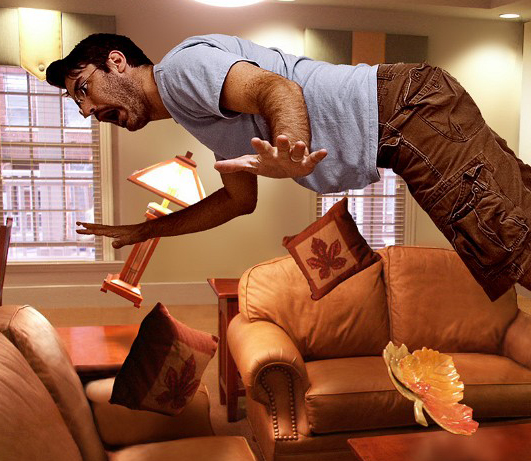
“Transcendental Manipulation” (Transcendental Meditation)

FLOATI contacted a Transcendental Meditation office about learning the practice and expected to be on hold for some time listening to sitar music, but they answered right away. In short order, I learned it would cost almost $1,000 for one of their amateur yogis to provide me a word I was to repeat many times while breathing deeply with my eyes closed. My magic mantra monies were spent on my trip to the fortune teller in Tbilisi, so that ended my plans for a first-hand TM account. Hence, most of this will be from an outsider’s perspective.

The technique was started by Maharishi Mahesh Yogi. He denied this, stating that his yogic predecessors were chanting holy mantras at the moment of Earth’s creation. He merely continued the line, along with developing the enterprising notion of charging $960 a word.

His fame peaked in the 1960s, even holding court with The Beatles. When a frustrated John Lennon left in mid-session, Mahesh asked where he was going, to which the Walrus Egg Man replied, “You’re the holy man, you tell me.”

Mahesh is dead, doing cosmic yogi stuff now, and I am not a music icon with means and access, so the TM experience related here will be more pedestrian.

Neophytes are told they have a unique mantra, arrived at through a guru’s thought process. Unlike many religions, TM is upfront about the costs, at least in the beginning. The pricier items, such as invisibility and spiritually-attuned mansions, come later. Meditators are told never to reveal their mantra, lest it lose its power. Blogger Joe Kellett, who left the movement, claims the real reason is because many persons are given the same mantra, despite the insistence that each one is unique.

TM practicioners once claimed that adherents had the ability to float by assuming the lotus, repeating their mantra, and bouncing about. In the interest of investigative journalism, I gave this a shot. I remained ground-bound, but in fairness to TM, I am too stiff to assume a full lotus and not agile enough to bounce very well, plus I was never given a proper secret mantra. At any rate, TM yogis now downplay this power, since its fraudulent nature was revealed in video exposés.  Now, the ability is touted as merely being the potential for flight, once enough superhero powers are attained.

Most meditative techniques focus on the individual, but TM claims collective benefits. Specifically, if the square root of one percent of the population practices TM, it will create a powerful effect on everyone. If any nation reaches the square root of one percent mark, the country becomes invincible. For a proper control, we need for two neighboring countries to reach this threshold, then go to war. Once all nations have reached this number, Earth transforms into heaven.

TM adherents once claimed this was best demonstrated in the Shangri-La of Fairfield, Iowa. This is home to the Maharishi University of Management, and devotees said 13 percent of the city’s residents practiced TM, with resulting good vibes oozing onto all the locals. They reported the town was virtually without crime, illness, and unemployment, with bountiful harvests of milk, honey, and winning lottery tickets. James Randi and cohorts bounced these claims against government and police numbers and found them wildly conflicting with reality.

At first, TM can sound reasonable, even to the skeptic. For instance, it highlights the reduction of stress that comes with the practice. Indeed, the most comprehensive metadata of meditation studies does suggest limited benefits, although similar results can be attained through soothing music and other relaxation techniques. However, the positives in these studies center on meditation, and despite the Transcendental prefix, TM offers nothing beyond that.

That’s what I say, anyway. TM advocates insist otherwise, asserting that the recited mantra will reveal a higher consciousness, leading to a more advanced state of evolution, which continues until the chanter becomes a deity.

The Natural Law Party ran a candidate for president in 1992, touting TM techniques as a panacea to the nation’s ills. The 10,000 or so votes the party received fell well below the square root of one percent threshold, so the nation’s sub-paradise status continued unabated.

Kellett reports that in the initial sessions, mantra recitation is followed by instructions on how to induce a trance, and this is followed with indoctrination. Kellett said persons start out with plans to relax, but end up in the quite uncomfortable position of being asked to pay thousands of dollars for classes aimed at developing supernatural abilities.

The idea is that those staying (or floating) around long enough will achieve what TM proponent David Lynch calls “pure consciousness, bliss, creativity, peace, and intelligence.” Lynch, who claims rudimentary levitating abilities, hopes to assemble groups of 8,000 meditators to bring about world peace and harmony. By these standards, Twin Peaks seems downright plausible.

Lynch can afford the training, though others may not. The basic technique ends up running $1,500, while levitation instruction sets TMers back $3,000, and that’s without a warranty. Mantra adjustments are $1,000, on top of the $960 you paid for the flawless mantra in the first place. There are also gems, cosmetics, yogi medicine, and a protective cleansing that shields your home from negative energy.

At the last of the three initial indoctrination meetings, we learn that all personal suffering will disappear if the Transcendental Meditator practices for 20 minutes a day. Curiously, this attainment of full enlightenment, harmony, and bliss is followed by further purchasing of TM products and training.
“Calling For Doctor Love” (Anti-physician movement)

TWZONEAn anti-doctor stance makes as much sense to me as opposing oxygen or water. However, there are some with this opinion, so I will address some of the specific complaints I hear about the profession.

Occasionally, a big deal is made about doctors not knowing everything, a condition they share with every other occupation. If medicine thought it knew everything, it would no longer be conducting research into diseases, treatments, and cures. But gaps in knowledge cannot be filled with seaweed wraps, therapy touch, and ionic bracelets. We need to continue the search for truth using the Scientific Method, the same process that conquered smallpox and landed a probe on a comet.

A common refrain from alternative medicine advocates is that medicine has made mistakes before, whether it involved leeches, thalidomide, or failing to ask about allergies when prescribing medications. But in every instance, it was medicine that discovered and corrected the mistake. Medicine will continue to make mistakes (see, I’m not inherently anti-clairvoyant), but the field is a self-correcting practice that eventually gets it right. Scientists and doctors change their positions when dictated by the evidence. Science is forever trying to prove itself wrong, and healthy, robust debate is encouraged.

Sometimes proponents of medicine are accused of being unable to think for ourselves. Like science, I don’t know everything either. So I have no issue deferring when 98 percent of those with advanced degrees, having evaluated published research and studies, arrive at the same conclusion. I know the field has its flaws, but it is continually researching and advancing.

No one has thrown the accusation of closed-mindedness at me, though I’ve seen it applied to those with my mindset. But we will always consider new evidence attained through proper studies and science. I talked with a crystal healer who had various rocks for different ailments. Had I mentioned my skin cancer, maybe she would have recommended amethyst. But there is no alternative medicine, there is only medicine, treatments that have been proven to work in repeated double blind studies. There is no bias here. Gems, Reiki, and detoxifying foot pads are held to the same standard as pills cranked out by pharmaceutical companies. All must be judged according to the Scientific Method.

Some alternative medicine publications run advertisements with insinuations of cover-ups, warning that doctors don’t want you to know about a miracle treatment. First, it is a pseudomedicine tip-off if claims are taken straight to a sympathetic audience, rather than submitted for peer review. Second, doctors are concerned about their patients’ well-being and would recommend any cure or treatment that was proven effective. This is demonstrated by their embrace of continual research that, if ever completely successful, would put them out of business.

I sometimes hear that doctors treat only symptoms, not the cause. This idea is refuted by antibiotics, vaccines, annual check-ups, and doctor’s office brochures promoting a healthy lifestyle and letting readers know what warning signs to look for.

Some object to mainstream medication because of horror stories centering on drug reactions, medical miscues, and even death. Like all fields, medicine has pulled some doozies, such as amputating the wrong limb or allowing anesthesia to wear off during surgery. But the harm of medicine must be considered alongside the tremendous benefits. Medicine has killed, but it has saved many more. Vaccines, sanitation, and the advent of Germ Theory have caused the average life span to double in 400 years.

Numbers about medical dangers can also be misleading. Many who develop treatment complications lived as long as they did only because of the medicine. Some patients die while receiving last-ditch experimental treatments. All effective treatments have side effects. Indeed, the very property of it being medicine can make it risky. To reduce the dangers, doctors conduct a risk-benefit analysis and base treatments on it. They reject treatments where risk outweighs benefits.

The seeming safety of alternative medicine is offset by its inefficiency. There’s no chance of overdosing on homeopathic cough remedies. Misdiagnosis is sometimes a problem in medicine, whereas there’s not much danger if you slap on frankincense instead of thyme. And the only way someone dies from crystals is if they try to pull them from their pocket while driving.

There are also outright fabrications, such as the recent Internet claim that 108 persons have died in the past decade from the Measles vaccine. In actuality, there were 108 persons who received the vaccine and later died, but the deaths were unrelated to being immunized. It would be like seeing how many persons ate Rice Krispies and died later in the decade, then using those numbers to justify an anti-cereal stance. The Measles vaccine death falsehood was usually accompanied with a note that there have been zero U.S. deaths from Measles in the same time. The actual number was four, but the larger issue is that it was an absurd point to be making in an anti-vaccine post. It was a successful Measles vaccination campaign that eradicated the disease from the U.S., while 145,000 persons worldwide died from it during the same decade.

Another claim is the medical field is resistant to new or natural cures, yet half of prescription drugs were derived from plants. And any original idea is welcome to be submitted for peer review and double blind studies. If the evidence seems valid, it will be published and investigated further and considered for approval by the FDA. Doctors discovering new diseases or treatments are honored, with the greatest accolades reserved for those who disprove traditional wisdom. For instance, treating ulcers with antibiotics went against accepted medical methods, but the two doctors who discovered this use won the Nobel Prize.

I also have an affinity for the field, since a routine physical led to the discovery of my skin cancer. Since the discovery, I have been back to the doctor three times for treatment and am disease-free, with a follow-up scheduled for a few months from now. The best part is, there are free suckers in the waiting room.

“Discounting calories” (Breatharians)

SKELDRINKI prefer to be involved in topics I post about, so I decided to experiment with being a Breatharian, one who attempts to survive without food. To help me along, I sought out those who practice this. However, I could only find four persons worldwide who were confirmed Breatharians. An additional complication was that all of them were dead.

Britons Verity Linn, Timo Degen, and Lani Morris, along with an anonymous woman in Switzerland, all perished from the practice. Morris kept a diary of her attempt, reporting that she became incontinent and lost use of her legs. She also began coughing up a black, sticky fluid, which presumably was her common sense.

She and the other Brits were disciples of Ellen Greve, who said becoming a Breatharian is done in stages of increasingly-restricted diets. Stage one is to become a vegetarian. Hey, at this rate I’ll be done in 10 seconds. Step two is to become a vegan. My breakfast is vegan except for egg whites, so I substituted Shredded Wheat and soy milk, and stage two was complete.

Some Breatharians have been disproven without having to die. Wiley Brooks, who also claims to access the fifth dimension, was caught eating at McDonald’s. He said this was because those restaurants are “constructed on properties that are protected by fifth dimensional high energy spiritual portals,” so food eaten there doesn’t count.

Meanwhile, Greve attempted it herself. The Australian version of 60 Minutes put her to the test, during which she suffered severe dehydration. She blamed this on city air, so she was moved to the country. There, here condition deteriorated, with dilated pupils, slurred speech, a doubled pulse rate, and signs of kidney failure. 60 Minutes stopped the experiment on what it called ethical grounds, and on what Greve called fear of her eventual vindication.

Naveena Shine of Seattle attempted it in 2013. She planned to live only on water, tea, and sunlight. Her logic was that, “Plants live on light, then we eat plants. Are we accessing our inherent ability to live on light?”

Of course, plants also need their version of food, soil nutrients. If you pull a geranium up by its roots and lay on the sidewalk, daily watering and a constant breeze and sunshine will be useless. She was undeterred and pondered how much more lovely Earth would be if we needed no land for farming. “If humans did not have to eat, we could turn our planet back into a place of beauty,” she said. If she wanted a place where humans don’t eat, she could have left Seattle for rural sub-Saharan Africa.

Shine reported that she received a call from the universe telling her to go for it. She also received calls from doctors telling her to knock it off. She declined the advice, saying, “A doctor can’t see living on light because he looks at it through different lenses.”

Those lenses also revealed that Shine lost 20 percent of her body weight in five weeks. Other afflictions were a severe lack of energy, dizziness, sensations of freezing, and vomiting bile. On the plus side, she reported that her skin felt better. Despite the improved dermatology, Shine pulled the plug on the experiment before someone had to do the same to her.

She gave up, but I’m still at it. I’m ready for stage three, raw food.The next step after that is becoming a fruititarian. I decided to speed things along by tackling those stages simultaneously and having tomatoes for lunch. Quite tasty, actually. It may have helped that they were part of a veggie cheesesteak with tater tots.

Human death by starvation poses a sizable obstacle for Breatharians, who offer differing reasons for their practitioners’ 100 percent fatality rate. Some say the deceased failed to access life-sustaining energy from an invisible spaceship. Others say the secret is tapping into prana, Hinduism’s vital life force. Another subset prefers to stare at the sun at dusk or dawn in an attempt to gain nourishment. This has never worked, which practitioners say is because the technique takes years to master. A more likely factor is the eye’s inability to photosynthesize. Maybe man will evolve that ability if we stare at the sun long enough.

During the documented attempts, Breatharains became painfully thin, with sunken eyelids and quivering limbs. As to what was going on inside, the body attempts to maintain glucose levels when denied food. It starts by breaking down glycogen, a form of energy storage. If it’s still not being fueled, the body starts feasting on protein, muscle, and fat. Next, the liver helps out by turning fatty acids into nutrients. This works for a while, but it eventually leads to ketosis, a fatal chemical imbalance. It takes a lot of UFO vibes to counter that.

At any rate, I’m ready for stage five, the all-liquid stage. Looks like I chose a good day to grab a Samuel Adams seasonal sampler.

“Stories, studies, and stouts” (Data vs. anecdotes)

ghost2Some persons who suffer leg cramps have reported relief in the form of snoozing with soap. Anecdotes like this have value in being the first step of scientific investigation, but some persons are content to let these be the end of the experiment. However, proof comes not from stories, but from metadata of peer-reviewed, double-blind, reproducible studies employing the Scientific Method and sound statistics.

Such studies are mighty boring compared to tales of ritual Satanic abuse, autism-inducing syringes, homegrown osteoporosis cures, Bigfoot run-ins, and the danger of getting cancer from breast implants, especially if you’re talking on a cell phone.

However, testimonials are unreliable due to bias, selective details, prevarication, a tendency to embellish them if encountered by a positive reaction, and a willingness to believe, from both the speaker and listener. Most stories get distorted through retellings, events get exaggerated, time sequences are reversed, and specifics become cloudy.

Furthermore, the anecdote usually only involves one person seeing the angel, hearing the ghost, or instantly zapping the flu with Therapeutic Touch. Since others cannot experience the same thing under identical conditions, there is no way to verify the experience. Selective thinking and self-deception can never be controlled and observed, which are necessary elements in scientific experimentation. With no way to test the claim, it’s impossible to determine if the experience was interpreted correctly.

Still, many persons put a lot of stock in anecdotes. One reason is unfamiliarity with the importance of the Scientific Method. Also, people seeking evidence for a Chupacabra, homeopathy, or reincarnation won’t find it in double blind studies or laboratories, so they have to rely on anecdotes and possibly shaky, out of focus videos.

The appeal to feelings is another factor. Some persons put value in testimonials because they are vivid, detailed, and emotional. This causes them to relate to the speaker and give a statement more value than is justified. Tales are often made by people who seem enthusiastic and honest.

Imagine a girl. That’s little to work with, so let me add that her name is Jenny, she’s 7, from Pocatello, Idaho, with thick medium-length blond hair. She loves to play with toy horses, listens to One Direction, and rides her bicycle every chance she gets. Last week, for cooked for the first time, making her favorite food, cinnamon rolls.

She just became more real to you. Throw in a congenital, potentially fatal kidney defect, a miracle wonder cure based on lemongrass, and a weeping mother grasped by Oprah, and you’re hooked. No way that the cold hard facts in 15 double blind reproducible studies could compete with that.

Less emotional testimonies can also get a free pass depending on the listener’s point of view. Someone into essential oils likely will accept without question a chat room story about eucalyptus vanquishing a boil. Billy Bo Jim Bob will be so overjoyed by a post from ETHunter about seeing a UFO accompanied by F-15s that he will heartily embrace it.

Even when stories can be verified, it’s not enough to establish its meaning beyond that one instance. If a 38-year-old man dies while taking a new medication, there’s no way to know if he would have died anyway, unless the autopsy shows a clear connection between the medication and death. This also applies to positive results with untested treatments. Anecdotes fail to mention the people who did not get better. One man may tell of slipping on a Q-Ray Bracelet to cure a rash, but you won’t hear about the 100 who tried it unsuccessfully. Nor would many persons be drawn to the headline, “Boy completes vaccine regimen without incident.” To highlight how easily cherry-picked anecdotes can be abused, it could be argued that cigarettes promote remarkable life spans because the oldest person ever verified, 122-year old Jeanne Calment, smoked for over a century.

Very few persons would accept this logic, owing to tobacco’s documented dangers. But when the unfamiliar is in play, combined with the fear of death, people can be swayed. Let’s say 10,000 people try an untested food and fitness regimen to battle lung cancer. Between spontaneous remission and misdiagnosis, maybe 50 and up being “cured,” and those are the ones highlighted. Or perhaps someone is made better after taking both proven and unproven medication, with the latter being the only one credited. These types of errors would be exposed in a scientific study, but not through anecdotes.

Kim Tinkham appeared on The Oprah Winfrey Show to praise an alkaline diet, which she credited with curing her cancer. She later died of the disease. Because her case was fairly prominent, her death made the news. But in most cases, anecdotal stories never include these poignant endings. There are no follow-up studies or attempts at replication.

By contrast, there was a case study that included an instance of spontaneous remission of diabetes in an anonymous woman. In the anecdote world, that would be the end of it. But since this was a case study, we know the woman’s diabetes returned in a couple of years.

So that’s my take on anecdotes vs. evidence. I’m off now to enjoy an Imperial Stout on draft. It’s not only delicious, some guy at the bar told me it took away his Type 2 Diabetes.

“Immunized against reality” (Anti-vaccine movement)

MEASLESFor the first time in my 100 posts, the accompanying photo makes no attempt at humor. There is no lazy PhotoShopping, trademark thievery, or aspiration of ingenuity. Instead I am presenting the face, neck, arms, and torso of the anti-vaccination movement. This is the principle they are fighting for. This is the result of demanding freedom to infect infants and children. This is a boy with measles, a disease declared eradicated in the United States 15 years ago, but which was spread at Disneyland thanks to the anti-vaccination movement. The U.S. is once again home to a highly contagious disease that kills over 100,000 children annually and leaves others blind, deaf, and brain damaged.

Christopher Ingraham and Jason Millman of The Washington Post put together a map of measles vaccinations rates and noticed those not immunized were clustered in wealthy Southern California communities. When many unvaccinated persons are congregated, a serious issue becomes much worse.

It’s not just the offspring of the willfully defiant who suffer. Also impacted are those too unhealthy to be vaccinated or those too young, such as the six infants who were Disneyland victims. There is also the rare person for whom a vaccine will be ineffective, and they are at risk if they encounter someone diseased.

The anti-vaccine movement defies political categorization. It afflicts alternative medicine leftists, religious conservatives, and libertarians insistent on keeping the government away from all health decisions.

But there is nothing progressive in denying science and causing some public schools to become disease incubators. There is nothing conservative about equating the eradication of disease with socialized medicine and government overreach into parental domain. There is nothing libertarian about allowing one person to harm another or to infect the vulnerable.

One anti-vaccination parent told The New York Times why she refused to vaccinate in the wake of the measles outbreak. She also ignored a doctor’s advice to have her son receive a tetanus shot after being cut. She said, “It’s good to explore alternatives. Vaccines don’t feel right for me and my family.” Science is based on facts, not feelings. And alternatives are for selecting a living room carpet, not for gambling with your child’s health.

Denial such as this is a growing public health menace that results in unnecessary suffering and death for children. It is irresponsible for Chris Christie to present this as just another lifestyle choice on par with which car to drive or what hobbies to embrace. It is abominable that Rand Paul, a doctor, would say, “I have heard of many tragic cases of walking, talking normal children who wound up with profound mental disorders after vaccines.” This assertion is without merit, but gained traction after a study in the Lancet medical journal. This article has been discredited and was redacted in 2010.

While the anti-vaccine throng is a small percentage of the country, it is creeping dangerously close to impacting the herd immunity threshold. This is the vaccination rate required to prevent disease outbreak. The threshold is between 75 and 94 percent, depending on the disease. The measles outbreak was the manifestation of vaccinations dipping below the threshold in impacted areas.

As to what the victims are suffering through, here is the account of John Snyder, who contracted measles as a medical student in 1991: “For the next 10 days I lay on my friend’s floor coughing uncontrollably, hallucinating, and dehydrated, with fever spikes to 105 degrees. I have never been sicker in my life, and I could easily have died.” In Snyder’s case, the measles advanced into encephalitis, which can kill. It’s easy to see why he concluded that, “The failure to fully vaccinate our children is extremely dangerous.”

Diseases have been a main cause of death, illness, and disability for all of history. But germ theory and the advent of vaccination curtailed this immensely, tackling mumps, measles, smallpox, polio, and much more.

But the anti-vaccine movement, based on unfounded fears, bad science, and celebrity endorsers, has caused a decline in immunizations and a rise in preventable diseases. In the United Kingdom, vaccination rates for Whooping Cough were cut almost in half, leading to deadly epidemics in 1978 and 1982. In the Pacific Northwest, the disease skyrocketed by 1,300 percent in 2012 after vaccination rates plummeted. In California, 10 children died from Whooping Cough in 2010, the result of parents who refused vaccination.

By contrast, instances of Hib meningitis have gone from 15,000 a year to 50 since a vaccine was developed. More than 15,000 Americans died from diphtheria in 1921, whereas there has been one case in the United States since 2004. In 1975, rubella affected 12.5 million Americans, causing 11,000 miscarriages and 2,000 infant deaths. In 2012, there were nine rubella cases reported in the country.

These numbers are not post hoc reasoning because we understand how the immune system works and we know the science behind vaccinations.

Rare side effects can occur, but the regulatory process ensures they are within an acceptable risk boundary. Hence, vaccination is statistically much safer than letting a disease rage unchecked.

For instance, adverse reactions to the HPV vaccine were reported by four-tenths of one percent of those vaccinated. These reactions were mild, such as headaches, nausea, sore arms, rash, and dizziness. Reactions are no reason to abstain from vaccination since complications are far more likely to arise from illness than being inoculated.

The FDA ensures that new drugs work and that benefits outweigh risks before they are made available. Drug companies seeking to sell a drug in the United States must test it, then send results to the FDA. There, physicians, statisticians, chemists, and pharmacologists review the company’s data and proposed labeling. If this review shows the drug’s benefits outweigh the risks, it can be sold.

Going back to how this infects the entire political spectrum, some vaccine deniers prefer untested, “natural” remedies, some prefer to rely wholly or partly on prayer, and others think vaccinations are an attempt to control citizens. These views tend to be deeply entrenched and denial of science runs strong. Acerbating the problem is that persons can seek refuge in likeminded Internet communities, where rejection of health advancement is lauded.

Also, vaccines are a preventive measure, not a treatment, making them a more abstract concept for some. Vaccine denial was almost unheard of when nefarious diseases were common.

Another issue is false balance in media. Presenting all sides of the issue is necessary to political reporting. Without balance, it’s not journalism. But when reporting science, only facts should be presented. When celebrating the moon landing, the media doesn’t give equal time to proponents of the hoax theory. But it will present two talking heads when the issue is vaccination, giving the false impression the scientists and doctors are in disagreement, when the overwhelming majority favor vaccination.

There is one incidental benefit to false balance. It exposes anti-vaccination leaders such as Dr. Jack Wolfson. When asked on CNN about the leukemia patient who was at great risk from measles because she could not be vaccinated, Wolfson retorted that vaccines had probably given her the cancer.

That’s the side we’re fighting against.

“Lacking essentials” (Aromatherapy oils)

EGYPTOIL2After advertisements for products I would never consider and the full spectrum of opinion on police tactics, one of the most frequent features of my news feed the past few months has been essential oils and Facebook Friends attesting to their power.

I set out to determine if essential oil claims were backed by the gold standard of research: A double blind reproducible study proving effectiveness. A friend of a friend suggested one site, which had a lot of information, though it was about the process of extraction, the chemistry, and the history, not the research I was looking for.

I later found other sources that had some positive double blind study results for essential oils. But they were far fewer and far narrower in scope than what would be needed to justify the industry’s claims.

On the recommended site, armoaticscience.com, there were some pseudomedicine red flags. Featured prominently is the appeal to irrelevant ancient authority, specifically, “The use of plant-based therapies has been recorded as far back as 3000 BCE with the Egyptians.” Also noted was its use by Romans, Greeks, Indians, and Chinese. But none of this attests to the product’s effectiveness. A treatment is based on its efficiency, not its antiquity.

Another red flag came from conflicting ideas about the basics of the field, such as this sentence: “There are many opinions about how essential oils should most effectively and safely be used.” Science is continually questioning and challenging itself, but the primary knowledge, tactics, and techniques are accepted because they have been proven in repeated studies and experiments. Essential oil purveyors present their internal disagreement as a positive, pointing out that everyone’s body chemistry is different and won’t be impacted in the same way. This is taking a veracious idea and twisting it into a falsehood. Not every Hodgkin’s patient will respond to chemotherapy, and Tylenol might work better on my back pain than on my neighbor’s. But the Hodgkin’s patient will not be helped by Tylenol, nor my neighbor given chemotherapy for his aches. By contrast, jasmine might be used for aggravated sinuses by one essential oil user, for anxiety relief by another, and for arthritic flare-ups by a third. This is a strong sign that it’s useless for all these ailments, and any seeming successes are owed to the placebo effect, post hoc reasoning, and the tendency of symptoms to fluctuate. This will be compounded by communal reinforcement and selective memory.

A third red flag is the trumpeting that the field is almost there: “Scientific publication on essential oils is accelerating as researchers continue to study both individual aromatic constituents and whole essential oils.” This is preferable to the purveyors of tachyon treatments or the Joy Touch, who just make stuff up, but it’s still different from having data on your side. Again to its credit, the site acknowledges this by noting that “Finding accurate, validated, and applicable scientific literature pertaining to essential oils can be a major challenge.”

I accepted this challenge and did unearth some double blind studies that suggested the effectiveness of some oils for specific conditions. Peppermint oil seems to be good for Irritable Bowel Syndrome, eucalyptus helps with Rhino-sinusitis, and copaiba does the same with acne. Could have used me some of that when I was 14.

Another potential validation for essential oils came in Iran. Guess the country has given us more than the Iron Sheik and apostate beheadings. In a study, 47 migraine sufferers were divided into a test group and a control group. When a migraine struck, patients were instructed to record its severity in 30-mintue intervals for two hours. 92 of the 129 headaches that were treated with lavender met with significant relief. In the control group, 32 of 68 headaches were lessened after taking a placebo. This means 40 percent better results were achieved with lavender over a placebo.

Assuming this study was conducted with proper prescribed protocols, this is strong evidence that lavender works. If this study is repeated 50 times, with 43 of them reaching the same result as in Iran, this would be metadata double blind study evidence, and I will champion lavender’s effectiveness in migraine mitigation. I am a skeptic, not a cynic or hardheaded mule. My view of a very limited number of essential oil products has altered upon investigation. What has not changed is my view of claims lacking scientific backing.

Essential oil purveyors should not be promising health benefits that are not supported by empirical evidence. It is wrong to tell someone their sore throat will be made better by rosemary if it won’t be. And it is highly unethical and criminal to sell someone myrtle with the promise that it will take care of their Parkinson’s. Marketers of Young Living Essential Oils have made such claims, even saying their products would cure cancer, PTSD, and Ebola, before the FDA put a stop to it.

While aromatherapy seems to have some benefits, the field remains rife with nonsense and shady marketers. They give undue relevance to oils’ use among ancient cultures and to the scores of anecdotes they have to cull from. Young Living boasts that its products reside “at the intersection of cutting edge research and traditional wisdom.” Put another way, they are a hybrid of stuff not yet proven and stuff that may have never worked, but is touted because of its antiquity.

With regard to modern research, most claims by essential oil marketers are vague and focus on an oil’s potential, not its potency. They lack empirical data backing and credit an oil’s ability to assuage a wide variety of ailments, which is not how medicine works.

Moreover, pseudoscientific jargon such as “immune booster” and “restoring of the body’s natural energy balance” are seen in some advertisements. Another flaw is they will sometimes highlight in vitro results, which fail in vivo.

The most frequent defense I hear for essential oils is that, “They work for me.” But it is faulty thinking to assert that coriander cures a rash because a friend said it worked once. Or because 50 friends said it worked 50 times. The plural of anecdote is not data, and the relative lack of studies leaves the essential oil field resting on post hoc reasoning, such as, “I had a stuffy nose, used some sage, and ta da.” Peer-reviewed, replicated research and double blind studies are needed to eliminate bias, pet beliefs, the regressive fallacy, and selective memory.

Another common justification is that there is nothing to lose, except for maybe money. This is also unsound thinking. I have nothing to lose by hopping on one leg to increase my thriftiness, but that doesn’t mean it will work.

Essential oils are not hogwash to the extent that astrology or telepathic communication with Inner Earth inhabitants is. There is at least one essential oil product, Vicks VapoRub, that is backed by empirical evidence, and the studies noted earlier, if replicated, would establish the field’s use for other maladies. Furthermore, the industry somewhat acknowledges its deficiencies, owning up to the scarcity of validating research.

However, the relatively few success stories are not keeping essential oil purveyors from claiming their products have the ability to cure and mitigate almost anything. Some of these supposed treatments could eventually be proven. If lavender does indeed zap migraines, someone using it 10 years ago would have gotten the same result then. Likewise, someone may get flu relief from basil oil, with this connection being verified by science 10 years from now.

But marketers should not attribute unproven abilities to their products. And essential oil users should not use them in lieu of traditional medicine and methods. If you want to slap on frankincense for that lump on your neck, lather away, but do so before heading to the doctor.

“Pisces and crises” (Astrotherapy)

ASTROTHERAPYPIC
Astrotherapy challenges the assertion that two wrongs don’t make a right. It combines the fallacy of horoscopes with shaky psychology and uses the resulting mongrel to sell people a path to success.

While it taps into the discredited ideas of Carl Jung, the psychology aspect of the practice is relatively scant. Its main connections to that field is its use of leather couches and fern-laden offices. The sessions are primarily an extended horoscope, with little in the way of therapy.

The man most responsible for the field is Dane Rudhyar, who ruminated on Jung’s notion that the psyche needs wholeness, and figured the Zodiac would help that along. He became the first astrotherapist in the 1930s. There are not a lot of astrotherapists these days, but we’ll take a look at the few that I could find.

We’ll start with Alan Salmi and his description of his profession. He starts by accurately noting that changes happen all the time. He then leaps blindly to this unfounded follow-up: “Astrology gives us a map of the ongoing changes and where they came from.” He then ventures back toward possible accuracy by asserting, “Learning to take advantage of change can enhance and smooth our way in life.” Next, he makes the usual New Age appeal to long-lost enlightenment, writing, “Ancient wisdom and knowledge is applicable today.” Salmi closes by setting the conditions for piggybacking on legitimate science and psychology by telling us, “Modern understanding of the mind complements our traditional understandings.”

Salmi uses a patient’s birth chart to determine their position in life. It’s akin to a horoscope, except that it takes at least three expensive sessions to arrive at. During these meetings, therapist and patient will focus on strengths, weaknesses, changes, challenges, goals, and interactions. So it’s pretty much like a job review, except you’re paying the guy to give it to you and not the other way around.

One common thread of astrotherapists is that they provide a ubiquitous New Age benefit, a holistic approach. I feel better just writing that, holistic, holistic, holistic. The mystics of yore, while benevolent and talented, missed the larger picture, astrotherapists insist. The planets impact people, yes, but only in the sense that everything is interconnected. This assertion ties into Carl Jung’s theory of synchronicity and gets in the requisite psychobabble to justify the “therapy” part of the field.

The synchronicity idea merits a quick explanation. During a session with a patient, a golden scarab flew kamikaze style into Jung’s window. The patient related that she had dreamt about just such a flying insect the night before. Jung excitedly reached the conclusion that this was no mere coincidence. The consciousness and the physical world work in concert, he now realized. He further inferred that the cause of the patient’s neurosis was her unilateral personality, and that if it would die, so would her illness, much like the scarab met its demise.

It’s clear how an idea this grandiose and coming from Jung could be embraced by those wanting to combine astrology and psychology. One such proponent, Linda Hill, offers this explanation of Jung’s theory: “It just works. We are somehow synchronized to the celestial patterns that were present at our birth.” That’s what passes for an explanation from an expert in the field. My counter: “It just doesn’t work. We are in no way synchronized to the celestial patterns that were present at our birth.”

Stated goals of these sessions vary from the comprehensible (“find dormant abilities”) to the esoteric (“delve into the subconscious”) to the nonsensical (“become cosmically synchronized.”)

Since the field is not legitimate science or medicine, it requires no licensure or education, and most practitioners have no competence in therapy. Still, legitimate doctors can be part of the work, such as psychologist Glen Perry. Though a fan of astrology, Perry insists it has limitations and he works to eliminate them. For instance, traditional astrologers might stipulate that a Capricorn and Gemini would be incapable of a long-term loving relationship.

He says ideas like this result from misinterpretation of the art. While two persons from these amorous-challenged signs may end up lovelorn, another possibility is that an even more profound passion may result. This is because the love would need to be built on patience, searching, understanding, and support (something it would have in common with every meaningful romance ever). Perry’s system allows maximum flexibility for the doctor. If it works, great, the system succeeds! If not, well, yeah, you know that Capricorn-Gemini thing can be a doozy.

Others in the field likewise steer far wide of definitive statements when analyzing someone. A typical line from an astrotherapist reads, “The readings symbolize the type of adult that the individual may become.” None of the sites list any analysis, methods, or research. In fact, this field is beyond empirical testing.

For those that prefer the Jung angle, we have the aforementioned therapists. For those that want the stars to guide their way, we have Max Heindel, who has convinced people to pay for advice like this: “At the time of conception the moon was in the degree which ascends at birth. The vital body was then placed in the mother’s womb as a matrix into which the chemical elements forming our dense bodies are built. The vital body emits a sound similar to the buzz of a bumblebee.” He then goes on to explain how people can lose this matriarchal moon-flying insect goodness, and how he can fix it.

Another of the more astrology-themed practitioners, Jennifer Forchelli. lets us know that, “The position of the planets on the day you were born have miraculous information regarding your behavior, thoughts and lessons in this lifetime.” On her website, she attributes so much power to these traits, it’s perplexing why she wastes money on advertising, or spends time creating websites. If the stars preordained every action as much as she suggests, the customers would show up anyway.

She also assures us that each session with her is “a deep dive into crystal clear self-awareness.” Which begs the question, if the patient experiences self-awareness, why does Forchelli even bother showing up? My favorite of her abilities: “Cleaning toxic energy within your family dynamics.”

While comical, this field can have serious ramifications. Kimberly Carson boasts, “My clients tell me that during our astrotherapy sessions, we uncover in a matter of minutes what they’ve been trying for years to figure out in traditional therapy. Once you realize that you chose the conditions in your life you are immediately transformed from victim to victor and can live the life you were meant to live in peace, harmony and prosperity.” Offering advice this shallow and simplistic to someone suffering from mental issues is disturbing. Successful resolution takes years of therapy from licensed, educated professionals, not 15 minutes with someone impersonating Sydney Omarr and Sigmund Freud.

“Considering the alternative” (Quack medicine)

DRMARXIt felt like a Roswell alien was throttling the back of my neck, sending a negative aura all the way to my eye, where a Chupacabra continued the attack.

The only time I’ve had a worse headache was the time I sauntered into a low-lying steel beam. For every action there’s an equal and opposite reaction, but I’m convinced I got the worst of the head-steel beam matchup.

This latest headache came and went, usually throbbing in the morning, with flares throughout the day. Some days were almost symptom free, others were tough to get through. The worst pain came about 36 hours before my doctor’s appointment. But within 12 hours, the pain was completely gone. Owing to the headache’s cyclical nature, I kept the appointment. The relief could have been just a lull, the eye of my headache hurricane. My physician recommended a prescription medication. Partly because I thought the headache was probably over and partly because I’m cheap, I decided to eschew picking up the prescription and waited to see if the pain came roaring back.

The headache stayed away. Had the appointment been 24 hours earlier, I would have picked up the prescription and been amazed at the medicine’s power. Similarly, this is how alternative medicine treatments can seem wonderful.

Pain usually fluctuates, and people are more apt to try unorthodox treatments when its gets unbearable. The pain then goes away, as it might have naturally, and the person becomes a committed user. Compounding this are similar stories from fellow believers. Now, couldn’t one say the same thing about legitimate medicine, such as my-never-picked-up prescription? Perhaps, but with a substantial caveat. Such medicines have been subjected to randomized, reproducible, double blind studies. Post hoc reasoning can result, but only infrequently. By contrast, alternative medicines are seldom put to a scientific test, instead resting on testimonies and communal reinforcement.

Once metadata of double blind studies confirms a product’s effectiveness, it is no longer alternative medicine. It is simply medicine. Another reason it is no longer “alternative medicine” is that it loses its appeal among those in that community who distrust modern healthcare.

Before going further, let’s define the term. Alternative medicine refers to treatments or practices that are unproven (probably even untested), and that are based on no known science. The ideas may even be unscientific.

Sometimes, it is labeled complementary and is used in conjunction with real medicine. When this is done, there is no way to test the effectiveness of the alternative product, or know if it’s any better than using the medicine by itself.

There are scores of alternative medicine practices, but some of the more well-known include acupuncture, aromatherapy, chiropractic, most herbs, homeopathy, and reflexology. These practices are not backed by randomized, double blind, reproducible tests. There are thousands of glowing testimonials, but as James Randi notes, the plural of anecdote is not data. The reason science prefers double blind studies is because they eliminate biases, pressures, and selective memories.

We will now look at the warning signs that one is dealing with alternative medicine. This is my duty as a member of both the sheeple and Big Pharma Shill communities:

• It is labeled completely safe. Almost all medicine is going to have some risk, however slight. These dangers are often negligible, or at least manageable, and the reward may greatly outweigh the risk. But if it comes without a warning label, it is not medicine. By contrast, reiki.org boasts, “Reiki can never do harm. One never need worry about whether to give Reiki or not. It is always helpful.” Meanwhile, the hawkers of the Miracle Diabetes Cure write, “Our program works on a completely natural basis without any side effects and without damaging the body.”

• The product is advertised as a quick-acting panacea. Remember that alien-inducing headache of mine? Young Living Essential Oils recommends its peppermint concoction for such a condition. However, this same product is also touted as a treatment for indigestion, nausea, arthritis, bruises, congestion, bug bites, poison oak, and fever. A legitimate medical product is only going claim to treat a specific condition, and this assertion will be backed by empirical data.

Young Living claims its lemon oil can zap varicose veins and detoxify (which is by itself another alternative medicine red flag. The only detoxification treatment verified by science are the liver and kidneys). Young Living also attributes to its lemon product the ability to cure acne and relieve anxiety. I guess you’d have less to worry about if your zits were gone. Lemon oil improves not just your health, but your house, as ads tout its ability to clean countertops and freshen the air.

• They trumpet unverified, miraculous results. On the Center for Reiki Wellness website, anonymous persons credit the practice with permanently curing pain, anxiety, depression, insomnia, PTSD, multiple sclerosis, scoliosis, infertility, and panic attacks.

The promoters may also insist their product is a scientific breakthrough or contains secret ingredients. The Diabetes Miracle Cure claims to permanently keep the disease in check. Extravagant claims like this are a giveaway, as is the fact that it appears in an advertisement rather than a peer-reviewed journal. Someone who cured diabetes would be accepting a Nobel Prize, not hawking the product on a rudimentary website.

• The message is couched in language that is seemingly esoteric, or which uses medical and scientific jargon out of context. From reiki.org, we have this gem: “Life force flows within the physical body though pathways called chakras, meridians and nadis. It also flows around us in a field of energy called the aura. Life force nourishes the organs and cells of the body, supporting them in their vital functions. Reiki raises the vibratory level of the energy field in and around the physical body.”

This text references bodies, cells, organs, vibrations, and other scientific terms, but misuses them. It also uses undefined new age terms. Whatever words are used, it says nothing quantifiable or testable.

• It appeals to ancient authorities, most often Egyptians, Chinese, and Indians.

• The promoter claims the government and/or health care industries are suppressing the product. The Diabetes Miracle Cure website informs us, “The reason this method isn’t well know is that pharmaceutical companies do everything they can to keep it as secret as possible.” Also frequently seen, usually in all caps and red letters, are pronouncements such as, “Dermatologists HATE this!!” or “What allergists don’t want you to know!!”

• The product is available from only one source. The Miracle Diabetes Cure includes the ominous message: “The success of the program has led to a growing number of fake Diabetes Miracle Cure websites. In order to not get ripped off, order only from our official website.” Similarly, a miracle herpes cure cautions, “There are many other rival products on the market, but none of them produce these incredible results!!” Since we’re here, multiple exclamation points are another giveaway.

• The product is labeled natural. Natural means only that it occurs in nature, a distinction that is neither good nor bad. I could have treated my killer headache with pureed clovers, but this natural drink would not have been a remedy.

A few alternative medicine treatments, such as leeches and gulping urine can be harmful. But most are harmless by themselves. The danger is when they are used in lieu of medicine, such as using a lemongrass diet to fight hemophilia.

Persons can be drawn to alternative medicine out of fear, frugality, or the New Age appeal factor.

Some alternative medicine enthusiasts will point out past medical failures, such as using menthol cigarettes to treat asthma. But medicine is a self-correcting practice that will fix itself over time. By contrast, much of alternative medicine is untestable, so it can never be disproven, and thus never improved. This is the main reason its treatments seldom change.

Despite claims to the contrary, nothing is being repressed. If a treatment proves worthwhile, it will be acknowledged. Chiropractic is mostly a racket, with its claims that the spine relates to all health issues. However, the field has value in lower back pain relief, and mainstream science and skeptics accept this. Most herbal remedies are bogus, but St. John’s Wort, garlic, and ginseng all have proven benefits. If plants contain healing properties, those properties will be extracted and made into cures.

Medicine is continually improving, which means it has flaws. There are also outrageous mistakes, such as scalpels left inside patients, anesthesia wearing off during surgery, or the wrong limb being amputated. By contrast, no one will end up in ER from a homeopathic overdose or misapplied iridology.

These facts can drive persons away from medicine, but this is a mistake. Chemotherapy is often horrible, but declining it is usually much worse. Medicine has eliminated many pains and diseases, and mitigated others. And faced with a life-threatening emergency, people summon an ambulance, not a naturopath.

The medical field will continue to search for cures and improvements, while its alternative counterpart will remain static and rely on ad hoc justifications and post hoc reasoning. Medicine is done in the lab, alternative medicine is done in chat rooms.

The vague, holistic claims of alternative medicine can be another draw. From a detached, scientific view, a tumor is either regressing, stagnating, or growing. But an alternative medicine practitioner can attack the condition with chakra cleansings, chi empowerment, immune system boosters, mind-strengthening Qi Gong, and aura field replenishment.

These treatments might seem to work, owing to the regressive fallacy and post hoc thinking. Most things fluctuate, from Apple stock to Aaron Rodgers’ QBR to your great aunt’s heartburn. People’s selective memory and tendency to credit the good and forget the bad helps to drive alternative medicine. Meanwhile, failures are explained away through ad hoc hypotheses. When Pat Paulsen died from cancer while receiving alternative medicine, his daughter blamed the fact that the treatment hadn’t started sooner, when the real culprit was that it was started at all.

In scientific medicine there will be disagreement, error, testing, change, and improvement. Meanwhile, homeopathy, reflexology, Reiki, aromatherapy, and therapeutic touch will continue using the same methods. Their practitioners will seldom challenge each other, except when claiming exclusive cures that are backed by no testing or independent confirmation. Doctors and scientists publish in journals and are subject to peer review and challenges. Alternative medicine practitioners are often hostile to criticism, sometimes accusing the person of clandestinely acting on on Big Pharma’s behalf.

But the choice is yours. You can use proven medicine, alternative medicine, or my method of just hoping it goes away. If the latter works for you, send me $10.

“How ionic” (Panacea jewelry)

JEWELRYIonized jewelry is worn to make a person feel better or to protect them. While it won’t actually do this, it is not harmful unless the wearer thinks it allows them to safely leap off a bridge or impersonate Steve Irwin.

Advertisments claim these products will make the wearer more energetic, athletic, or luckier, or aid them with improved balance, memory, or clarity. Any seeming benefits are the result of post hoc reasoning, confirmation bias, and communal reinforcement. Persons wearing the jewelry ascribe any benefit to having done so. By contrast, if something bad happens while wearing an ionized bracelet, perhaps a complementary necklace is needed. If the person forgets to put it on and nothing bad happens, that will fail to register. But if something bad occurs, they’ll realize they forgot to wear it and figure that’s why it happened.

The jewelry can be made of magnets, metals, plastic, or rubber. They come in many forms: bracelets, pendants, rings, even soccer jerseys, with one publication wondering if this would give teams an unfair advantage a la steroids.

The ionized jewelry industry dresses itself in borrowed robes, using scientific sounding terms that are either made up or misapplied. These terms include alignment, cell frequency, electromagnetic balance, harmonic convergence, oscillation, biomagnetics, electro-conductivity, and vital centers. We also have “Sympathetic Resonance Technology,” which we learn, “decreases energy drains” and “corrects our bodies’ natural electrical fields.” One piece promised “harmony energy balance.” One could put those words in any order and they would mean – or not mean – the same thing.

While these terms are either invented or worthless as applied here, they are also immune from legal charges of fraud since they are untestable and impossible to disprove. The industry adopted this approach after it made false, scientifically-testable claims that led to legal action against it. During the trial, one ionized jewelry business owner conceded he did not know what ionization was, but used the term because it sounded catchy.

Some of the products are marketed for pain relief even though ionized jewelry has failed in every double blind study it has been subjected to. But the confluence of a cheap price, glowing testimonials, and throbbing pain will cause some to give it a try. The discomfort might lessen, but this is coincidental since pain usually fluctuates and the body often heals itself of minor afflictions. There is no connection between pain relief and a positive ion surplus.

While usually content to rest on the gullibility of the uniformed, some take it further with fraudulent demonstrations. One product boasts that it will increase balance. To show this, a subject will be placed with their feet together and arms behind their back, with fingers interlocked. The seller will push down and away from the subject, easily throwing him off balance. Then the jewelry is put on and the magic bracelet dude pushes again on the hands, only this time toward the subject, who remains stationary.

The overarching idea behind ionized jewelry is that good health will be achieved through the proper balance of positive and negative ions in the body. If this were true, sidling across a carpet would make one sick since doing so builds up a static electrical charge. Or people inside a car would be healthier than those standing grounded outside the car (or maybe the other way around).

“Not worth the weight” (Fad diets)

diet2
Since I’ve lost 10+ pounds multiple times, I’m something of an expert in the practice. Having gained 10+ pounds more than once (or twice or thrice), I know how to do this too.

In the generosity of the holiday season, I’ll give away my secret: For the former, decrease the number of calories consumed and increase the number of calories burned. The higher those numbers are, along with the amount of time this lasts, will determine the amount of weight loss. To do the latter, reverse the process.

The only other factor is a person’s metabolism. Everything else is fluff. There are tips that can help, such as drinking water to feel full, or exercising with a partner because one is less likely to stand up a friend than to blow off the gym out of laziness. And 100 calories from a banana will give you more lasting energy and feeling of fullness than 100 calories from a cookie. But everything must still fall under the calorie reduction umbrella.

But the diet industry brings in $20 billion a year and the adult obesity rate has fattened to 30 percent, so there will always be someone looking to create an even slicker snake oil.

One can eat like a bird in metaphorical sense, using the Hollywood 48-Hour Miracle Diet or similar starvation method. Birds consume a tremendous amount of food in relation to their body weight, so one can eat like a bird in the more literal sense by using the original Atkins diet. One can eat like a rabbit (raw food diet), eat like a prehistoric hunter-gatherer (Paleolithic diet), or eat like a Miami cardiologist who has cashed in big on selling the concept of calorie reduction (South Beach Diet).

Other fad diets focus on lemonade, the Bible, food separation, and the dieter’s blood type. These diets will work if the number of calories consumed goes down enough and the amount of calories burned goes up enough. There are no magic pills, potions, or diets deciphered from papyrus left inside a mummy’s casket.

Fad diets are fueled by advertising campaigns and anecdotes, rather than random, double blind, reproducible studies. Most will not usually be unhealthy, except in cases of extreme calorie reduction. However, high protein-low carbohydrate diets force the body into ketosis for prolonged periods and can harm the bones, heart, liver, and kidneys. Some go beyond dieting and claim foods will cure diseases, which can be potentially fatal advice.

The industry displays remarkable flexibility in coming up with new twists on a centuries-old idea. Throwing in a misused scientific term or two is one trick. For instance the alkaline diet’s stated goal is to alter the dieter’s pH level, purportedly leading to more weight loss. But food consumption will never substantially impact the pH level since normal bodily functions keep it constant. Food in the stomach will be acidic and the food that has moved on to the intestines will be alkaline. And even if this did work, the diet would still require calorie reduction to cause weight loss.

Sometimes legitimate diets are born from medical needs that are necessary for some people. The gluten-free diet is one example. However, some persons twist this and declare that gluten or whatever else is bad for everyone, and start selling products to promote that diet.

The keys to good health are ingesting fruits, vegetables, grains, legumes, nuts, water, and protein, while engaging in exercise that boosts flexibility, muscle, and cardiovascular fitness. Adequate sleep, medical checkups, and sparse use of sweets and alcohol are other big factors.

Most fad diets say to incorporate these habits into their program. But doing all this makes their diet superfluous. If you do these things and replace the reticulated frog beetle diet with listening to viola concertos, you’ll get the same result.