Chemistry fret

A widespread misunderstanding of chemistry and chemicals is fueling an anti-science and anti-progress backlash. This dangerous movement impacts medicine, agriculture, everyday items, and more. It has led to a retreat on advances in food, vaccines, oral health, and skin care.

Science communicator Dr. Andrea Love, a microbiologist and immunologist, defines chemophobia as the unfounded fear that synthetic chemicals are inherently harmful, while natural ones are OK. This is the Appeal to Nature fallacy and has no bearing in reality. Natural arsenic is highly lethal, while synthetic insulin is lifesaving. Similarly, the number of syllables in a chemical tells us nothing about its safety. Love pointed out that the scientific name for Vitamin C would scare some folks off drinking orange juice. It is 5R)-5-[(1S)-1,2-Dihydroxyethyl]-3,4-dihydroxy-5H-furan-2-one). The length of such words are necessary because they describe, to a scientist, the chemical’s properties, attributes, and uses.

Love noted that industrial mishaps like Three Mile Island and Bhopal gas leak exacerbated legitimate fears and turned them into irrational concerns. Likewise, Silent Spring addressed the genuine issue of thinning egg shells, but that transformed into an unwarranted freakout over all synthetic chemicals.

The distrust of chemicals is based on both misunderstanding and mistaken claims. People often associate natural with a beautiful sunset, a peacock, or a healthy fruit. And while these might be good examples of nature, box jellyfish venom, spewing volcanoes, and poisoned berries also fall under this umbrella. Wellness industry charlatans prey on this mindset to declare that their all-natural alternatives will beat what Big Ag, Big Pharma, or Big What The Hell Ever are peddling to you and your offspring.

When it comes to any chemical, the relevant issue is the amount, not whether it occurs naturally in the wild or is manufactured in laboratories. Love gave this example: “Natural botulinum toxin is a million times more toxic than synthetic sarin, yet people willingly inject that into their faces while fearing preservatives in bread.” This misunderstanding leads to bans on harmless synthetic food dyes, safe and effective herbicides, and, most chillingly, to anti-vaccine messages trumpeted by the Louisiana Department of Health and the Florida surgeon general. Meanwhile, natural versions of dyes and herbicides can often do more damage to people and the environment than their banned artificial counterparts.

Love noted that only 28 percent of Americans have the knowledge and ability to find, understand, and apply science to policy decisions. And in Europe, 40 percent of respondents said they would prefer to live in a world without chemicals, which would make living impossible. This is why governments and activist groups can succeed in making great scientific advances like GMOs, vaccines, and fluoridation seem like dangers being foisted by malevolent forces onto the masses.

This leads to halted progress on producing healthier crops, causes vaccine-preventable deaths in newborns, and stops medicine development. This regression has exploded under perhaps the most dangerous man in the world, RFK Jr. If allowed to go unchecked and unchallenged, his monstrous anti-science and anti-health campaign will lead to untold misery, pain, and death. The lowlights have already included pulling the plug on a half billion dollar mRNA vaccine research project and to defunding pediatric cancer research.

Love lamented that some persons obsess over safe food dyes while being unconcerned with healthcare inequities that are the real source of health problems. She added that because literally everything is chemicals, there are an infinite number of panicky proclamations that can be made about them. Windmills, cell phone towers, hardier corn, vaccines, fluoride, pesticides, and anything else can be demonized, blamed, and legislated against.

Frogs, dogs, and blogs

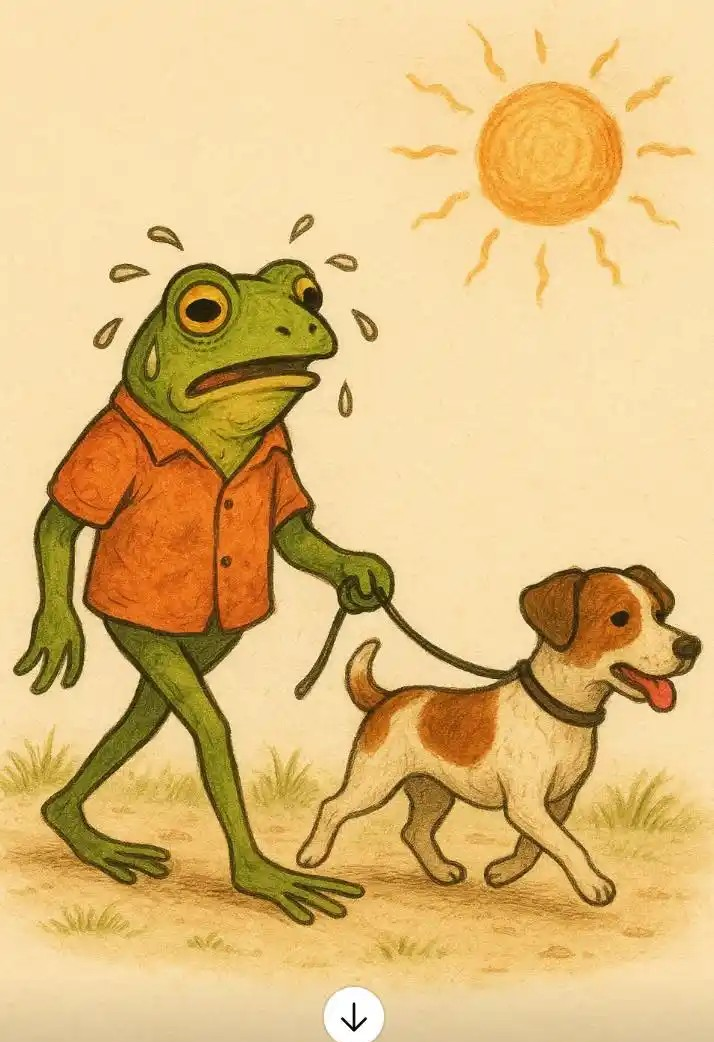
Benjamin Radford is esteemed in skeptic circles, where he is known for his investigations into cryptological claims. But earlier this year he turned his skeptical spectacles away from Bigfoot and toward animals known to exist, specifically dogs and frogs. He looked into whether two time-honored propositions are true: That dogs will accept a gradually shortened lease until they are eventually uncomplaining about being immobile; and similarly, whether frogs will stay in a gradually-boiling pot until their amphibian selves expire.

Radford noted that the canine claim rests on the genuine notion of habituation. Keeping with the dog theme, Radford wrote that someone with a fear of such animals might be able to overcome this through a series of gradual steps: They could stay in a room with a small, leashed, friendly dog for a minute, then upgrade that to petting the leashed dog, then the canine is allowed to be unchained, and finally the person is holding the animal. Radford explained that this method has three components: Frequency, distance, and duration. As applied to fear of dogs, the person slowly increases how often they see the dog, how close it gets, and how long the session lasts.

But while fear of dogs could be overcome, would those same animals unconsciously acquiesce to having their leash gradually shortened until they were unable to move?

Radford wrote that this assertion is often presented in this manner: “If you reduced a dog’s chain one link at a time, every few days, until his chain is so short he won’t be able to move, he will never resist because he is conditioned to the loss of his freedom slowly, over time. That’s what’s happening to you.”

Of note, this claim is frequently employed as a metaphor intended to expose some government evil, corporate strategy, or clandestine plot. An entity is gradually conditioning you, so you’d best be aware lest you fall for it.

But what you would really be falling for is an urban legend. Dogs notice, although they are less likely to object to a small change than a large one. But they will eventually resist. Dogs can sense the tension from a leash, which is why a trained one will respond to its owner moving it one direction or pulling on the leash to get it to stop. As to length being lessened, the dog will object in the form of barking and lunging since a shortened leash limits its freedom and ability to respond to threats. Owing to a dog’s oppositional reflex – the instinct to push against any pressure they feel on their bodies – they may exert more force on a leash when they feel continual tension, and shortening the leash can spark this reaction.

This could play out over several days, whereas the frog in boiling pot myth can be quickly dispatched with. Radford cited University of Oklahoma zoology professor Victor Hutchinson, who called hooey on the notion. He told of tests in which, “The water in which a frog is submerged is heated gradually at about two degrees per minute. As the temperature of the water is gradually increased, the frog will eventually become more and more active in attempts to escape the heated water. If the container size and opening allow the frog to jump out, it will do so.”

So there is no need to subject the animals to any cruel experiments to see if these notions are true, they have been shown to be false. There would be more value in searching for Bigfoot.

Why the beef?

Republicans have long been an anti-science party, rejecting and legislating against climate science, fluoridation, the Big Bang, and evolution. This decade, they have expanded their nefarious net by combatting vaccines, Pasteurization, and our subject for this post, processed foods.

Like many lightning rod terms, processed foods is largely undefined – though it should properly include many traits that those who putatively oppose them would be OK with. This includes the food being smoked, cured, salted, dried, frozen, or pickled.

One particular food that was singled out for demonization this year was veggie burgers. But it wasn’t just the meat that was fake, it was the studies, found Vox reporter Marina Bolotnikova.

The claim emerged from a study on plant-based “ultra-processed” foods by nutrition researchers at the University of São Paulo and Imperial College London. However, plant-based meats represented just .2 percent of the calories consumed in this study. Also of note, the likes of Impossible and Beyond Burgers were not yet a thing when these studies were conducted.

Ultra-processed food is an undefined term, but the presumption is that anything so called is bad and needs to be avoided and likely regulated, if not banned. While a pet project of RFK Jr. (Does he really get to be the one Kennedy who gets to live?), the foods were originally attacked by far-left Earthy types before becoming a MAGA magnet.

Bolotnikova writes that the scientists who work to construct dietary guidelines determined that there was scant evidence to support the study’s claim. This will do little to assuage those who see not a food product but a poison foisted upon us by a faceless, uncaring behemoth.

Of course, a healthy diet will consist of fruits instead of Fruity Pebbles, protein over Pop-Tarts, and calcium rather than cake. But automatically consigning all foods that are anything but all-natural into the boogeyman category is unwise and unjustified.

Bolotnikova quoted Harvard epidemiology and nutrition professor Walter Willett, who said, “You look at these papers, and it’s still very hard to pin down what the definition really is. Bolotnikova added, “It’s a concept prone to illogical free association, lumping together Cheetos with ultra-healthy fermented beans.”

A process is merely a way of doing things, so a food being processed is not by itself a good or bad thing. Bolotnikova notes that Twinkies and Oreos are unhealthy because they’ve been processed in a way that replaces valuable nutrients with sugar and fructose. contrast, a food could be processed in a way that added nutrients and vitamins. Indeed, Bolotnikova notes that healthy options such as whole-grain bread and tofu fall under the demonized ultra-processed umbrella.

Consigning a huge swath of foods to an evil and poorly-defined category makes it easier for Kennedy and other charlatans to attack them, lambaste those who feed it to their children, and to call for bans, regardless of where the evidence points.

“The Cajoling Stones” (Ica Stones)

The origin of many hoaxes is lost to history, but with the Ica Stones, skeptics and reporters chased down the origin, which lies with first the gullibility, and then the deceit, of Dr. Javier Cabrera.

Our tale begins in the mid-1960s when Cabrera received an engraved rock for his birthday. If I were so bequeathed, I would think there had better be some really good ice cream to make up for it. But the doctor was intrigued and recalled, “It was engraved on one side with a carving of a fish I did not recognize. The stone struck me as most unusual,” since he had thought the aquatic animal had died out long before humans encountered it.

At the time, the only other known pieces belonged to the brotherly duo of Carlos and Pablo Soldi, Peruvian looters and grave robbers who illegally excavated archaeological sites for profit. The siblings and doctor met through an intermediary, Basilo Uschuya Peering at their collection, Uschuya guessed the inscriptions to be ancient renderings of now-extinct creatures. The Soldis said the collection had been found in a secret cave and more could be produced for a price. Thousands (both stones and sols) would be forthcoming. Cabrera deduced that because the stones’ hardness would have precluded them from being carved into, aliens had to have done it. But the real source were terrestrial con artists, the artist part being literal.

Authorities arrested Uschuya for selling archaeological artifacts since, if the stones were what he alleged them to be, they weren’t his to sell. And if not, it was fraud, so he was cooked regardless.

At this point, Uschuya confessed to the hoax, saying he got the ideas for the images from various entertainment media. Hit with a cognitive dissonance overload, Cabrera claimed it was the confession that was a hoax.

He said that stones were too hard to carve, which is true, but the images had not been carved, they were etched. Second, he argued that the collection was too voluminous for just a few people to have perpetrated. This was untrue, as a skilled fraudster could knock one out in 15 minutes. A team of 10 or so working for a few weeks could produce a mammoth collection. But while the hoaxers had some artistic skills, they lacked in anthropologic knowledge and made some telling mistakes, such as the images reflecting outdated 1960s portrayals of dinosaur life. Further, the only animals depicted were known at the time; none that have been discovered since make an appearance. And no fossils of these types have ever been found in the region.

As to the humans, they are shown as having harnessed advanced technology such as surgery, telescopes, and airborne conveyances. Again, no corresponding archeological evidence supports this. If their society had evolved to such a point, it is reasonable to assume that they would leave remains on their existence in other artwork, architecture, and accomplishments, instead the lone remnant being a huge rock collection.

Since the stones contain no organic material, they cannot be carbon dated. Still, Cabrera claimed scientific analysis shows the stones to be made of andesite and that their was revealed through their oxidized patina. He was presented no evidence to support this, nor has it been independently verified. Even if all this were true, it would not verify the age since the engravings lack patina in the grooves. Later analyses indicated the clean edges of the incisions would have lost this distinction after a few centuries due to oxidation. Also, evidence suggests the engravings were made with acid, sandpaper, and modern saws. In the end, all Cabrera ended up with was a memorable birthday present.

“Scheming service” (Pseudo archeology)

I’m looking forward to the release this summer of a Netflix series featuring Patrick Mahomes, quarterback of my beloved Super Bowl champion Kansas City Chiefs. I’m less enthusiastic about the streaming service’s offering of Ancient Apocalypse, whose main contention is that human civilization is much older than what most historians and archaeologists contend.

According to host Graham Hancock, around 12,000 years ago a cataclysm wrought havoc on an advanced Ice Age civilization.
Survivors dispersed throughout Earth, introducing primitive populations to agriculture, architecture, legal systems, astronomy, and other advances. While such claims have long been made by ancient astronaut aficionados, Hancock posits a slightly less ridiculous narrative centering on Atlantis.

However, there are already scientifically-grounded explanations for these societal development and there is no need to bring lost continent refugees into the equation. Hancock claims the explosion in knowledge was too much to be practical, citing Göbekli Tepe as one example. Yet Damian Fernandez-Beanato writes in Skeptical Inquirer that archaeological records for the Fertile Crescent, home of Göbekli Tepe, show gradual development: “Archaeologists found that pre-Neolithic people, increasingly sedentary and starting to cultivate plants more and more, led to sedentary and farming people in the Neolithic. There are known precursor cultures.”


Fernandez-Beanato further points out that the megalithic structures at Göbekli Tepe were constructed many thousands of years before the invention of the wheel, the domestication of the horse, and the advent of writing – developments conspicuously absent for a society supposedly advancing at lightning speed.

Hancock sometimes plays the Galileo Gambit, dismissing archeologists as stuck in their stodgy ways and as hostile to new evidence or ideas. But as Fernandez-Beanato notes, solid proof for
Hancock’s hypothesis would show that modern knowledge or capabilities immediately preceded the Neolithic transition. That ancient peoples had impressive accomplishments consistent with the resources and abilities available works against Hancock’s proposal.

Further, Ancient Apocalypse mistakenly casts the established scientific position on the advent of farming as occurring after the end of the Last Glacial Period. This dismisses recent findings that pushes back the origins of the Neolithic transition. Another falsehood is the assertion that Antarctica appears on maps drawn before it was discovered. What those maps actually show is the Terra Australis, a hypothetical continent thought at the time to exist.

Pseudoscientists play the Galileo Gambit when they are dismissed by experts in the field. Hancock speaks of “official” archeology, which is not a thing. It merely serves to set him up as a brave interloper daring the question enforced orthodoxy.

Further, pseudoscience frequently relies anecdotes over data. Fernandez-Beanato writes, “When analyzing the so-called Bimini Road with other team members (a biologist and a wreck searcher, no geologist or archaeologist in sight), Hancock and the biologist mention that they have never personally seen beach rock fractured that way, as if that were anything to go by in science.”

Other evidence-free claims such as humans existing in the Americas 130,000 years ago are presented as fact rather than wild speculation.

There is plenty of genuine archeology out there, online and in libraries, and I would suggest seeking out that instead. Or at least check out the Mahomes documentary rather than Ancient Apocalypse.

“Muscle & Witless” (Liver King)

Brian Johnson endorses what he calls an extreme case of primal living. In other words, he embraces the Appeal to Antiquity fallacy. This is when some time in the past – the 1950s, the Old West, the Medieval era, or something less concrete – is touted as ideal and a period whose values we should emulate. This requires cherry picking at best and a complete mangling of history at worst.

Additionally for Johnson, his claim fell horribly flat when leaked e-mails revealed that his Muscle & Fitness-cover physique came from the relatively recent invention of anabolic steroids. He may have consumed raw animal organs and gobbled some undefined supplements as he claimed, but it was steroids that resulted in his brawn.

Johnson said he started weightlifting because classmates were bullying him. That’s possible, although when the central tenet of a person’s existence is proven fraudulent, it’s hard to believe anything else they say.

Eventually, he founded Ancestral Supplements, which borrowed heavily from the ideas of author Sally Fallon. Her philosophy eschews modern diets and lifestyles. Applied physiologist Dr. Nick Tiller wrote in Skeptical Inquirer, “With so much competition in a saturated space, Johnson needed to distinguish himself among fitness influencers…so in 2021, the Liver King was born.”

This body organ monarch said he followed a list of Tenets, which were eat, sleep, move, connect, cold, sun, fight, and bond. As one example of what this meant, move refers to being active, usually by walking, to, as Teller explained, “combat the mismatch between our genetics that evolved when humans were required to expend energy to obtain it, and our modern environment, characterized by an abundance of empty calories.”

The sleep portion highlights sleep quality, which the hypothesis holds is best managed by regular sleep cycles and blocking blue light at bedtime. Both these Tenets have some validity but when Johnson starts dispensing nutritional advice, things get dicey. His suggested intake is a supreme form of the mostly-debunked Paleo Diet. This lifestyle emphasizes consuming large amounts of organ meat.

Tiller notes organ meat contains copious amounts of iron, zinc, and riboflavin, so its consumption can be advantageous. But there is the flip side, which includes high saturated fat and cholesterol. Further, the diet embraces raw milk and raw egg yolks, both of which have potential dangers.

While ground organs have been used as food for many years, it does not go all the way back to early homo sapiens. According to Tiller, their diet leaned heavily on meat when it was dry and a more plant-based, high-fiber approach during the wet times. Despite this, Johnson insists that we modern humans are descended from “the baddest mammalian predators that ever lived,” and we owe it to their legacy and honor to eat like they did. Curiously, this mindset does not extend to eschewing electronics, sleeping in a mud hut, or wearing loincloths.

While he lauded raw eggs and organs, Johnson most enthusiastically ingested synthetic testosterone, several anabolic and androgenic steroids, plus various drugs which mediate the effects of growth hormone and stimulate appetite.

Johnson’s claim that his physique was owed to food choice and sleeping patterns was comical to anyone possessing the slightest common sense. Attaining his form is impossible without massive doses of steroids and similar concoctions. The assertion that his extreme muscle size and definition was the result of diet and lifestyle choice was absurd on its face. Additionally, if true, it would mean that everyone in the time that he is claiming to mimic would have looked the same as he does now.

Johnson tries to maintain an image of back to nature, the good old (this case really old) days and embracing extreme manhood. Yet he enjoys the luxury lifestyle that this image enables him to attain. Teller describes the comical nature of how Johnson presents himself: “He’s often pictured with spears and other weapons, holding handfuls of raw meat that look as though they’ve been cut straight from an animal’s carcass. He owns four Dobermans and a fleet of trucks including a Hummer and an American Tank from World War II…and uses a rifle to obliterate vegan food.”

Teller also points out the hypocritical irony of Johnson taping himself destroying a WiFi router because it is modern, while employing a technology unavailable 150 years ago to tape this destruction. And, of course, Johnson needs the Internet to hawk his products and image.

His one accurate claim of continuing tradition is his following in the line of anti-science charlatans that have plagued society for the last millennium.

“Get a cue” (Body language)

A droopy head can reveal discouragement, a furrowed brow can mean concentration, and an upward glance can indicate boredom. Or perhaps these actions reveal none of those things. Despite this uncertainty, a cottage industry has sprung up starring analysts and consultants who purport to know what a person is thinking based on nonverbal cues. But while they may lack the intentional fraud of psychics, their success record is not much better.

Astrophysicist Ramin Skibba wrote about this in an article for Undark and he cited an example of a language consultant who interpreted Joe Biden’s downward look at his podium as withdrawal. Or possibly a sign of self-control. These contradictory interpretations give the claimant wiggle room and are akin to horoscopes. Another commonality with astrologers is telling a person what they want to hear. For example, the president’s people would be told Biden was exhibiting this self-control, while the opponent’s team would be told he had been beaten into submission.

No real harm would be done in these cases. By contrast, a self-described body language expert being trusted by police officers, airline screeners, and federal agents to gauge truthfulness can be unsettling. A suspect wrongly deemed to be prevaricating, a Muslim would-be traveler, or a job applicant falsely accused of lying about past deeds could have serious ramifications for the victim.

Most assertions by body language interpreters have yet to be tested by science in a controlled setting. For example, Skibba wrote, “Claims that a single gesture reliably indicates what a person thinks or desires are not backed by solid evidence.” It is a patchwork of guesses, assumptions, and whim.

It is true that research teams have looked at how the brain reacts to facial expressions and how newborns imitate adult gestures. But scientists have also discovered that body language can be complex and granular, making solid declarations of what certain gestures mean to be challenging at best. Skibba quoted University of Idaho communication researcher Dawn Sweet, who informed him, “There’s not likely to be a single behavior diagnostic ever to be found” to indicate if someone is untruthful or experiencing a specific emotion.

Sweet prefers to look at someone’s body language and spoken words together, since they often say the same things. She and her fellow researchers also examine if the body language is consistent for them or an outlier.
Sweet cites a meta analysis of studies centering on 1,300 estimates of 158 possible deception signs. The studies focused on cues people might associate with lying, such as looking down or quickly botting their head. Researchers found such cues have little connection to whether a subject is lying. A person might appear uncomfortable at a given moment, but observers rarely know why. It could be dependent on the situation, person, and culture.

“Bear in mind” (Playing dead)

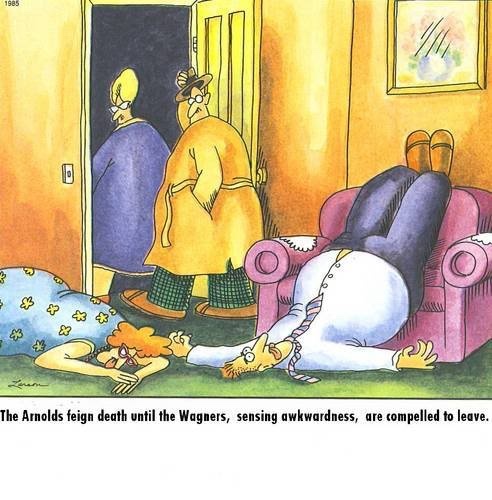
Feigning death when a predator approaches acts as a common defense tactic in the animal kingdom. Some creatures additionally have the ability to release foul-smelling liquids that resemble a rotting carcass (sounds like a Cannibal Corpse song), which might cause the hunter to presume the animal would be dangerous to consume. Playing dead has varying degrees of success among snakes, possums, and even fleas, but does it work for us homo sapiens?

Skeptical Inquirer considered this question and found it was a sound strategy against just one in seven animals.

The technique is most commonly associated with bears. Even the strongest man is no match for the smallest adult bear, all of whom can outrun Usain Bolt. Therefore, coming upon a bruin is one of the most terrifying situations imaginable.

The response most likely to yield life-preserving results depends on the type of bear. With the black variety, the initial strategy should be one of intimidation, as these bears prefer to stay away from us, a favor we return. If in their territory, use a booming voice, bang wood together, ring bells, just generally make noise. If spotted by a black bear, you’ll want to make yourself as big as possible, make as much noise as you can, and slowly back away. Never run, do not seek out shelter in a tree, and do not play dead.

Grizzlies, that’s another story. Playing dead here is a sound strategy, though it’s not the first one. Backing off is the way to go. This should be done slowly, no sudden moves or running. And no matter how big a person is or makes themselves look, they will still be dwarfed by a grizzly, so trying to make one’s self seem large could serve no purpose other than making the bear think you are threatening it. If the grizzly charges, this is where the cliché of curling up and covering one’s head applies. If encountering a polar bear, first, you have likely ended up in Svalbard. Second, lie low, then curl into the tightest ball possible, so as to kiss your ass goodbye.

Now we move to the Feline and Canine families and consider cougars, coyotes, and wolves.
For any of these mammalian predators, the sound strategy is to play the antithesis of dead, being loud and animated. Making a gunshot sound is recommended, especially against cougars. With wolves, maintaining eye contact is advised, contrary to the usual response to encountering most predators. Fighting any of these should only take place if attacked.

Now onto the slithery portion. Snakes are not the fastest representative of the animal kingdom, so running away is usually a good idea – but only if one has not been bitten. If struck by a venomous snake, the poison will make its way faster through a moving body. To try to avoid the situation in the first place, be loud if in a suspected snake habitat.

Meanwhile, run way from crocodiles alligators, and caimans. Scaling a tree will also work. These critters’ nostrils and eyes are their only areas not protected by scales so go for those if unfortunately close enough to do so.

Sharks have a fearsome reputation, mostly undeserved. The great majority are of relatively small size and pose no threat to people. And the ones who are a threat prefer fatty animals like seals and walruses. There is some speculation that sharks sometimes mistake surfboarders paddling out to sea for a seal, take a hunk out of them, don’t like the taste, and move on. Shark attacks are uncommon and fatal ones quite rare. That being said, if you are in such a dire situation as shark approaching or observing you, make yourself as small as possible but keep your eyes on the animal. Move away slowly and calmly (easier said than done in this predicament). Go for the nose and gills if attacked.

Moose can usually be run off by a good show of waving arms and loud yells, but if that fails, the play dead stereotype is the best bet. If it’s not too late, backing away slowly.

When I encountered a herd of yaks in Mongolia, I marveled at them but owing to their massive size, I kept my distance. By contrast, any number of YouTube idiots have ambled up to large and/or dangerous beasts with predictable results. So follow my strategy of maintaining separation, in addition to employing common sense and prevention. The latter includes keeping food stored, hiking and camping with companions, and becoming familiar with what animals are native and what techniques should be employed if you meet up with one. Or to be safer still, stay home and watch Hulu.

“All’s well that spends well” (Wellness industry)

There are several critical thinking errors associated with wellness, an intentionally vague term that can mean most anything a marketer, company, or user wishes it to.

Some of these are among the most frequent logical fallacies, such as the ad populum. Here, the ubiquity and popularity of a product is considered synonymous with its efficiency. Sometimes products sell because they work but other times it is due to who is endorsing it, a savvy marketing approach, or manipulated data.

Another frequent fallacy which is seen in wellness products is the appeal to tradition. While some traditions endure because they are good, others exist only because that’s the way we’ve always done it (i.e. circumcision or the Lions playing on Thanksgiving). Tradition is another way of saying inertia and the duration something has been done has no bearing on its soundness. If I punched myself in the mouth every morning, that would be a bad idea. At no point would it morph into a good idea because it had been done for a certain time length.

Still another frequent fallacy that makes its way into wellness marketing is the appeal to nature. This extends to other areas too, where with the exception of motor oil, synthetic is presumed to be undesirable. Appealing to nature is gold for the wellness industry since it targets those who think they are getting back to the way things were in a glorious past, be that our grandparents’ time or the Paleo era.

Proponents will use “natural” and let the assumption be that means foods the way nature intended. Or it is meant to bring to mind snowcapped mountains and flowing streams when it also means arsenic and box jellyfish venom.

I sometimes see a putative list of ingredients in fries or chicken sandwiches as sold in the US as opposed to their counterparts in other countries. I cannot vouch for the accuracy of either nation’s food constituency, but the implication is that the number of ingredients, along with their polysyllabic nature, means they are dangerous. There is no truth to this. Writing for Skeptical Inquirer, Nick Tiller gave this example: “Consider two glucose molecules —one synthesized in a lab and one found in nature. Both have the chemical formula C6H12O6, both appear as identical under an electron microscope, and both will have an identical effect on the body when consumed.”

Now we’ll move onto some fallacies that are less seen in general but which are still common in the wellness industry. We’ll start with the use of pseudoscience. This refers to using scientific terms improperly or fabricating terminology designed to sound scientific. In any event, the goal is to obfuscate.

Tiller cited the PowerBalance bracelet that enjoyed popularity among elite athletes early this century. It purported to harness the power of “holographic technology,” which is not a thing, with the bracelets said to be “embedded with frequencies that react positively with the body’s energy fields.” Frequency, positivity, and energy are all legitimate scientific terms but as used here are meaningless. Always beware of references to energy and remember that this refers to “measurable work capability.” Insert this phrase in place of “energy” when you see it in ads and it will usually become clear that the claim is absurd.

Along with energy, other words frequently bandied about are balance, immunity, and anti-inflammatory. Again, these are all valid concepts but likely are not so in the way they are used in wellness advertisements. At other times, the peddlers will just coin a term like bioharmonic in hopes of impressing the scientifically illiterate.

While hardly the exclusive purview of wellness, the industry it often guilty of observational selection, which refers to only counting the results you like. I have gone on extreme diets before and lost 25 pounds in a matter of a few weeks. I could highlight this as a success, but to tell the whole story, I would need to tell what happened when I went back to my old habits rather than instituting a lifestyle change. Ignoring such stories enables companies to tell the truth, but not the whole truth.

We also often see a confusing of correlation with causation, often in the form of post hoc reasoning. There might be a connection or it might by coincidence or it could be causation. But we need data and double blind studies to determine this, not anecdotes. As Tiller explained, “Personal accounts trigger emotion and contrast sharply with empty messages from large data sets of cold numbers and statistics. Products are often sold alongside customer testimonials and ‘before and after’ images to compensate for a lack of scientific legitimacy.”

“Thoughts for food” (Raw and organic myths)

For a food to be labeled organic, it must meet a set of established criteria. For it to be considered raw requires no distinction other than not being cooked or prepared in any way. Despite these differences, both organic and raw foods are the focus of rumors that are partially or completely false.

We’ll start with raw, which can be a more nutritious offering than its cooked alternative (depending on how those types are prepared), in addition to being cheaper than their packaged-with-added-ingredients counterpart. However, some enthusiasts go beyond these attributes to make some dubious claims.

For example, they assert wild animals, who consume only raw food, never get sick, a desirable fate which would befall us of we did the same. This is, literally, wildly off the mark, as disease is a leading contributor to animal mortality. Further, the few persons who subscribe to an entirely all-raw food diet sometimes fall ill just like the rest of us.

A less extreme but just as mistaken claim is that munching raw foods increases the consumer’s lifespan. It might make one’s life healthier but there will be no appreciable delaying of death. Skeptoid’s Brian Dunning looked into this and concluded, “The greatest driver in longevity is heredity. Diet is not a significant factor, statistically.”

Looking at the raw numbers, so to speak, there can appear to be a longer lifespan attached to such a diet, but this is because most raw foodists become so in adulthood and never succumbed to fatal newborn or child illnesses and disease. So an apparently increased lifespan would be true amongst almost any adult group, be they red meat lovers, fruitarians, or stamp collectors.

Another mistaken notion is that we are the only meat-eating primates. In truth, most apes are omnivorous. And even if true, this claim would have no bearing on the health benefits of raw fruits and vegetables.

Still another erroneous idea is that cooking foods zaps nutritious enzymes, without which the body struggles to properly digest food. However, we naturally produce digestive enzymes, which make their way through our glands. Moreover, almost anything that is digested is destroyed in the process, which in fact describes digestion. Dunning noted that this process causes enzymes to break down into amino acids, which are absorbed by the intestines.

Most of these notions were based on a false premise or a misunderstanding. Others are total fabrications, such as the claim that white blood cells rush to the stomach to try and fend off the poison that cooked foods yield. This is a complete myth and unsubstantiated fear-mongering.
There is also an assertion that cooking makes organic compounds non-organic. This is an impossibility. Dunning explained that organic chemistry “is the study of carbon compounds, and organic compounds are those formed by living organisms, with molecules containing two or more carbon atoms, linked by carbon-carbon bonds.”

Yet carbon-carbon bonds only begin to break at 750 degrees, so unless preferring one’s chicken carbonara in a charred-beyond-recognition state, this bond-breaking won’t happen. And it wouldn’t matter anyway, as we will see in the second portion of this piece, the focus on organic food. When my children ask what that is, I usually tell them it means more expensive. If I am feeling loquacious enough, I will add that it is supposed to mean grown without synthetic chemicals, though there are about 30 exceptions and even then, natural is no safer than artificial. With that, let’s examine some of the claims associated with organic food.

One is that buying organic food benefits family farms rather than Big Agra, or some such smear. This is wholly untrue since organic food is a corporate behemoth. Dunning explained that major food producers realized the commercial potential of organic would allow them to charge higher prices for fewer products. According to Dunning, “Nearly all organic crops in the United States are either grown, distributed, or sold by the same companies who produce conventional crops.”

A second claim is that organic foods are healthier. But when farmers take the same strain of a plant and grow it in two different ways, its chemical and genetic makeup remain the same. Genes, rather than production method, determine a food’s chemical makeup.

Additionally, some organic enthusiasts say chemical residue remains on non-organic foods. Perhaps, but since organic pesticides are less efficient than their synthetic counterparts, such foods are saturated with up to seven times as many pesticides as what is used with conventional agriculture. Further, organic food, which is one percent of food sold in the US, is responsible for eight percent of E. coli cases.

Finally, we have the notion that organic growing methods are better for the environment. This is also wide of the mark since organic methods require about twice the acreage to produce the same crop.

Eat raw and/or organic if you want to, just do in knowing the facts.